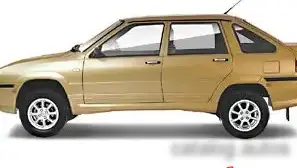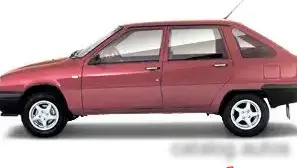
The Izh 2126, produced between 2004 and 2005, represents a late attempt by the Izhevsk Automobile Plant (IzhAvto) to modernize and remain competitive in the Russian automotive market. This five-door hatchback, built upon a modified version of the older Izh 2125 platform, aimed to offer a more contemporary vehicle to Soviet and post-Soviet consumers. The 1.8 D variant, equipped with a 1.8-liter diesel engine producing 63 horsepower, was positioned as the entry-level offering in the 2126 lineup, prioritizing fuel economy and affordability over outright performance. Its production run was brief, reflecting the financial difficulties and eventual restructuring of IzhAvto.
Technical Specifications
| Brand | Izh |
| Model | 2126 |
| Generation | 2126 |
| Type (Engine) | 1.8 D (63 Hp) |
| Start of production | 2004 |
| End of production | 2005 |
| Powertrain Architecture | Internal Combustion engine |
| Body type | Hatchback |
| Seats | 5 |
| Doors | 5 |
| Fuel consumption (urban) | 8 l/100 km (29.4 US mpg) |
| Fuel consumption (extra urban) | 5.5 l/100 km (42.8 US mpg) |
| Fuel Type | Diesel |
| Acceleration 0 – 100 km/h | 19 sec |
| Acceleration 0 – 62 mph | 19 sec |
| Acceleration 0 – 60 mph | 18.1 sec |
| Maximum speed | 135 km/h (83.89 mph) |
| Power | 63 Hp @ 4800 rpm |
| Torque | 110 Nm @ 2500 rpm (81.13 lb.-ft. @ 2500 rpm) |
| Engine layout | Front, Longitudinal |
| Engine displacement | 1774 cm3 (108.26 cu. in.) |
| Number of cylinders | 4 |
| Engine configuration | Inline |
| Cylinder Bore | 82 mm (3.23 in.) |
| Piston Stroke | 84 mm (3.31 in.) |
| Compression ratio | 22:1 |
| Number of valves per cylinder | 2 |
| Fuel injection system | Precombustion chamber injection |
| Engine aspiration | Naturally aspirated |
| Trunk (boot) space – minimum | 300 l (10.59 cu. ft.) |
| Trunk (boot) space – maximum | 958 l (33.83 cu. ft.) |
| Fuel tank capacity | 45 l (11.89 US gal) |
| Length | 4053 mm (159.57 in.) |
| Width | 1660 mm (65.35 in.) |
| Height | 1357 mm (53.43 in.) |
| Wheelbase | 2470 mm (97.24 in.) |
| Front track | 1390 mm (54.72 in.) |
| Rear track | 1370 mm (53.94 in.) |
| Drivetrain Architecture | Rear wheel drive |
| Number of gears | 5 |
| Gearbox type | Manual transmission |
| Front suspension | Spring Strut |
| Rear suspension | Coil spring |
| Front brakes | Disc |
| Rear brakes | Drum |
| Steering type | Steering rack and pinion |
| Tires size | 175/70 R13 |
Powertrain & Engine Architecture
The Izh 2126 1.8 D was powered by a 1.774-liter (108.26 cubic inches) inline-four diesel engine. This engine, internally designated with various codes depending on minor revisions, was a relatively simple design utilizing precombustion chamber injection. This system, common in older diesel engines, involved injecting fuel into a small pre-chamber within the cylinder head, where it partially combusted before igniting the main charge. This aided in cold starting and reduced engine noise compared to direct injection systems of the time. The engine produced 63 horsepower at 4800 rpm and 110 Nm (81.13 lb-ft) of torque at 2500 rpm. The engine’s longitudinal front-engine, rear-wheel-drive layout was a carryover from earlier Izh models, a configuration increasingly uncommon in modern automotive design. The five-speed manual transmission was the only gearbox option available for this variant.
Driving Characteristics
The 1.8 D variant of the Izh 2126 offered modest performance. Acceleration was slow, taking approximately 19 seconds to reach 100 km/h (62 mph). The engine’s torque characteristics meant that it felt relatively responsive at lower speeds, making it suitable for city driving, but struggled when attempting to accelerate quickly or maintain speed on inclines. Compared to potential gasoline-powered versions (which were rarely produced), the diesel offered significantly less power but superior fuel economy. The manual transmission, while basic, provided the driver with full control over the engine’s limited power band. The rear-wheel-drive configuration contributed to a somewhat less refined driving experience compared to front-wheel-drive cars, particularly in slippery conditions.
Equipment & Trim Levels
The Izh 2126 1.8 D was the base trim level, and as such, it featured a relatively sparse equipment list. Standard features typically included basic cloth upholstery, a simple dashboard layout with analog gauges, and manual windows and door locks. Power steering was not standard, and air conditioning was rarely fitted, even as an option. The focus was on providing a functional and affordable vehicle. Optional extras, when available, might have included a basic radio, upgraded seat covers, or a more comprehensive instrument cluster. The interior was designed for practicality rather than luxury, with durable materials intended to withstand the harsh conditions of Russian roads.
Chassis & Braking
The Izh 2126 utilized a relatively simple chassis design. The front suspension consisted of a spring strut setup, while the rear suspension employed coil springs. This configuration provided a reasonable ride quality, although it was not particularly sophisticated. The braking system featured disc brakes on the front wheels and drum brakes on the rear. This combination was typical for vehicles in this price range at the time. Steering was via a steering rack and pinion system, offering adequate precision but lacking the feel of more modern systems. The tires were typically 175/70 R13, chosen for their affordability and durability rather than high performance.
Market Reception & Comparison
The Izh 2126 1.8 D received mixed reviews. Critics generally acknowledged its affordability and fuel economy but criticized its lack of power, outdated design, and overall refinement. Compared to other vehicles available in the Russian market at the time, such as the Lada Priora or imported used cars, the Izh 2126 was often seen as a budget option. The diesel engine offered better fuel economy than the gasoline alternatives, but at the cost of significantly reduced performance. Reliability was also a concern, with reports of issues related to the engine, transmission, and electrical system. The 1.8 D was primarily targeted at buyers who prioritized low running costs over driving pleasure.
Legacy
The Izh 2126, and particularly the 1.8 D variant, holds a limited legacy. Its short production run and relatively low build numbers mean it is not a particularly common sight today. The diesel engine, while robust, is prone to wear and tear, and finding replacement parts can be challenging. In the used car market, the Izh 2126 1.8 D is valued primarily for its affordability and simplicity. It appeals to those seeking a basic, inexpensive vehicle for short-distance commuting or as a project car. While it did not represent a significant technological advancement, the Izh 2126 1.8 D serves as a reminder of the challenges faced by the Russian automotive industry in the post-Soviet era.