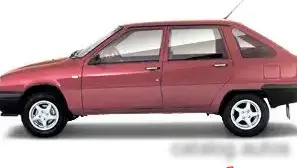
The Izh 2126, specifically the 4×4 variant powered by the 1.6-liter engine producing 73 horsepower, represents a unique chapter in Russian automotive history. Produced from 1997 to 2005, this vehicle was a continuation of the Izh-Moskvitch lineage, attempting to modernize a platform with roots stretching back to the 1960s. The 2126 4×4 aimed to provide affordable all-wheel drive capability to a market with challenging road conditions, filling a niche similar to that of the Lada Niva, but with a more utilitarian focus. It was positioned as a budget-friendly option for rural areas and those needing a robust vehicle for work or leisure, though it faced criticism for its outdated design and relatively low power output.
Technical Specifications
| Brand | Izh |
| Model | 2126 |
| Generation | 2126 4×4 |
| Type (Engine) | 1.6 (73 Hp) |
| Start of production | 1997 |
| End of production | 2005 |
| Powertrain Architecture | Internal Combustion engine |
| Body type | Hatchback |
| Seats | 5 |
| Doors | 5 |
| Fuel Type | Petrol (Gasoline) |
| Acceleration 0 – 100 km/h | 15 sec |
| Acceleration 0 – 62 mph | 15 sec |
| Acceleration 0 – 60 mph | 14.3 sec |
| Maximum speed | 157 km/h (97.56 mph) |
| Power | 73 Hp |
| Power per litre | 46.6 Hp/l |
| Torque | 116 Nm (85.56 lb.-ft.) |
| Engine layout | Front, Longitudinal |
| Engine displacement | 1568 cm3 (95.69 cu. in.) |
| Number of cylinders | 4 |
| Engine configuration | Inline |
| Number of valves per cylinder | 2 |
| Fuel injection system | Carburettor |
| Engine aspiration | Naturally aspirated engine |
| Valvetrain | OHC |
| Trunk (boot) space – minimum | 300 l (10.59 cu. ft.) |
| Trunk (boot) space – maximum | 958 l (33.83 cu. ft.) |
| Fuel tank capacity | 45 l (11.89 US gal | 9.9 UK gal) |
| Length | 4053 mm (159.57 in.) |
| Width | 1660 mm (65.35 in.) |
| Height | 1357 mm (53.43 in.) |
| Wheelbase | 2470 mm (97.24 in.) |
| Front track | 1390 mm (54.72 in.) |
| Rear (Back) track | 1380 mm (54.33 in.) |
| Drive wheel | All wheel drive (4×4) |
| Number of gears and type of gearbox | 5 gears, manual transmission |
| Front suspension | Spring Strut |
| Rear suspension | Coil spring |
| Front brakes | Disc |
| Rear brakes | Drum |
| Assisting systems | ABS (Anti-lock braking system) |
| Steering type | Steering rack and pinion |
| Tires size | 175/70 R 14 |
Powertrain & Engine Architecture
The heart of the Izh 2126 4×4 was the 1.6-liter inline-four cylinder engine, designated as a continuation of the UMZ-417 series. This engine, while relatively simple in design, was known for its robustness, if not its refinement. The 73 horsepower output was achieved through a carburetor fuel system – a technology largely superseded by fuel injection in Western markets by the late 1990s. This carburetor setup contributed to lower fuel efficiency and higher emissions compared to more modern engines. The engine featured an overhead camshaft (OHC) valvetrain with two valves per cylinder. The longitudinal engine placement, coupled with a rear-wheel-drive based all-wheel-drive system, meant the driveshaft ran the length of the vehicle. The standard transmission was a five-speed manual, providing a reasonable spread of gears for both on-road and off-road driving. The engine’s relatively low compression ratio and conservative tuning prioritized durability over outright performance.
Driving Characteristics
The 1.6-liter, 73 hp engine in the Izh 2126 4×4 delivered modest performance. Acceleration was slow, with 0-60 mph times hovering around 14.3 seconds. The vehicle felt underpowered, particularly when fully loaded or tackling steep inclines. The five-speed manual transmission helped to mitigate some of the engine’s shortcomings, allowing drivers to keep the engine in its relatively narrow power band. The all-wheel-drive system provided improved traction on loose surfaces, making it suitable for navigating unpaved roads and snowy conditions. However, the vehicle’s high center of gravity and relatively soft suspension resulted in noticeable body roll during cornering. Compared to other trims, the 1.6L was the base engine, offering less power than potential upgrades, but also better fuel economy than larger displacement options.
Equipment & Trim Levels
The Izh 2126 4×4 was generally sparsely equipped, reflecting its budget-oriented positioning. Standard features typically included basic steel wheels, cloth upholstery, and a simple dashboard layout. Power steering was not standard, requiring significant effort at low speeds. Air conditioning and power windows were rarely, if ever, offered. Optional extras were limited, often consisting of upgraded audio systems or minor cosmetic enhancements. The interior was functional but lacked the refinement found in contemporary Western vehicles. The focus was on providing a durable and practical interior that could withstand harsh conditions.
Chassis & Braking
The Izh 2126 4×4 utilized a body-on-frame construction, contributing to its robustness but also resulting in a less rigid chassis compared to unibody designs. The front suspension consisted of a MacPherson strut setup, while the rear employed a coil spring arrangement. The braking system featured disc brakes on the front wheels and drum brakes on the rear. An Anti-lock Braking System (ABS) was included as a standard safety feature, a relatively uncommon inclusion for a vehicle in this price range. The tires were typically 175/70 R14, providing adequate grip for most road conditions.
Market Reception & Comparison
The Izh 2126 4×4 received mixed reviews. Critics acknowledged its affordability and all-wheel-drive capability but criticized its outdated design, low power output, and lack of refinement. Compared to the Lada Niva, the Izh 2126 offered a slightly more spacious interior and a more modern (though still basic) dashboard. However, the Niva was generally considered to be more capable off-road due to its shorter wheelbase and more robust four-wheel-drive system. Fuel economy was moderate for the time, but significantly lower than more modern vehicles with fuel injection. Reliability was generally acceptable, but maintenance could be challenging due to the limited availability of spare parts and the carburetor fuel system.
Legacy
The Izh 2126 4×4 represents a transitional period in Russian automotive history. It was one of the last vehicles produced by the Izh Automotive Plant before its eventual decline. Today, the Izh 2126 4×4 has a small but dedicated following among enthusiasts who appreciate its simplicity, robustness, and unique character. The 1.6-liter engine, while not particularly powerful, proved to be relatively durable, and many examples are still on the road today. However, finding spare parts can be a challenge, and maintenance often requires specialized knowledge. The vehicle’s low price and all-wheel-drive capability continue to make it an attractive option for those seeking a basic and affordable off-road vehicle, though its age and limited features mean it is unlikely to appeal to a mainstream audience.