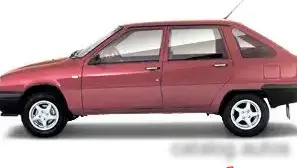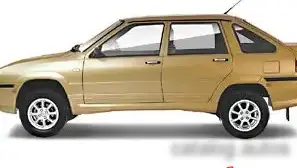
The Izh 2126, specifically the 4×4 variant powered by the 1.8-liter engine producing 85 horsepower, represents a unique chapter in Russian automotive history. Produced from 1997 to 2005, this vehicle was a continuation of the Izh-Moskvitch lineage, attempting to modernize a platform with roots stretching back to the 1960s. The 2126 4×4 aimed to provide affordable all-wheel drive capability to a market with challenging road conditions, filling a niche similar to that of the Lada Niva, but with a more conventional hatchback body style. This particular 1.8L, 85 hp configuration was positioned as a mid-range offering within the 2126 lineup, offering a balance between performance and economy.
Technical Specifications
| Brand | Izh |
| Model | 2126 |
| Generation | 2126 4×4 |
| Type (Engine) | 1.8 (85 Hp) |
| Start of production | 1997 |
| End of production | 2005 |
| Powertrain Architecture | Internal Combustion engine |
| Body type | Hatchback |
| Seats | 5 |
| Doors | 5 |
| Fuel Type | Petrol (Gasoline) |
| Acceleration 0 – 100 km/h | 16 sec |
| Acceleration 0 – 62 mph | 16 sec |
| Acceleration 0 – 60 mph | 15.2 sec |
| Maximum speed | 157 km/h (97.56 mph) |
| Power | 85 Hp |
| Power per litre | 46.8 Hp/l |
| Torque | 135 Nm (99.57 lb.-ft.) |
| Engine layout | Front, Longitudinal |
| Engine displacement | 1816 cm3 (110.82 cu. in.) |
| Number of cylinders | 4 |
| Engine configuration | Inline |
| Number of valves per cylinder | 2 |
| Fuel injection system | Carburettor |
| Engine aspiration | Naturally aspirated engine |
| Valvetrain | OHC |
| Trunk (boot) space – minimum | 300 l (10.59 cu. ft.) |
| Trunk (boot) space – maximum | 958 l (33.83 cu. ft.) |
| Fuel tank capacity | 45 l (11.89 US gal | 9.9 UK gal) |
| Length | 4053 mm (159.57 in.) |
| Width | 1660 mm (65.35 in.) |
| Height | 1357 mm (53.43 in.) |
| Wheelbase | 2470 mm (97.24 in.) |
| Front track | 1390 mm (54.72 in.) |
| Rear (Back) track | 1380 mm (54.33 in.) |
| Drive wheel | All wheel drive (4×4) |
| Number of gears and type of gearbox | 5 gears, manual transmission |
| Front suspension | Spring Strut |
| Rear suspension | Coil spring |
| Front brakes | Disc |
| Rear brakes | Drum |
| Assisting systems | ABS (Anti-lock braking system) |
| Steering type | Steering rack and pinion |
| Tires size | 175/70 R 14 |
Powertrain & Engine Architecture
The heart of the Izh 2126 4×4 1.8 was the ZMZ-4062.10 engine, an inline four-cylinder, 1.8-liter (1816 cc) gasoline engine. This engine, while a development of earlier ZMZ designs, retained a relatively archaic carbureted fuel system. The use of a carburetor, rather than fuel injection, was a cost-saving measure and contributed to the engine’s lower output and less refined operation. The engine featured a single overhead camshaft (OHC) valvetrain with two valves per cylinder. The longitudinal engine placement was a necessity to accommodate the transfer case for the all-wheel-drive system. The 85 horsepower output at around 5,200 rpm and 135 Nm (99.57 lb-ft) of torque were modest, but sufficient for the vehicle’s intended purpose. The engine was typically paired with a five-speed manual transmission, although an automatic transmission was available as a rare option. The automatic, when equipped, was a three-speed unit, further impacting performance.
Driving Characteristics
The Izh 2126 4×4 1.8 with the manual transmission offered adequate, if uninspiring, performance. Acceleration to 100 km/h (62 mph) took approximately 16 seconds. The engine’s torque curve was relatively flat, providing usable power across a narrow rev range. The all-wheel-drive system provided enhanced traction on loose surfaces, making it suitable for rural roads and inclement weather. However, the vehicle’s relatively heavy weight and the engine’s limited power meant that highway cruising was often a strained experience. The automatic transmission version suffered even more in terms of performance, with noticeably slower acceleration and reduced fuel economy. The gear ratios were optimized for low-speed torque rather than outright speed.
Equipment & Trim Levels
The Izh 2126 4×4 1.8 was generally sparsely equipped, reflecting its affordability. Standard features typically included basic cloth upholstery, a simple dashboard layout, and manual windows and door locks. The 4×4 models often included a transfer case lever for selecting between two-wheel drive, four-wheel drive high, and four-wheel drive low. Optional extras were limited but could include power steering, upgraded audio systems, and improved interior trim. The trim level of the 1.8L model was considered mid-range, offering a slight step up in comfort and features compared to the base models with smaller engines.
Chassis & Braking
The Izh 2126 4×4 utilized a body-on-frame construction, a design choice that contributed to its robustness but also its relatively heavy weight. The front suspension consisted of a MacPherson strut setup, while the rear suspension employed a coil spring arrangement. Braking was provided by disc brakes on the front wheels and drum brakes on the rear. An Anti-lock Braking System (ABS) was available, but not standard on all models. The steering system was a rack and pinion type, offering reasonable precision. Tire size was typically 175/70 R14.
Market Reception & Comparison
The Izh 2126 4×4 was primarily a domestic market vehicle in Russia and other former Soviet republics. It was viewed as a practical and affordable option for those needing all-wheel drive capability. Critics often pointed to the vehicle’s outdated design, rough ride quality, and lack of refinement. Compared to the Lada Niva, the Izh 2126 4×4 offered a more conventional hatchback body style and a slightly more comfortable interior, but lacked the Niva’s dedicated off-road focus. Fuel economy was moderate, and reliability was generally acceptable, although parts availability could be an issue.
Legacy
The Izh 2126 4×4, while not a groundbreaking vehicle, holds a significant place in Russian automotive history. It represented an attempt to modernize a long-running platform and provide affordable all-wheel drive to a wide range of consumers. Today, the Izh 2126 4×4 is a relatively rare sight on the roads, but it has gained a following among enthusiasts and collectors. The 1.8-liter engine, while not particularly powerful, is considered relatively durable and reliable. Parts availability can be challenging, but a dedicated community of owners and enthusiasts continues to support the preservation of these vehicles. The 2126 4×4 serves as a reminder of a unique era in automotive manufacturing and a testament to the ingenuity of Russian engineers.