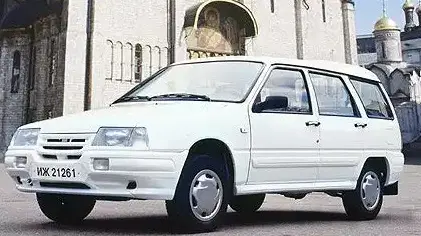
The Izh 21261 4×4 1.7, produced between 2002 and 2005, represents a final evolution of the long-running Izh Kombi series, originating from the Soviet-era Moskvitch lineage. This particular variant, equipped with a 1.7-liter engine producing 85 horsepower and a five-speed manual transmission, was positioned as a utilitarian, all-wheel-drive station wagon aimed at providing affordable transportation in challenging conditions. It served as a workhorse vehicle, particularly in rural areas, and represented a continuation of the rugged, simple designs that characterized Soviet automotive engineering. The 21261 4×4 was a product of the Izh Automotive Plant (Izhavtomash) in Izhevsk, Russia, and was largely based on the earlier Izh 2125 and 2126 models.
Technical Specifications
| Brand | Izh |
| Model | 21261 |
| Generation | 21261 4×4 |
| Type (Engine) | 1.7 (85 Hp) |
| Start of production | 2002 |
| End of production | 2005 |
| Powertrain Architecture | Internal Combustion engine |
| Body type | Station wagon (estate) |
| Seats | 5 |
| Doors | 5 |
| Fuel consumption (combined) | 11.3 l/100 km (20.8 US mpg, 25 UK mpg, 8.8 km/l) |
| Fuel Type | Petrol (Gasoline) |
| Acceleration 0 – 100 km/h | 20 sec |
| Acceleration 0 – 62 mph | 20 sec |
| Acceleration 0 – 60 mph | 19 sec |
| Maximum speed | 130 km/h (80.78 mph) |
| Weight-to-power ratio | 12.8 kg/Hp, 78 Hp/tonne |
| Weight-to-torque ratio | 8.5 kg/Nm, 117.4 Nm/tonne |
| Power | 85 Hp @ 5400 rpm |
| Power per litre | 50 Hp/l |
| Torque | 128 Nm @ 3000 rpm (94.41 lb.-ft. @ 3000 rpm) |
| Engine layout | Front, Longitudinal |
| Engine displacement | 1699 cm3 (103.68 cu. in.) |
| Number of cylinders | 4 |
| Engine configuration | Inline |
| Cylinder Bore | 85 mm (3.35 in.) |
| Piston Stroke | 75 mm (2.95 in.) |
| Compression ratio | 8.5:1 |
| Number of valves per cylinder | 2 |
| Fuel injection system | Carburettor |
| Engine aspiration | Naturally aspirated engine |
| Valvetrain | OHC |
| Kerb Weight | 1090 kg (2403.04 lbs.) |
| Max. weight | 1490 kg (3284.89 lbs.) |
| Max load | 400 kg (881.85 lbs.) |
| Trunk (boot) space – minimum | 372 l (13.14 cu. ft.) |
| Trunk (boot) space – maximum | 960 l (33.9 cu. ft.) |
| Fuel tank capacity | 50 l (13.21 US gal | 11 UK gal) |
| Length | 4053 mm (159.57 in.) |
| Width | 1660 mm (65.35 in.) |
| Height | 1450 mm (57.09 in.) |
| Wheelbase | 2470 mm (97.24 in.) |
| Front track | 1390 mm (54.72 in.) |
| Rear (Back) track | 1390 mm (54.72 in.) |
| Drive wheel | All wheel drive (4×4) |
| Number of gears and type of gearbox | 5 gears, manual transmission |
| Front suspension | Spring Strut |
| Rear suspension | Coil spring |
| Front brakes | Disc |
| Rear brakes | Drum |
| Assisting systems | ABS (Anti-lock braking system) |
| Steering type | Steering rack and pinion |
| Tires size | 175/70 R13 |
Powertrain & Engine Architecture
The Izh 21261 4×4 1.7 utilized a 1699cc inline-four cylinder engine. This engine, while a development of earlier Izh/Moskvitch designs, was relatively simple in its construction. It featured a single overhead camshaft (OHC) valvetrain with two valves per cylinder. Critically, this variant employed a carburetor for fuel delivery, a technology largely superseded by fuel injection in Western markets by the early 2000s. The carburetor system contributed to the engine’s lower power output and less refined operation compared to contemporary vehicles. The engine’s longitudinal front-engine layout was a carryover from its predecessors. The five-speed manual transmission was a standard feature, providing a relatively wide range of gears for navigating varied terrain. The transmission was mechanically linked to the transfer case, enabling the vehicle’s four-wheel-drive capability.
Driving Characteristics
The 85 horsepower output and 128 Nm of torque delivered by the 1.7-liter engine resulted in modest performance. Acceleration was slow, with a 0-60 mph time of approximately 19 seconds. The vehicle’s weight of around 1090 kg (2403 lbs) contributed to this sluggishness. However, the all-wheel-drive system provided enhanced traction on loose surfaces, making it suitable for off-road use and challenging road conditions. The carburetor’s tuning meant that power delivery was somewhat peaky, requiring frequent gear changes to maintain momentum. Compared to potential higher-output variants (which were not commonly produced for this generation), the 1.7-liter engine prioritized fuel economy and durability over outright performance.
Equipment & Trim Levels
The Izh 21261 4×4 1.7 was typically offered with a basic level of equipment. Standard features included a simple interior with cloth upholstery, a basic instrument cluster, and manual windows and door locks. The vehicle was designed for functionality rather than luxury. Optional extras were limited, but could include upgraded audio systems or minor cosmetic enhancements. The trim level was largely consistent across the production run, with minimal variations in standard equipment.
Chassis & Braking
The Izh 21261 4×4 featured a body-on-frame construction, contributing to its ruggedness and durability. The front suspension utilized a spring strut setup, while the rear suspension employed coil springs. The braking system consisted of disc brakes on the front wheels and drum brakes on the rear wheels. An Anti-lock Braking System (ABS) was included as a standard safety feature, a relatively modern addition for a vehicle of this type. The steering system was a rack and pinion type, providing reasonable steering precision.
Market Reception & Comparison
The Izh 21261 4×4 1.7 was primarily sold within the Russian domestic market and neighboring countries. It was not exported in significant numbers to Western Europe or North America. Critics generally acknowledged the vehicle’s affordability and all-wheel-drive capability, but also noted its outdated technology, low performance, and basic interior. Compared to other vehicles in its class, such as the UAZ-469, the Izh 21261 offered a slightly more comfortable ride and a more modern (though still spartan) interior. Fuel economy was relatively poor, averaging around 11.3 liters per 100 kilometers (20.8 US mpg).
Legacy
The Izh 21261 4×4 1.7 represents the final chapter in a long line of Soviet-era station wagons. While not renowned for its performance or refinement, it served a vital role in providing affordable transportation to a wide range of users. Today, the vehicle is primarily found in the hands of enthusiasts and collectors, particularly those interested in Soviet automotive history. The 1.7-liter engine and five-speed manual transmission combination is generally considered to be a reliable, if somewhat underpowered, powertrain. Parts availability can be challenging, but the vehicle’s simple construction makes it relatively easy to maintain for those with mechanical skills. The Izh 21261 4×4 remains a testament to the ingenuity and resourcefulness of Soviet automotive engineering.