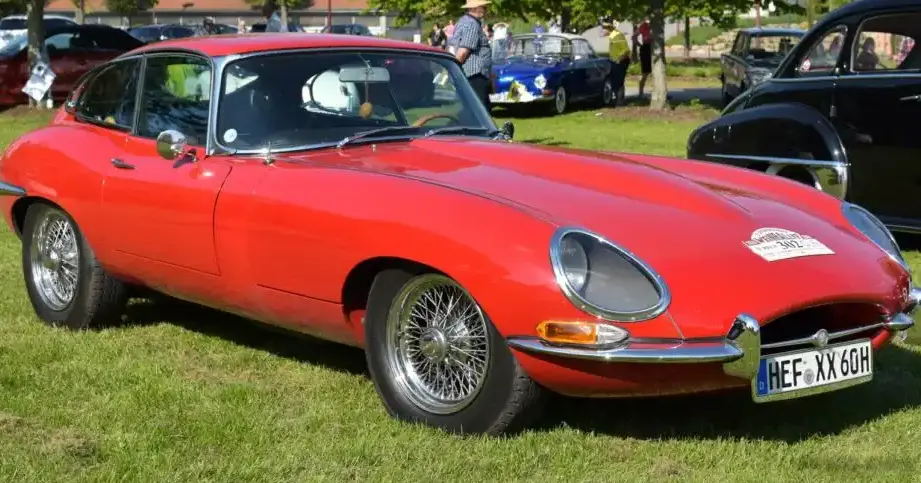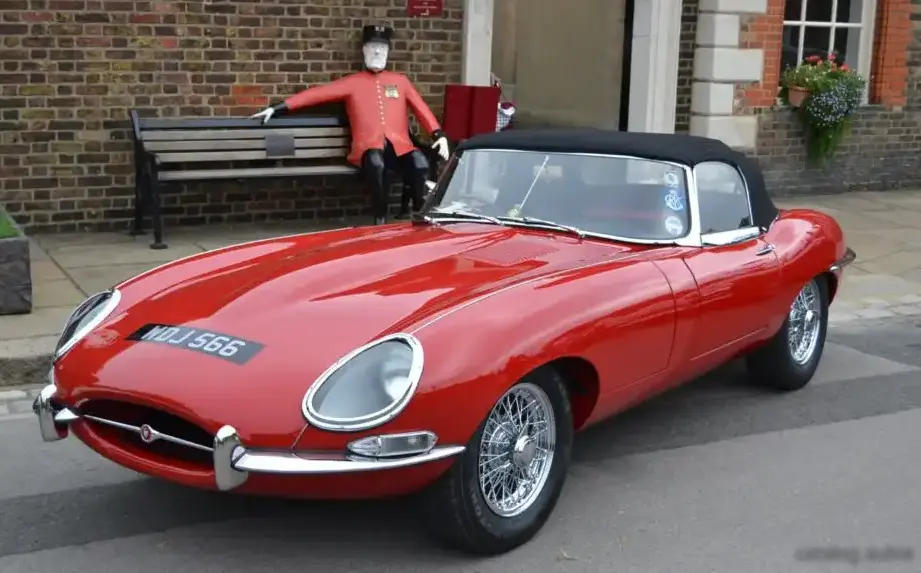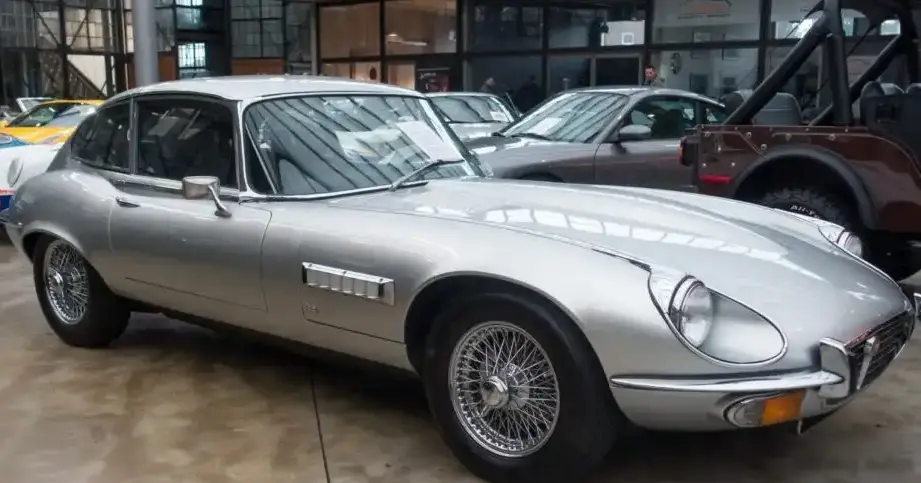
The Jaguar E-type 2+2 4.2 (Series 1), produced between 1966 and 1968, represented a significant evolution of the iconic E-type. While the original E-type, launched in 1961, was a groundbreaking sports car, the 2+2 variant aimed to broaden the model’s appeal by offering increased practicality with a larger cabin and occasional rear seating. This Series 1 4.2-liter version, distinguished by its fully enclosed headlights, occupied a unique position within the E-type lineage, offering a blend of performance and comfort that appealed to buyers seeking a grand touring experience. It was built on the same basic chassis as the earlier Series 1 cars, but with a lengthened wheelbase and modified bodywork to accommodate the rear seats.
Technical Specifications
| Brand | Jaguar |
| Model | E-type |
| Generation | E-type 2+2 |
| Type (Engine) | 4.2 (Series 1) (265 Hp) |
| Start of production | 1966 |
| End of production | 1968 |
| Powertrain Architecture | Internal Combustion engine |
| Body type | Coupe |
| Seats | 4 |
| Doors | 2 |
| Fuel Type | Petrol (Gasoline) |
| Acceleration 0 – 100 km/h | 7.3 sec |
| Acceleration 0 – 62 mph | 7.3 sec |
| Acceleration 0 – 60 mph | 6.9 sec |
| Maximum speed | 240 km/h (149.13 mph) |
| Weight-to-power ratio | 4.3 kg/Hp, 231.8 Hp/tonne |
| Weight-to-torque ratio | 3 kg/Nm, 336 Nm/tonne |
| Power | 265 Hp @ 5400 rpm |
| Power per litre | 62.6 Hp/l |
| Torque | 384 Nm @ 4000 rpm (283.22 lb.-ft. @ 4000 rpm) |
| Engine layout | Front, Longitudinal |
| Engine Model/Code | XK6 |
| Engine displacement | 4235 cm3 (258.44 cu. in.) |
| Number of cylinders | 6 |
| Engine configuration | Inline |
| Cylinder Bore | 92.07 mm (3.62 in.) |
| Piston Stroke | 106 mm (4.17 in.) |
| Compression ratio | 9:1 |
| Number of valves per cylinder | 4 |
| Fuel injection system | Single-point injection |
| Engine aspiration | Naturally aspirated engine |
| Valvetrain | DOHC |
| Engine oil capacity | 8.5 l (8.98 US qt | 7.48 UK qt) |
| Coolant | 18.2 l (19.23 US qt | 16.01 UK qt) |
| Kerb Weight | 1143 kg (2519.88 lbs.) |
| Trunk (boot) space – minimum | 220 l (7.77 cu. ft.) |
| Fuel tank capacity | 64 l (16.91 US gal | 14.08 UK gal) |
| Length | 4680 mm (184.25 in.) |
| Width | 1680 mm (66.14 in.) |
| Height | 1270 mm (50 in.) |
| Wheelbase | 2670 mm (105.12 in.) |
| Front track | 1280 mm (50.39 in.) |
| Rear (Back) track | 1280 mm (50.39 in.) |
| Ride height (ground clearance) | 140 mm (5.51 in.) |
| Minimum turning circle (turning diameter) | 12.5 m (41.01 ft.) |
| Approach angle | 21° |
| Departure angle | 21° |
| Drivetrain Architecture | The Internal combustion engine (ICE) drives the rear wheels of the vehicle. |
| Drive wheel | Rear wheel drive |
| Front suspension | Double wishbone, Wishbone, Transverse stabilizer |
| Rear suspension | Independent multi-link suspension, Transverse stabilizer |
| Front brakes | Disc |
| Rear brakes | Disc |
| Steering type | Steering rack and pinion |
| Wheel rims size | 15 |
Powertrain & Engine Architecture
The heart of the E-type 2+2 4.2 Series 1 is the Jaguar XK6 inline-six engine. This engine, displacing 4.2 liters (4235 cc), was a significant upgrade over the earlier 3.8-liter unit. It featured a cast iron block, an aluminum cylinder head with dual overhead camshafts (DOHC), and three SU carburetors providing single-point fuel injection. The 9:1 compression ratio contributed to its respectable power output of 265 horsepower at 5400 rpm and 283 lb-ft of torque at 4000 rpm. The engine’s longitudinal front-mounted layout and rear-wheel drive configuration were standard for the time. The transmission was a three-speed automatic, a key differentiator from the more common four-speed manual available on other E-type models.
Driving Characteristics
The 4.2-liter engine, even in its automatic guise, provided brisk acceleration for the era. The 0-60 mph time was around 6.9 seconds, and it could achieve a top speed of 149 mph. However, the automatic transmission did impact performance compared to the manual versions. Gear changes were not as quick or precise, and the overall driving experience was more focused on comfortable cruising than outright sportiness. The lengthened wheelbase of the 2+2 also contributed to a slightly less nimble feel than the standard E-type coupe. The automatic transmission’s gear ratios were optimized for smooth acceleration and highway driving, rather than maximizing performance on twisty roads.
Equipment & Trim Levels
The E-type 2+2 4.2 Series 1 was generally well-equipped for its time, though it wasn’t as lavishly appointed as some contemporary grand tourers. Standard features included leather upholstery, a wood-rimmed steering wheel, and a comprehensive instrument panel. The interior layout was designed to accommodate four passengers, although the rear seats were best suited for shorter journeys. Optional extras included air conditioning, a radio, and power-assisted steering. The trim levels were relatively simple, with most variations coming from the selection of optional equipment and exterior paint colors.
Chassis & Braking
The E-type 2+2 utilized a monocoque chassis construction, providing a good balance of strength and weight. The suspension system consisted of independent double wishbones at the front and an independent multi-link setup at the rear, both incorporating transverse stabilizers to reduce body roll. Disc brakes were fitted to all four wheels, providing effective stopping power. However, the increased weight of the 2+2, compared to the standard E-type, meant that the braking system was working harder, and stopping distances were slightly longer.
Market Reception & Comparison
The E-type 2+2 4.2 Series 1 received mixed reviews upon its launch. While praised for its elegant styling and comfortable interior, some critics lamented the loss of the original E-type’s pure sports car character. The automatic transmission was a point of contention, with some reviewers finding it less engaging than the manual gearbox. Compared to the manual 4.2-liter E-type, the automatic version offered less performance but greater convenience. Against rivals like the Aston Martin DB6, the E-type 2+2 offered a more affordable entry point into the grand touring market, though it lacked the same level of exclusivity and refinement.
Legacy
The Jaguar E-type 2+2 4.2 Series 1 remains a desirable classic car today. While not as highly sought after as the original two-seat E-type, it offers a more accessible entry point into E-type ownership. The XK6 engine is generally considered to be a robust and reliable unit, although regular maintenance is essential. The automatic transmission, while not as sporty as the manual, is relatively durable. Values for well-maintained examples have been steadily increasing in recent years, reflecting the enduring appeal of the E-type nameplate. The 2+2 variant, despite its initial mixed reception, has earned its place as a unique and important part of the E-type story, offering a blend of style, comfort, and performance that continues to captivate enthusiasts.