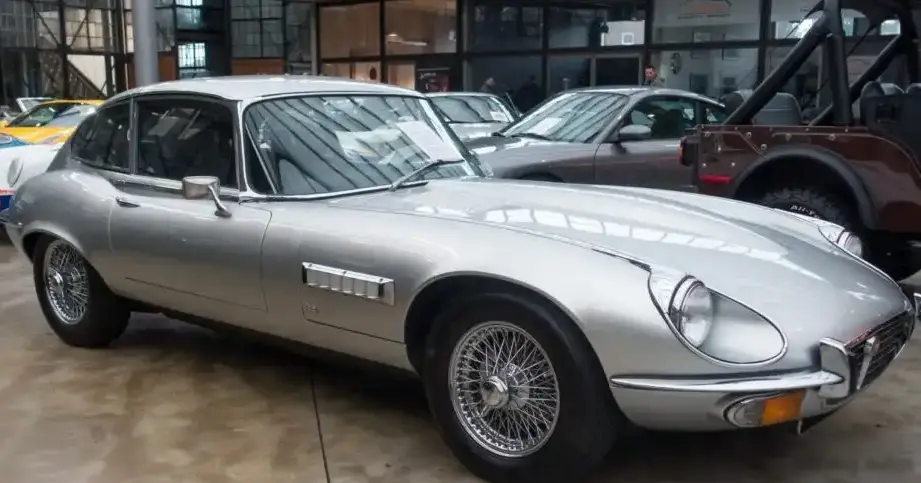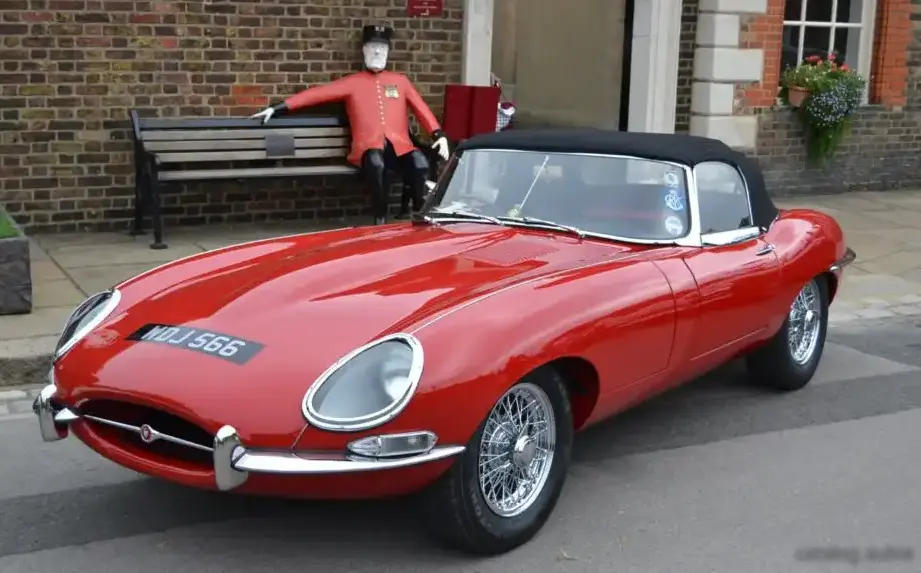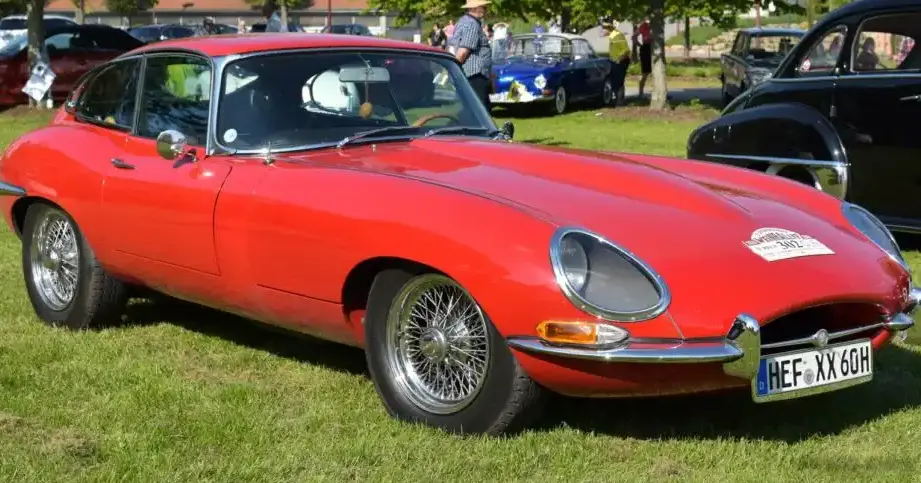
The Jaguar E-Type 4.2 Series 1, produced between 1964 and 1968, represents a significant evolution of the iconic E-Type lineage. Following the initial 3.8-liter version, the 4.2-liter engine offered increased performance and refinement, solidifying the E-Type’s reputation as a world-class grand tourer. This variant occupied a crucial middle ground in the early E-Type range, offering a substantial power upgrade over potential future smaller displacement models while retaining the classic E-Type aesthetic and driving experience. It was a pivotal model in establishing Jaguar’s presence in the lucrative North American market, where its combination of British style and performance proved immensely popular.
Technical Specifications
| Brand | Jaguar |
| Model | E-type |
| Generation | E-Type |
| Type (Engine) | 4.2 (Series 1) (265 Hp) |
| Start of production | 1964 |
| End of production | 1968 |
| Powertrain Architecture | Internal Combustion engine |
| Body type | Coupe |
| Seats | 2 |
| Doors | 2 |
| Fuel Type | Petrol (Gasoline) |
| Acceleration 0 – 100 km/h | 7.3 sec |
| Acceleration 0 – 62 mph | 7.3 sec |
| Acceleration 0 – 60 mph | 6.9 sec |
| Maximum speed | 240 km/h (149.13 mph) |
| Weight-to-power ratio | 4.3 kg/Hp, 231.8 Hp/tonne |
| Weight-to-torque ratio | 3 kg/Nm, 336 Nm/tonne |
| Power | 265 Hp @ 5400 rpm |
| Power per litre | 62.6 Hp/l |
| Torque | 384 Nm @ 4000 rpm (283.22 lb.-ft. @ 4000 rpm) |
| Engine layout | Front, Longitudinal |
| Engine displacement | 4235 cm3 (258.44 cu. in.) |
| Number of cylinders | 6 |
| Engine configuration | Inline |
| Cylinder Bore | 92.2 mm (3.63 in.) |
| Piston Stroke | 105.92 mm (4.17 in.) |
| Compression ratio | 9:1 |
| Number of valves per cylinder | 4 |
| Fuel injection system | Carburettor |
| Engine aspiration | Naturally aspirated engine |
| Valvetrain | DOHC |
| Engine oil capacity | 8.5 l (8.98 US qt | 7.48 UK qt) |
| Coolant | 18.2 l (19.23 US qt | 16.01 UK qt) |
| Kerb Weight | 1143 kg (2519.88 lbs.) |
| Trunk (boot) space – minimum | 220 l (7.77 cu. ft.) |
| Fuel tank capacity | 64 l (16.91 US gal | 14.08 UK gal) |
| Length | 4451 mm (175.24 in.) |
| Width | 1657 mm (65.24 in.) |
| Height | 1219 mm (47.99 in.) |
| Wheelbase | 2438 mm (95.98 in.) |
| Front track | 1270 mm (50 in.) |
| Rear (Back) track | 1270 mm (50 in.) |
| Ride height (ground clearance) | 133 mm (5.24 in.) |
| Minimum turning circle (turning diameter) | 11.3 m (37.07 ft.) |
| Drivetrain Architecture | The Internal combustion engine (ICE) drives the rear wheels of the vehicle. |
| Drive wheel | Rear wheel drive |
| Number of gears and type of gearbox | 4 gears, manual transmission |
| Front suspension | Double wishbone, Transverse stabilizer |
| Rear suspension | Independent multi-link suspension |
| Front brakes | Disc |
| Rear brakes | Disc |
| Steering type | Steering rack and pinion |
| Wheel rims size | Front wheel rims: 15, Rear wheel rims: 15 |
Powertrain & Engine Architecture
The heart of the E-Type 4.2 Series 1 is its 4.2-liter inline-six cylinder engine, designated the XK7 engine family. This engine represented a significant increase in displacement over the earlier 3.8-liter unit, achieved through a slightly larger bore and stroke. The engine utilized a cast iron block and an aluminum cylinder head, a common configuration for Jaguar at the time. It featured a dual overhead camshaft (DOHC) valvetrain, operating three SU HD8 carburetors. These carburetors were crucial to the engine’s performance, delivering a precise air-fuel mixture. The engine’s lubrication system was robust, designed to handle the stresses of high-performance driving. The four-speed manual transmission was standard, providing a direct connection between the engine and the rear wheels. The transmission was fully synchronized, offering smooth gear changes.
Driving Characteristics
The 4.2-liter engine transformed the E-Type’s driving experience. While the 3.8-liter was known for its explosive power, the 4.2 offered a broader, more usable powerband. The increased torque, peaking at 283 lb-ft at 4000 rpm, made the car feel more relaxed at lower speeds and provided effortless acceleration in everyday driving. The four-speed manual transmission, while requiring a skilled driver to extract the most performance, offered precise control. The gear ratios were well-matched to the engine’s characteristics, allowing for brisk acceleration in each gear. Compared to the 3.8, the 4.2 felt less peaky and more forgiving, making it a more enjoyable car for a wider range of drivers. The independent rear suspension contributed to a comfortable ride and excellent handling, although the car could still exhibit oversteer if pushed to its limits.
Equipment & Trim Levels
The E-Type 4.2 Series 1 was relatively sparsely equipped by modern standards, reflecting the car’s focus on driving experience. Standard features included leather upholstery, a wood-rimmed steering wheel, and a comprehensive instrument panel with gauges for speed, tachometer, oil pressure, coolant temperature, and fuel level. The interior was typically finished in black or red leather. Optional extras included a radio, wire wheels, and a hardtop for coupe models. The Series 1 retained the iconic “flat floor” design, providing ample footwell space for the driver and passenger. The exterior was typically finished in a range of vibrant colors, including British Racing Green, Old English White, and Carmen Red.
Chassis & Braking
The E-Type 4.2 Series 1 utilized a monocoque chassis construction, providing a strong and lightweight platform. The suspension featured independent front and rear suspension, with double wishbones at the front and an independent multi-link setup at the rear. This configuration provided a comfortable ride and excellent handling. Disc brakes were fitted to all four wheels, offering powerful and reliable stopping performance. The steering was a rack and pinion system, providing precise and responsive control. The car’s relatively low weight, around 2520 lbs, contributed to its agile handling characteristics.
Market Reception & Comparison
The E-Type 4.2 Series 1 was widely praised by automotive journalists and enthusiasts alike. It was lauded for its stunning design, exhilarating performance, and relatively affordable price. Compared to its rivals, such as the Porsche 911 and the Aston Martin DB5, the E-Type offered a compelling combination of style, performance, and value. The 4.2-liter engine was considered a significant improvement over the 3.8-liter unit, offering increased refinement and usability. Fuel economy, however, was not a strong point, averaging around 17 mpg in real-world driving. Reliability was generally good, although the SU carburetors required periodic maintenance and tuning.
Legacy
The Jaguar E-Type 4.2 Series 1 remains a highly sought-after classic car today. Its iconic design and exhilarating driving experience continue to captivate enthusiasts. The 4.2-liter engine is considered a robust and reliable powerplant, although regular maintenance is essential to keep it in top condition. Original, well-maintained examples command high prices in the collector car market. The E-Type’s influence on automotive design is undeniable, and it continues to inspire car manufacturers today. The 4.2 Series 1, in particular, is regarded as a sweet spot in the E-Type lineage, offering a perfect balance of performance, refinement, and classic British style.