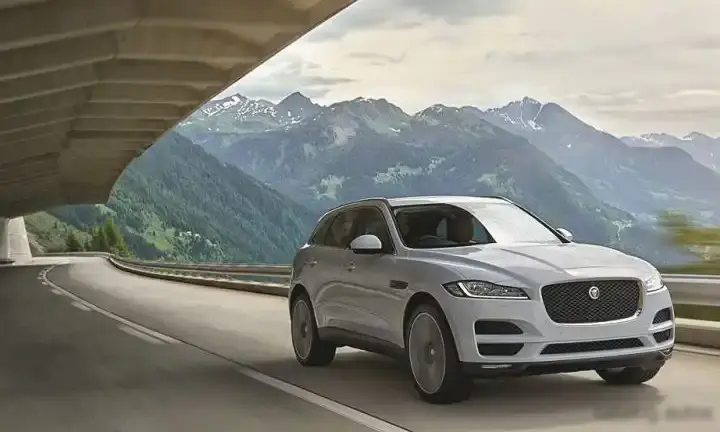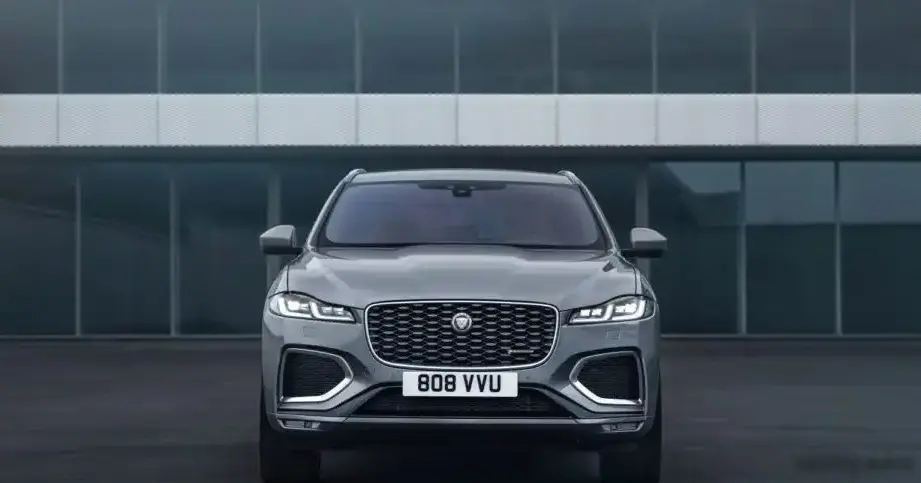
The Jaguar F-Pace 2.0 P400e, introduced with the 2020 facelift, represents Jaguar’s entry into the premium plug-in hybrid SUV market. Production began in September 2020, and it quickly became a significant variant within the F-Pace range, offering a blend of performance, efficiency, and all-weather capability. Positioned as a mid-to-high-range trim, the P400e aimed to attract buyers seeking a more environmentally conscious luxury SUV without sacrificing the Jaguar driving experience. It is built on the Jaguar Land Rover’s aluminum-intensive architecture, sharing its platform with the Range Rover Velar and other models within the group.
Technical Specifications
| Brand | Jaguar |
| Model | F-Pace |
| Generation | F-Pace (facelift 2020) |
| Type (Engine) | 2.0 P400e (404 Hp) Plug-in Hybrid AWD Automatic |
| Start of production | September, 2020 |
| Powertrain Architecture | PHEV (Plug-in Hybrid Electric Vehicle) |
| Body type | SUV |
| Seats | 5 |
| Doors | 5 |
| Combined fuel consumption (WLTP) | 2.2-2.5 l/100 km (106.9 – 94.1 US mpg, 128.4 – 113 UK mpg, 45.5 – 40 km/l) |
| CO2 emissions (WLTP) | 49-57 g/km |
| Fuel Type | Petrol / electricity |
| Acceleration 0 – 100 km/h | 5.3 sec |
| Acceleration 0 – 62 mph | 5.3 sec |
| Acceleration 0 – 60 mph | 5.0 sec |
| Maximum speed | 240 km/h (149.13 mph) |
| Emission standard | Euro 6d |
| Weight-to-power ratio | 5.2 kg/Hp, 191.1 Hp/tonne |
| Weight-to-torque ratio | 3.3 kg/Nm, 302.7 Nm/tonne |
| Gross battery capacity | 17.1 kWh |
| Net (usable) battery capacity | 13.6 kWh |
| Battery technology | Lithium-ion (Li-Ion) |
| Battery location | Under the trunk |
| All-electric range (WLTP) | 47-53 km (29.2 – 32.93 mi) |
| All-electric range | 59 km (36.66 mi) |
| Average Energy consumption (WLTP) | 17.5-17.6 kWh/100 km (28.16 – 28.32 kWh/100 mi, 120 – 119 MPGe, 5.7 – 5.7 km/kWh, 3.6 – 3.5 mi/kWh) |
| Max speed (electric) | 140 km/h (86.99 mph) |
| Electric motor power | 143 Hp |
| Electric motor Torque | 275 Nm (202.83 lb.-ft.) |
| Electric motor location | Between the combustion engine and the transmission |
| System power | 404 Hp @ 5500 rpm |
| System torque | 640 Nm @ 1500-4400 rpm (472.04 lb.-ft. @ 1500-4400 rpm) |
| Power | 300 Hp |
| Power per litre | 150.2 Hp/l |
| Torque | 400 Nm (295.02 lb.-ft.) |
| Engine layout | Front, Longitudinal |
| Engine Model/Code | Ingenium / PT204 |
| Engine displacement | 1997 cm3 (121.86 cu. in.) |
| Number of cylinders | 4 |
| Engine configuration | Inline |
| Cylinder Bore | 83.01 mm (3.27 in.) |
| Piston Stroke | 92.29 mm (3.63 in.) |
| Compression ratio | 9.5:1 |
| Number of valves per cylinder | 4 |
| Fuel injection system | Direct injection |
| Engine aspiration | Turbocharger, Intercooler |
| Valvetrain | DOHC |
| Engine oil capacity | 7 l (7.4 US qt | 6.16 UK qt) |
| Coolant | 16.8 l (17.75 US qt | 14.78 UK qt) |
| Kerb Weight | 2114 kg (4660.57 lbs.) |
| Max. weight | 2690 kg (5930.43 lbs.) |
| Max load | 576 kg (1269.86 lbs.) |
| Trunk (boot) space – minimum | 619 l (21.86 cu. ft.) |
| Trunk (boot) space – maximum | 1662 l (58.69 cu. ft.) |
| Fuel tank capacity | 69 l (18.23 US gal | 15.18 UK gal) |
| Permitted trailer load with brakes (12%) | 2000 kg (4409.25 lbs.) |
| Permitted trailer load without brakes | 750 kg (1653.47 lbs.) |
| Length | 4747 mm (186.89 in.) |
| Width with mirrors folded | 2071 mm (81.54 in.) |
| Width including mirrors | 2175 mm (85.63 in.) |
| Height | 1664 mm (65.51 in.) |
| Wheelbase | 2874 mm (113.15 in.) |
| Front track | 1640 mm (64.57 in.) |
| Rear (Back) track | 1656 mm (65.2 in.) |
| Front overhang | 845 mm (33.27 in.) |
| Rear overhang | 1028 mm (40.47 in.) |
| Ride height (ground clearance) | 213 mm (8.39 in.) |
| Drag coefficient (Cd) | 0.34 |
| Minimum turning circle (turning diameter) | 11.93 m (39.14 ft.) |
| Approach angle | 22.5° |
| Departure angle | 22.9° |
| Ramp-over (brakeover) angle | 19.0° |
| Wading depth | 500 mm (19.69 in.) |
| Drivetrain Architecture | The Internal combustion engine (ICE) and the electric motor permanently drive the rear wheels of the vehicle, capable of running in full electric or mixed mode, and if necessary through the electrically or mechanically controlled clutch, the front wheels are driven. |
| Drive wheel | All wheel drive (4×4) |
| Number of gears and type of gearbox | 8 gears, automatic transmission ZF |
| Front suspension | Double wishbone |
| Rear suspension | Independent multi-link suspension |
| Front brakes | Ventilated discs, 370 mm |
| Rear brakes | Ventilated discs, 325 mm |
INTRODUCTION
The Jaguar F-Pace 2.0 P400e, launched in 2020 as part of the model’s facelift, combines a 2.0-liter turbocharged four-cylinder Ingenium engine with an electric motor and a 17.1 kWh battery pack. This plug-in hybrid powertrain delivers a combined output of 404 horsepower and 472 lb-ft of torque, making it one of the quicker variants in the F-Pace lineup. The P400e was designed to appeal to buyers seeking a more efficient and environmentally friendly option without compromising on the F-Pace’s sporty character and luxurious interior. It slots into the range above the base 2.0-liter models and below the more powerful six-cylinder options.
Powertrain & Engine Architecture
At the heart of the P400e is Jaguar Land Rover’s Ingenium engine family, specifically the PT204 2.0-liter four-cylinder unit. This engine utilizes direct injection and a single twin-scroll turbocharger to produce 300 horsepower and 295 lb-ft of torque. The electric motor, positioned between the engine and the eight-speed ZF automatic transmission, adds another 143 horsepower and 275 lb-ft of torque. The battery pack, a lithium-ion unit with a usable capacity of 13.6 kWh, is located under the trunk floor, slightly reducing cargo space. The powertrain is managed by a sophisticated control system that seamlessly blends power from the engine and motor, offering both all-electric driving and a variety of hybrid modes. The eight-speed automatic transmission is calibrated to work in harmony with the electric motor, providing smooth and efficient gear changes.
Driving Characteristics
The F-Pace P400e delivers a unique driving experience. In all-electric mode, it offers near-silent acceleration and a range of up to 33 miles (WLTP), sufficient for many daily commutes. When the battery is depleted or more power is needed, the petrol engine seamlessly kicks in, providing brisk acceleration. The combined output of 404 hp allows for a 0-60 mph time of around 5.0 seconds. Compared to the 300 hp petrol-only F-Pace, the P400e offers noticeably stronger acceleration, particularly in the mid-range. The added weight of the battery pack does slightly impact handling agility, but the F-Pace retains its composed and comfortable ride quality. The transmission’s gear ratios are optimized for both efficiency and performance, providing responsive acceleration in all driving situations.
Equipment & Trim Levels
The P400e typically came well-equipped, often mirroring the features of the higher-spec petrol models. Standard features included leather upholstery, a touchscreen infotainment system with Apple CarPlay and Android Auto, navigation, a panoramic sunroof, and a suite of advanced driver-assistance systems such as adaptive cruise control, lane keep assist, and automatic emergency braking. Optional extras included upgraded audio systems, heated and ventilated seats, and a head-up display. Interior trim options varied, allowing buyers to personalize the cabin to their preferences. The P400e’s trim levels generally aligned with the broader F-Pace range, offering options like S, SE, and HSE, each adding progressively more luxury and technology.
Chassis & Braking
The F-Pace P400e utilizes a double wishbone front suspension and an independent multi-link rear suspension, providing a comfortable and controlled ride. The suspension is tuned to manage the added weight of the battery pack without compromising handling. Braking duties are handled by ventilated discs on all four wheels, with larger discs at the front for improved stopping power. The P400e incorporates regenerative braking, which helps to recapture energy during deceleration and recharge the battery. The standard fitment of all-wheel drive ensures excellent traction in all weather conditions. The steering is electrically assisted, providing a precise and responsive feel.
Market Reception & Comparison
The F-Pace P400e was generally well-received by automotive critics. It was praised for its strong performance, refined driving experience, and impressive fuel efficiency. Compared to the petrol-only F-Pace models, the P400e offered significantly lower running costs, particularly for drivers who could regularly utilize the electric driving range. However, the P400e’s higher price tag and slightly reduced cargo space were noted as potential drawbacks. Compared to other plug-in hybrid SUVs in the premium segment, such as the BMW X3 xDrive30e and the Volvo XC60 Recharge, the F-Pace P400e offered a compelling combination of performance, luxury, and technology.
Legacy
The Jaguar F-Pace P400e represents an important step in Jaguar’s transition towards electrification. While the model has been superseded by newer plug-in hybrid variants, the 2020-2023 P400e remains a desirable option in the used car market. The Ingenium powertrain has proven to be relatively reliable, although regular maintenance is essential. The battery pack is expected to retain a significant portion of its capacity for many years, but potential buyers should check the battery’s health before purchasing. The P400e’s blend of performance, efficiency, and luxury continues to appeal to buyers seeking a premium plug-in hybrid SUV.