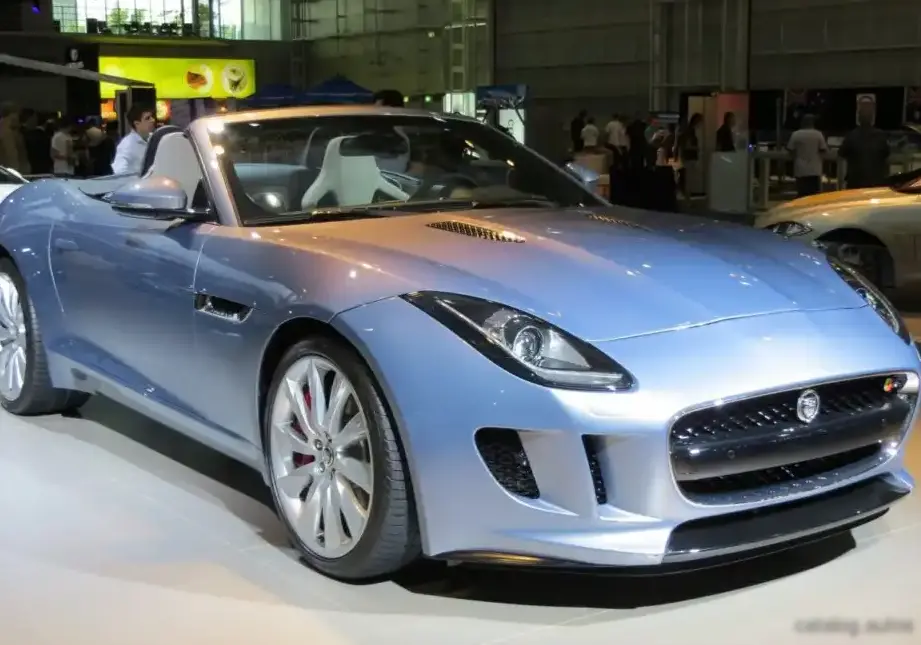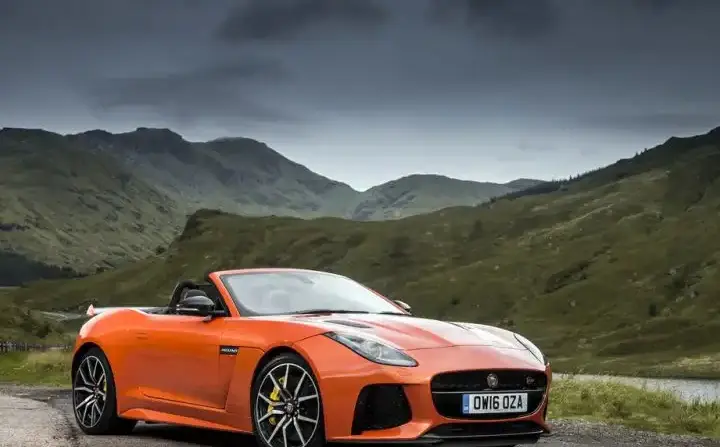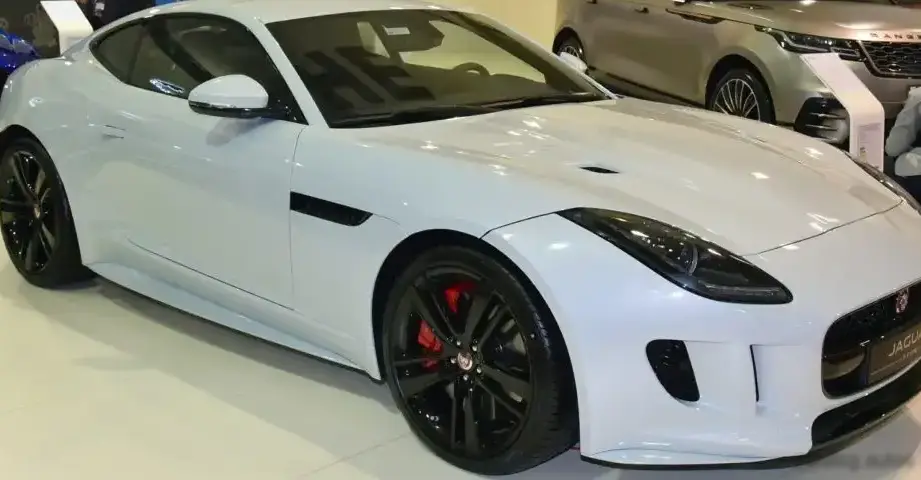
The Jaguar F-Type Coupe 3.0 V6 (340 Hp) represents a pivotal entry point into the acclaimed F-Type range, launched in 2014 and continuing through the 2017 model year. Positioned as the mid-range offering within the initial F-Type Coupe lineup, it bridged the gap between the more accessible 2.0L four-cylinder models and the high-performance V8 variants. This model aimed to deliver a compelling blend of sporting dynamics, sophisticated styling, and attainable performance, embodying Jaguar’s renewed focus on driver-focused vehicles. It was built on the Jaguar XK platform, representing a return to a more compact, sports car focused design for the brand.
Technical Specifications
| Brand | Jaguar |
| Model | F-type |
| Generation | F-type Coupe |
| Type (Engine) | 3.0 V6 (340 Hp) |
| Start of production | 2014 year |
| End of production | 2017 year |
| Powertrain Architecture | Internal Combustion engine |
| Body type | Coupe |
| Seats | 2 |
| Doors | 2 |
| Fuel consumption (economy) – urban | 13.5 l/100 km (17.4 US mpg, 20.9 UK mpg, 7.4 km/l) |
| Fuel consumption (economy) – extra urban | 7.6 l/100 km (30.9 US mpg, 37.2 UK mpg, 13.2 km/l) |
| Fuel consumption (economy) – combined | 9.8 l/100 km (24 US mpg, 28.8 UK mpg, 10.2 km/l) |
| CO2 emissions | 234 g/km |
| Fuel Type | Petrol (Gasoline) |
| Acceleration 0 – 100 km/h | 5.7 sec |
| Acceleration 0 – 62 mph | 5.7 sec |
| Acceleration 0 – 60 mph | 5.4 sec |
| Maximum speed | 260 km/h (161.56 mph) |
| Weight-to-power ratio | 4.6 kg/Hp, 217 Hp/tonne |
| Weight-to-torque ratio | 3.5 kg/Nm, 287.2 Nm/tonne |
| Power | 340 Hp @ 6500 rpm |
| Power per litre | 113.5 Hp/l |
| Torque | 450 Nm @ 3500-5000 rpm (331.9 lb.-ft. @ 3500-5000 rpm) |
| Engine layout | Front, Longitudinal |
| Engine Model/Code | 306PS |
| Engine displacement | 2995 cm3 (182.77 cu. in.) |
| Number of cylinders | 6 |
| Engine configuration | V-engine |
| Cylinder Bore | 84.5 mm (3.33 in.) |
| Piston Stroke | 89 mm (3.5 in.) |
| Compression ratio | 10.5:1 |
| Number of valves per cylinder | 4 |
| Fuel injection system | Direct injection |
| Engine aspiration | Supercharger, Intercooler |
| Engine oil capacity | 7.25 l (7.66 US qt | 6.38 UK qt) |
| Coolant | 9.6 l (10.14 US qt | 8.45 UK qt) |
| Kerb Weight | 1567 kg (3454.64 lbs.) |
| Max. weight | 2000 kg (4409.25 lbs.) |
| Max load | 433 kg (954.6 lbs.) |
| Trunk (boot) space – minimum | 315 l (11.12 cu. ft.) |
| Trunk (boot) space – maximum | 407 l (14.37 cu. ft.) |
| Fuel tank capacity | 70 l (18.49 US gal | 15.4 UK gal) |
| Length | 4470 mm (175.98 in.) |
| Width | 1923 mm (75.71 in.) |
| Width including mirrors | 2042 mm (80.39 in.) |
| Height | 1309 mm (51.54 in.) |
| Wheelbase | 2622 mm (103.23 in.) |
| Front track | 1597 mm (62.87 in.) |
| Rear (Back) track | 1649 mm (64.92 in.) |
| Ride height (ground clearance) | 108 mm (4.25 in.) |
| Minimum turning circle (turning diameter) | 11 m (36.09 ft.) |
| Drivetrain Architecture | The Internal combustion engine (ICE) drives the rear wheels of the vehicle. |
| Drive wheel | Rear wheel drive |
| Number of gears and type of gearbox | 6 gears, manual transmission |
| Front suspension | Double wishbone |
| Rear suspension | Double wishbone |
| Front brakes | Ventilated discs |
| Rear brakes | Disc |
| Assisting systems | ABS (Anti-lock braking system) |
| Steering type | Steering rack and pinion |
| Tires size | 245/45 R18; 275/40 R18 |
| Wheel rims size | 8.5J x 18; 9.5J x 18 |
Powertrain & Engine Architecture
At the heart of the F-Type Coupe 3.0 V6 (340 Hp) lies Jaguar’s AJ306 engine, a 2.995-liter supercharged V6. This engine, part of the AJ family, utilizes a sixth-generation Eaton supercharger to deliver its power. The engine employs direct fuel injection, optimizing combustion efficiency and responsiveness. The valvetrain features four valves per cylinder, contributing to its high-revving nature. The engine code 306PS indicates the metric horsepower rating. The 340 horsepower and 331.9 lb-ft of torque are produced between 3500 and 5000 rpm, providing a broad and usable powerband. The engine is longitudinally mounted at the front of the vehicle, driving the rear wheels. The standard transmission for this variant was a six-speed manual, though an eight-speed automatic transmission was also available as an option, impacting both performance and fuel economy.
Driving Characteristics
The 3.0 V6 F-Type Coupe offered a distinctly engaging driving experience. While not as brutally fast as the V8 models, the supercharged V6 provided ample power for spirited driving. The manual transmission version delivered a more connected feel, requiring active driver involvement. The automatic, while offering convenience, could feel slightly less responsive. Acceleration from 0-60 mph took approximately 5.4 seconds, making it a genuinely quick car. The supercharger provides instant throttle response, eliminating much of the turbo lag found in turbocharged engines. The chassis, tuned for agility, offered precise steering and well-controlled body roll. The relatively lighter weight compared to the V8 models contributed to a more nimble feel.
Equipment & Trim Levels
The 3.0 V6 F-Type Coupe came reasonably well-equipped as standard. Interior features typically included leather upholstery, power-adjustable seats, a touchscreen infotainment system, and automatic climate control. Optional extras included premium audio systems, navigation, heated seats, and various cosmetic enhancements. Trim levels were relatively simple, with options primarily revolving around adding packages of features. The interior design emphasized a driver-focused layout, with a sporty steering wheel and well-placed controls. Exterior styling cues included a sleek coupe profile, distinctive headlights, and a rear spoiler.
Chassis & Braking
The F-Type Coupe utilized an aluminum chassis, contributing to its relatively low weight. The suspension system employed double wishbones at both the front and rear, providing a balance of comfort and handling precision. Brakes consisted of ventilated discs all around, offering strong stopping power. ABS (Anti-lock Braking System) was standard. The rear track was slightly wider than the front, enhancing stability. The ride height was relatively low, contributing to the car’s sporty stance. The steering system employed a rack and pinion setup, providing direct and responsive steering feel.
Market Reception & Comparison
The Jaguar F-Type Coupe 3.0 V6 (340 Hp) was generally well-received by automotive critics. It was praised for its stylish design, engaging driving dynamics, and accessible performance. Compared to the 2.0L four-cylinder models, the V6 offered a significant step up in power and refinement. Compared to the V8 models, it provided a more affordable entry point into the F-Type range, albeit with slightly less outright performance. Fuel economy was reasonable for a sports car of its caliber, averaging around 24 US mpg in combined driving. Reliability was generally good, although some owners reported minor issues with the infotainment system.
Legacy
The Jaguar F-Type Coupe 3.0 V6 (340 Hp) remains a desirable used sports car. The AJ306 engine has proven to be relatively robust, with proper maintenance. The availability of both manual and automatic transmissions caters to different driver preferences. The F-Type’s striking design and engaging driving dynamics have ensured its continued appeal. Values have remained relatively stable, reflecting its enduring popularity. It represents a significant chapter in Jaguar’s history, marking a return to form for the brand and establishing the F-Type as a modern sports car icon.