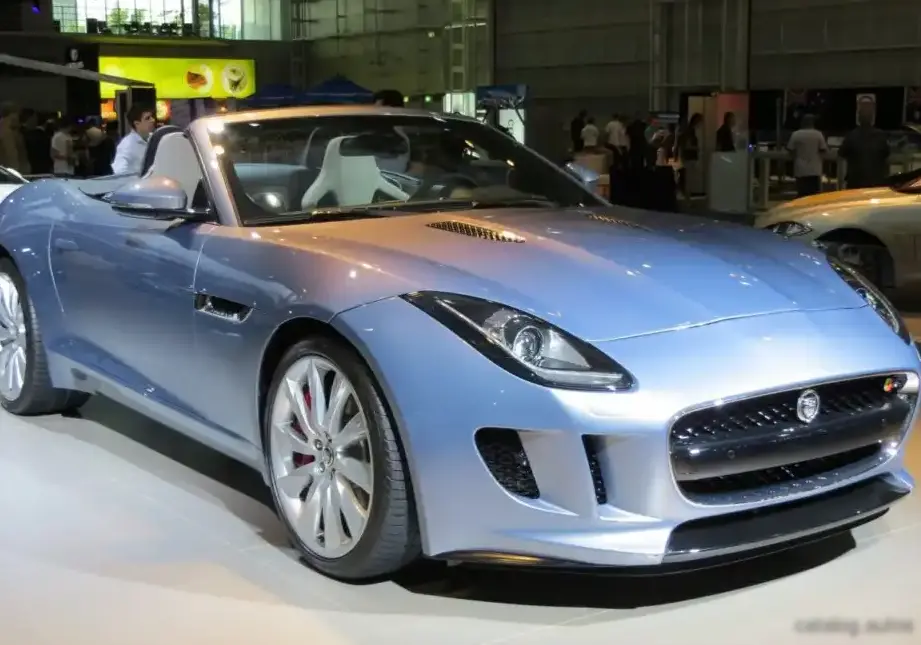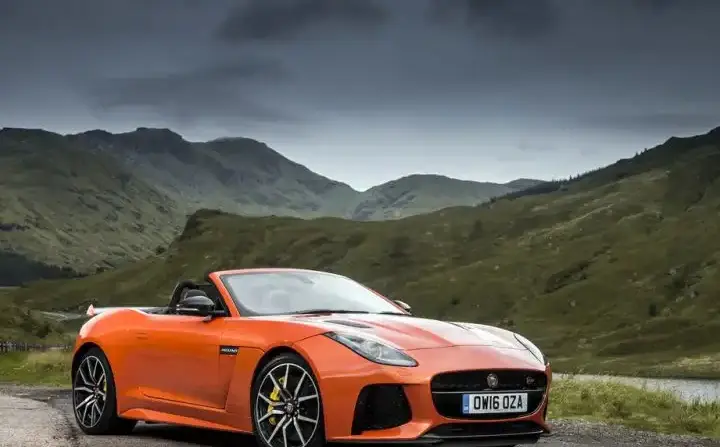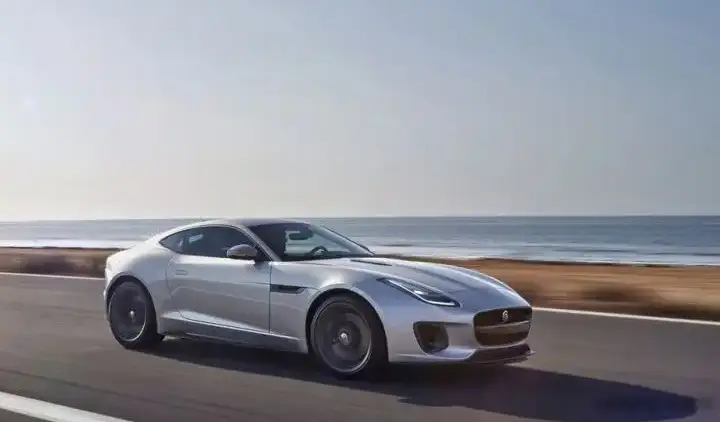
The Jaguar F-Type Coupe, specifically the 3.0 V6 (400 hp) Automatic variant produced from 2017 to 2018, represents a significant evolution of Jaguar’s sports car lineage. This facelifted model, part of the first-generation F-Type (X152) series, aimed to refine the original’s already compelling formula with enhanced performance, technology, and styling. Positioned as a mid-range offering within the F-Type Coupe lineup, it bridged the gap between the entry-level 2.0L four-cylinder models and the high-performance V8 derivatives. The 2017 update brought subtle but impactful changes to the exterior design, interior refinement, and crucially, powertrain calibration, solidifying the F-Type’s reputation as a genuine competitor in the premium sports car segment.
Technical Specifications
| Brand | Jaguar |
| Model | F-type |
| Generation | F-type Coupe (facelift 2017) |
| Type (Engine) | 3.0 V6 (400 Hp) Automatic |
| Start of production | 2017 |
| End of production | 2018 |
| Powertrain Architecture | Internal Combustion engine |
| Body type | Coupe |
| Seats | 2 |
| Doors | 2 |
| Fuel consumption (economy) – combined | 8.6 l/100 km |
| Fuel consumption (economy) – combined | 27.4 US mpg |
| Fuel consumption (economy) – combined | 32.8 UK mpg |
| Fuel consumption (economy) – combined | 11.6 km/l |
| CO2 emissions | 203 g/km |
| Fuel Type | Petrol (Gasoline) |
| Acceleration 0 – 100 km/h | 4.9 sec |
| Acceleration 0 – 62 mph | 4.9 sec |
| Acceleration 0 – 60 mph | 4.7 sec |
| Maximum speed | 275 km/h |
| Maximum speed | 170.88 mph |
| Emission standard | Euro 6 |
| Weight-to-power ratio | 4 kg/Hp |
| Weight-to-power ratio | 250.9 Hp/tonne |
| Weight-to-torque ratio | 3.5 kg/Nm |
| Weight-to-torque ratio | 288.6 Nm/tonne |
| Power | 400 Hp @ 6500 rpm |
| Power per litre | 133.6 Hp/l |
| Torque | 460 Nm @ 3500-5500 rpm |
| Torque | 339.28 lb.-ft. @ 3500-5500 rpm |
| Engine layout | Front, Longitudinal |
| Engine Model/Code | 306PS |
| Engine displacement | 2995 cm3 |
| Engine displacement | 182.77 cu. in. |
| Number of cylinders | 6 |
| Engine configuration | V-engine |
| Cylinder Bore | 84.5 mm |
| Cylinder Bore | 3.33 in. |
| Piston Stroke | 89 mm |
| Piston Stroke | 3.5 in. |
| Compression ratio | 10.5:1 |
| Number of valves per cylinder | 4 |
| Fuel injection system | Direct injection |
| Engine aspiration | Supercharger, Intercooler |
| Valvetrain | DOHC |
| Engine oil capacity | 7.25 l |
| Engine oil capacity | 7.66 US qt | 6.38 UK qt |
| Coolant | 9.6 l |
| Coolant | 10.14 US qt | 8.45 UK qt |
| Kerb Weight | 1594 kg |
| Kerb Weight | 3514.17 lbs. |
| Trunk (boot) space – minimum | 310 l |
| Trunk (boot) space – minimum | 10.95 cu. ft. |
| Trunk (boot) space – maximum | 408 l |
| Trunk (boot) space – maximum | 14.41 cu. ft. |
| Fuel tank capacity | 70 l |
| Fuel tank capacity | 18.49 US gal | 15.4 UK gal |
| Length | 4482 mm |
| Length | 176.46 in. |
| Width | 1923 mm |
| Width | 75.71 in. |
| Width including mirrors | 2042 mm |
| Width including mirrors | 80.39 in. |
| Height | 1311 mm |
| Height | 51.61 in. |
| Wheelbase | 2622 mm |
| Wheelbase | 103.23 in. |
| Front track | 1585 mm |
| Front track | 62.4 in. |
| Rear (Back) track | 1627 mm |
| Rear (Back) track | 64.06 in. |
| Drivetrain Architecture | The Internal combustion engine (ICE) drives the rear wheels of the vehicle. |
| Drive wheel | Rear wheel drive |
| Number of gears and type of gearbox | 8 gears, automatic transmission |
| Front suspension | Double wishbone |
| Rear suspension | Double wishbone |
| Front brakes | Ventilated discs |
| Rear brakes | Ventilated discs |
| Assisting systems | ABS (Anti-lock braking system) |
| Steering type | Steering rack and pinion |
| Power steering | Electric Steering |
Powertrain & Engine Architecture
At the heart of the 2017-2018 F-Type Coupe 3.0 V6 Automatic lies Jaguar’s AJ306 engine. This 2995cc (182.77 cu. in.) V6 is a supercharged powerplant, utilizing a Roots-type supercharger for immediate throttle response and a broad torque curve. The engine features direct fuel injection, a double overhead camshaft (DOHC) valvetrain with four valves per cylinder, and a compression ratio of 10.5:1. The ‘306PS’ designation refers to the engine’s metric horsepower rating (approximately 302 bhp), though output was tuned to 400 hp for the US market. The engine’s architecture is longitudinally mounted at the front of the vehicle, driving the rear wheels. Paired with this engine is ZF’s 8HP80 eight-speed automatic transmission, known for its smooth shifts and responsiveness. This transmission features a torque converter and allows for both fully automatic operation and manual gear selection via paddle shifters.
Driving Characteristics
The 400 hp V6 automatic F-Type delivers a compelling blend of performance and usability. Acceleration from 0-60 mph takes approximately 4.7 seconds, and it achieves a top speed of 170.88 mph. The supercharger provides instant power delivery, making overtaking effortless. The eight-speed automatic transmission is well-programmed, offering quick and seamless gear changes. Compared to the higher-output V8 models, the V6 feels more accessible and less demanding to drive daily. While lacking the raw visceral excitement of the V8, the V6 offers a more balanced driving experience, with less weight over the front axle contributing to improved handling. Compared to the six-speed manual versions of the same engine, the automatic provides greater convenience and arguably quicker acceleration due to the transmission’s ability to maintain optimal engine speed during shifts.
Equipment & Trim Levels
The 2017-2018 F-Type Coupe 3.0 V6 Automatic came standard with a generous array of features, including leather upholstery, power-adjustable seats, a premium sound system, and a touchscreen infotainment system. Standard exterior features included LED headlights, alloy wheels, and a rear spoiler. Optional extras included a panoramic sunroof, upgraded leather trim, adaptive dampers, and a suite of advanced driver-assistance systems. The interior design was focused on a driver-centric layout, with a sporty steering wheel and well-placed controls. The trim level generally sat in the middle of the F-Type range, offering a step up in performance and luxury compared to the four-cylinder models, but without the outright extravagance of the V8 versions.
Chassis & Braking
The F-Type Coupe utilizes an aluminum-intensive chassis, contributing to its relatively low weight. The suspension consists of double wishbones at both the front and rear, providing a firm yet controlled ride. The 3.0 V6 models were equipped with ventilated disc brakes on all four wheels, providing ample stopping power. ABS (Anti-lock Braking System) was standard. The steering is a rack-and-pinion system with electric power assistance, offering precise and responsive handling. The suspension tuning was geared towards a sporty driving experience, prioritizing handling and body control over outright comfort.
Market Reception & Comparison
The 2017 facelifted F-Type Coupe was generally well-received by automotive critics. The 3.0 V6 Automatic variant was praised for its strong performance, refined ride, and attractive styling. Fuel economy was considered reasonable for a sports car of its caliber, achieving around 27.4 US mpg in combined driving. Compared to rivals such as the Porsche 911 and BMW 6 Series, the F-Type offered a more distinctive design and a more engaging driving experience, though some critics noted that the interior quality wasn’t quite on par with its German competitors. Reliability reports have been mixed, with some owners experiencing issues with the infotainment system and electrical components.
Legacy
The Jaguar F-Type Coupe 3.0 V6 Automatic (2017-2018) remains a desirable sports car in the used market. The AJ306 engine, while not without its potential maintenance needs (particularly regarding timing chain tensioners), is generally considered a robust and reliable powerplant when properly maintained. The ZF 8HP80 transmission is also known for its durability. The facelifted model benefits from the improvements made during the 2017 update, making it a more refined and technologically advanced offering than earlier versions. Its combination of performance, style, and relative affordability has ensured its continued appeal to enthusiasts seeking a genuine sports car experience.