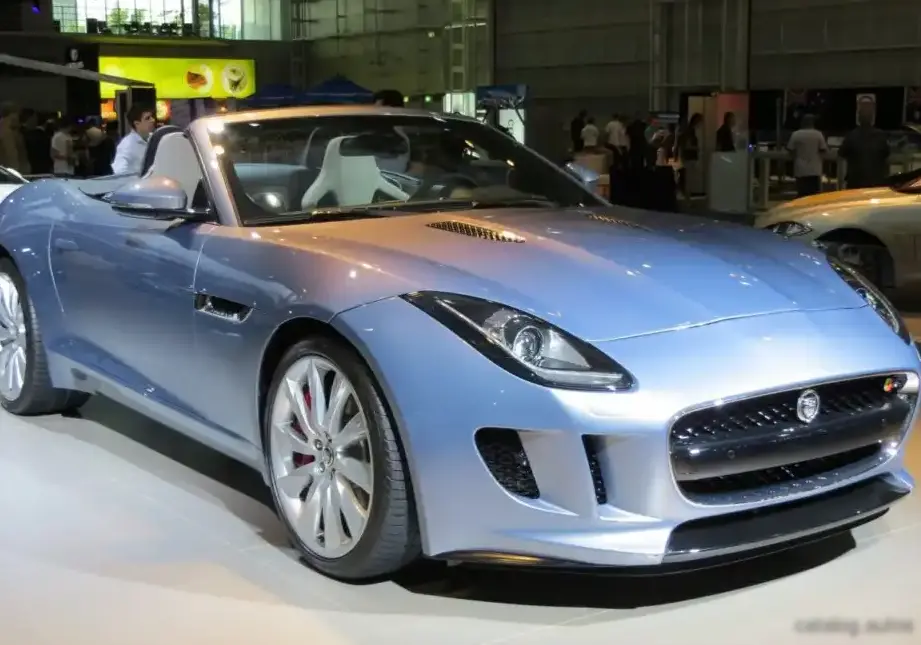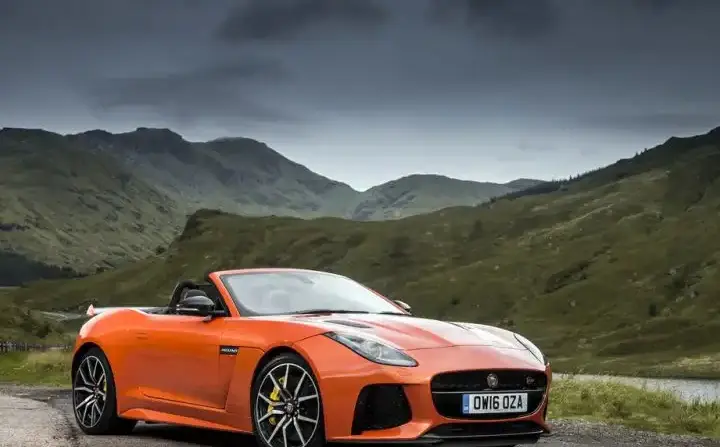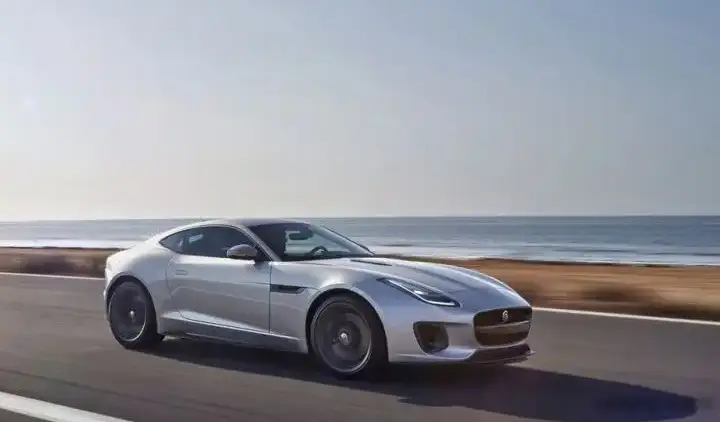
The Jaguar F-Type Coupe, specifically the P380 V6 variant with an automatic transmission, represents a compelling blend of performance and luxury within the broader F-Type lineage. Introduced as part of the facelifted model in 2019 and continuing through 2020, this version occupied a significant middle ground in the F-Type range, offering a substantial power upgrade over the base four-cylinder models while remaining more accessible than the supercharged V8 options. It built upon the foundation laid by the original F-Type (X152) launched in 2013, refining the design and enhancing the driving experience.
Technical Specifications
| Brand | Jaguar |
| Model | F-type |
| Generation | F-type Coupe (facelift 2017) |
| Type (Engine) | P380 V6 (380 Hp) Automatic |
| Start of production | 2019 year |
| End of production | 2020 year |
| Powertrain Architecture | Internal Combustion engine |
| Body type | Coupe |
| Seats | 2 |
| Doors | 2 |
| Fuel consumption (economy) – urban | 13.7 l/100 km (17.2 US mpg, 20.6 UK mpg, 7.3 km/l) |
| Fuel consumption (economy) – extra urban | 7.6 l/100 km (30.9 US mpg, 37.2 UK mpg, 13.2 km/l) |
| Fuel consumption (economy) – combined | 9.8 l/100 km (24 US mpg, 28.8 UK mpg, 10.2 km/l) |
| CO2 emissions | 223 g/km |
| Fuel Type | Petrol (Gasoline) |
| Acceleration 0 – 100 km/h | 4.9 sec |
| Acceleration 0 – 62 mph | 4.9 sec |
| Acceleration 0 – 60 mph | 4.7 sec |
| Maximum speed | 275 km/h (170.88 mph) |
| Emission standard | Euro 6d-Temp |
| Weight-to-power ratio | 4 kg/Hp, 250.2 Hp/tonne |
| Weight-to-torque ratio | 3.3 kg/Nm, 302.8 Nm/tonne |
| Power | 380 Hp @ 6500 rpm |
| Power per litre | 126.9 Hp/l |
| Torque | 460 Nm @ 3500-5500 rpm (339.28 lb.-ft. @ 3500-5500 rpm) |
| Engine layout | Front, Longitudinal |
| Engine Model/Code | 306PS |
| Engine displacement | 2995 cm3 (182.77 cu. in.) |
| Number of cylinders | 6 |
| Engine configuration | Inline |
| Cylinder Bore | 84.5 mm (3.33 in.) |
| Piston Stroke | 89 mm (3.5 in.) |
| Compression ratio | 10.5:1 |
| Number of valves per cylinder | 4 |
| Fuel injection system | Direct injection |
| Engine aspiration | Supercharger, Intercooler |
| Engine oil capacity | 7.25 l (7.66 US qt | 6.38 UK qt) |
| Coolant | 9.6 l (10.14 US qt | 8.45 UK qt) |
| Kerb Weight | 1519 kg (3348.82 lbs.) |
| Max. weight | 2050 kg (4519.48 lbs.) |
| Max load | 531 kg (1170.65 lbs.) |
| Trunk (boot) space – minimum | 310 l (10.95 cu. ft.) |
| Trunk (boot) space – maximum | 408 l (14.41 cu. ft.) |
| Fuel tank capacity | 70 l (18.49 US gal | 15.4 UK gal) |
| Length | 4482 mm (176.46 in.) |
| Width | 1923 mm (75.71 in.) |
| Width including mirrors | 2042 mm (80.39 in.) |
| Height | 1311 mm (51.61 in.) |
| Wheelbase | 2622 mm (103.23 in.) |
| Front track | 1597 mm (62.87 in.) |
| Rear (Back) track | 1649 mm (64.92 in.) |
| Ride height (ground clearance) | 100 mm (3.94 in.) |
| Minimum turning circle (turning diameter) | 11.2 m (36.75 ft.) |
| Drivetrain Architecture | Rear wheel drive |
| Drive wheel | Rear wheel drive |
| Number of gears and type of gearbox | 8 gears, automatic transmission |
| Front brakes | Disc, 380 mm |
| Rear brakes | Disc, 325 mm |
| Assisting systems | ABS (Anti-lock braking system) |
| Tires size | 255/35 R20; 295/30 R20 |
| Wheel rims size | 9J x 20; 10.5J x 20 |
Powertrain & Engine Architecture
At the heart of the P380 lies Jaguar Land Rover’s AJ306 engine, a 2.9-liter supercharged inline-six cylinder engine. This engine, part of the Ingenium engine family, utilizes direct injection and a twin-scroll turbocharger to deliver a potent 380 horsepower and 460 Nm (339 lb-ft) of torque. The supercharger, positioned centrally in the V of the engine, provides immediate throttle response and minimizes turbo lag. The engine’s architecture is designed for both efficiency and performance, incorporating features like variable valve timing and a sophisticated engine management system. The eight-speed automatic transmission, sourced from ZF, is a crucial component of the powertrain. It offers smooth and quick shifts, contributing to the car’s overall responsiveness. The transmission is programmed with various driving modes, including a Sport mode for more aggressive shifting and a manual mode for driver control.
Driving Characteristics
The F-Type P380 Automatic delivers a distinctly engaging driving experience. The supercharged inline-six provides ample power throughout the rev range, enabling brisk acceleration – 0 to 60 mph in approximately 4.7 seconds. While not as brutally fast as the V8 models, the P380 offers a more accessible and manageable power delivery. The eight-speed automatic transmission is well-matched to the engine, providing seamless gear changes and contributing to a refined cruising experience. The rear-wheel-drive configuration enhances the car’s handling balance, providing a sporty and connected feel. Compared to the manual transmission versions, the automatic offers greater convenience, particularly in urban driving. However, some enthusiasts may prefer the more direct control offered by the manual gearbox.
Equipment & Trim Levels
The P380 trim typically included a generous array of standard features. These included leather upholstery, heated front seats, a premium sound system, a touchscreen infotainment system with navigation, and a suite of driver-assistance technologies such as lane departure warning and automatic emergency braking. Optional extras included a panoramic sunroof, upgraded leather options, and a configurable dynamics pack that further enhanced the car’s handling and performance. The interior design emphasized luxury and driver focus, with a cockpit-style layout and high-quality materials.
Chassis & Braking
The F-Type Coupe utilizes an aluminum-intensive chassis, contributing to its relatively low weight and high structural rigidity. The suspension system features double wishbones at the front and a multi-link setup at the rear, providing a comfortable yet controlled ride. The P380 variant typically came equipped with 380mm front and 325mm rear disc brakes, providing ample stopping power. ABS (Anti-lock Braking System) is standard, enhancing safety and stability during braking. The steering is electrically assisted, offering precise and responsive control.
Market Reception & Comparison
The F-Type P380 Automatic was generally well-received by automotive critics. It was praised for its blend of performance, luxury, and refinement. Fuel economy, while not exceptional, was considered reasonable for a sports car of its caliber, averaging around 24 mpg combined. Compared to the four-cylinder F-Type, the P380 offered a significant performance upgrade. In contrast to the V8 models, it provided a more accessible price point and a slightly more manageable driving experience. Reliability reports have been generally positive, although, like any complex vehicle, the F-Type can be prone to occasional issues with its electronics and cooling system.
Legacy
The Jaguar F-Type P380 Automatic has established itself as a desirable used sports car. Its combination of performance, style, and relative reliability has made it a popular choice among enthusiasts. The Ingenium engine has proven to be a robust and capable powerplant, and the ZF eight-speed automatic transmission is known for its durability. As the F-Type continues to evolve, the P380 variant represents a sweet spot in the lineup, offering a compelling balance of performance and practicality.