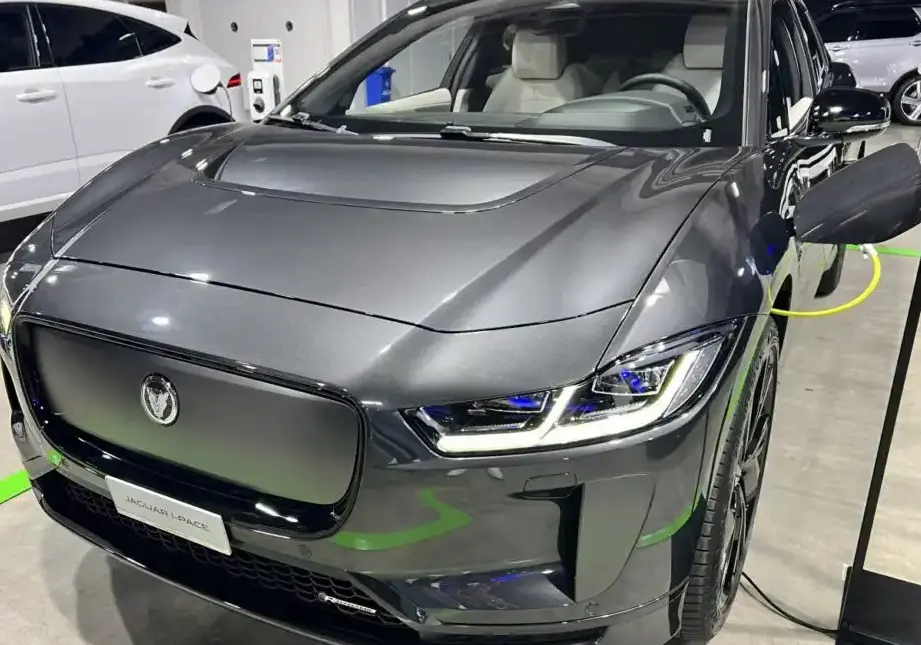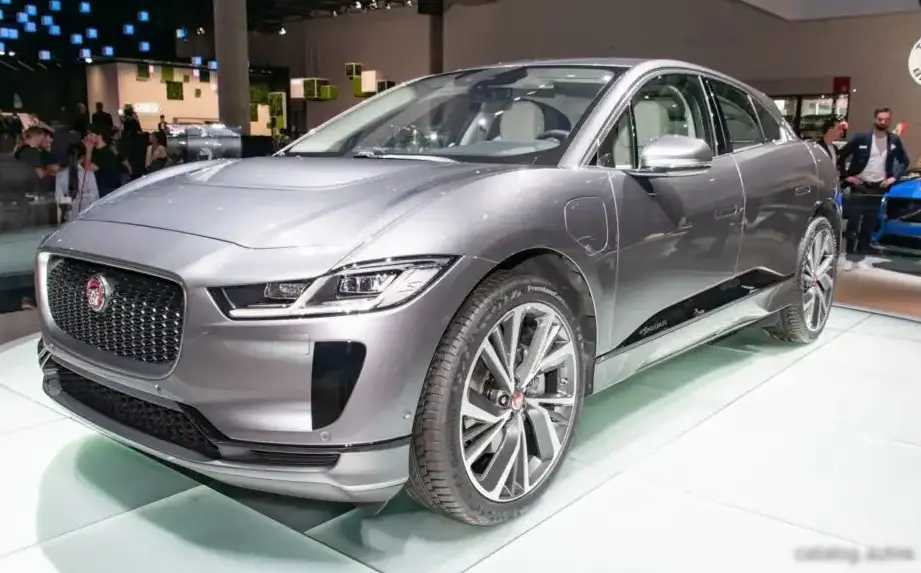
The Jaguar I-Pace EV320 90 kWh, producing 320 horsepower, was a pivotal model in Jaguar’s transition to electric vehicles. Introduced in August 2020 and remaining in production through 2021, it represented the brand’s first foray into the all-electric crossover segment. Positioned as a premium offering, the EV320 aimed to compete with vehicles like the Tesla Model X and Audi e-tron, offering a blend of performance, luxury, and practicality. It was built on Jaguar’s dedicated EV architecture, designed to maximize interior space and optimize battery placement for a low center of gravity.
Technical Specifications
| Brand | Jaguar |
| Model | I-Pace |
| Generation | I-Pace |
| Type (Engine) | EV320 90 kWh (320 Hp) AWD |
| Start of production | August, 2020 |
| End of production | 2021 |
| Powertrain Architecture | BEV (Electric Vehicle) |
| Body type | SUV, Crossover |
| Seats | 5 |
| Doors | 5 |
| Fuel Type | Electricity |
| Acceleration 0 – 100 km/h | 6.4 sec |
| Acceleration 0 – 62 mph | 6.4 sec |
| Acceleration 0 – 60 mph | 6.1 sec |
| Maximum speed | 180 km/h (111.85 mph) |
| Weight-to-power ratio | 6.7 kg/Hp, 150 Hp/tonne |
| Weight-to-torque ratio | 4.3 kg/Nm, 234.4 Nm/tonne |
| Gross battery capacity | 90 kWh |
| Net (usable) battery capacity | 84.7 kWh |
| Battery voltage | 389 V |
| Battery technology | Lithium-ion (Li-Ion) |
| Battery weight | 606 kg (1336 lbs) |
| Battery location | Below the floor |
| All-electric range (WLTP) | 407-470 km (252.9 – 292.04 mi) |
| Average Energy consumption (WLTP) | 22-25.2 kWh/100 km (35.41 – 40.56 kWh/100 mi) |
| MPGe | 95 – 83 |
| km/kWh | 4.5 – 4 |
| mi/kWh | 2.8 – 2.5 |
| Electric motor 1 power | 160 Hp |
| Electric motor 1 Torque | 250 Nm (184.39 lb.-ft.) |
| Electric motor 1 model/code | TZ204XSA |
| Electric motor 1 location | Front axle, Transverse |
| Electric motor 1 type | Synchronous |
| Electric motor 2 power | 160 Hp |
| Electric motor 2 Torque | 250 Nm (184.39 lb.-ft.) |
| Electric motor 2 model/code | TZ204XSA |
| Electric motor 2 location | Rear axle, Transverse |
| Electric motor 2 type | Synchronous |
| System power | 320 Hp |
| System torque | 500 Nm (368.78 lb.-ft.) |
| Kerb Weight | 2133 kg (4702.46 lbs) |
| Max. weight | 2670 kg (5886.34 lbs) |
| Max load | 537 kg (1183.88 lbs) |
| Trunk (boot) space – minimum | 505 l (17.83 cu. ft.) |
| Trunk (boot) space – maximum | 1163 l (41.07 cu. ft.) |
| Max. roof load | 75 kg (165.35 lbs) |
| Length | 4682 mm (184.33 in) |
| Width with mirrors folded | 2011 mm (79.17 in) |
| Width including mirrors | 2139 mm (84.21 in) |
| Height | 1566 mm (61.65 in) |
| Wheelbase | 2990 mm (117.72 in) |
| Front track | 1641-1643 mm (64.61 – 64.69 in) |
| Rear (Back) track | 1660-1662 mm (65.35 – 65.43 in) |
| Ride height (ground clearance) | 174 mm (6.85 in) |
| Drag coefficient (Cd) | 0.29 |
| Minimum turning circle (turning diameter) | 12.39 m (40.65 ft) |
| Approach angle | 16° |
| Departure angle | 19° |
| Ramp-over (brakeover) angle | 11.5° |
| Wading depth | 500 mm (19.69 in) |
| Drivetrain Architecture | One electric motor drives the front wheels, one electric motor drives the rear wheels. |
| Drive wheel | All wheel drive (4×4) |
| Number of gears and type of gearbox | 1 gears, automatic transmission |
| Front suspension | Double wishbone |
| Rear suspension | Independent multi-link suspension |
| Front brakes | Ventilated discs, 350 mm |
| Rear brakes | Ventilated discs, 325 mm |
| Assisting systems | ABS (Anti-lock braking system) |
| Steering type | Steering rack and pinion |
| Power steering | Electric Steering |
| Tires size | 235/65 R18; 245/50 R20 |
| Wheel rims size | 7.5J x 18; 8J x 20 |
Powertrain & Engine Architecture
The I-Pace EV320 utilizes a dual-motor, all-wheel-drive (AWD) powertrain. Each axle is driven by a permanent magnet synchronous motor (PMSM), designated TZ204XSA. These motors produce 160 horsepower and 250 Nm (184 lb-ft) of torque individually, combining for a total system output of 320 horsepower and 500 Nm (369 lb-ft). The powertrain is powered by a 90 kWh lithium-ion battery pack, providing 84.7 kWh of usable capacity. The battery is located low in the vehicle’s floor, contributing to a low center of gravity and improved handling. The I-Pace employs a single-speed automatic transmission for each axle, simplifying the drivetrain and maximizing efficiency. The car features sophisticated thermal management for both the battery and motors, crucial for maintaining performance and longevity.
Driving Characteristics
The I-Pace EV320 delivers brisk acceleration, achieving 0-60 mph in approximately 6.1 seconds. The instant torque characteristic of electric motors provides strong off-the-line performance. The AWD system ensures excellent traction in various conditions. Compared to the base I-Pace models, the EV320 offers a noticeable performance upgrade. While not as overtly sporty as some competitors, the I-Pace prioritizes a comfortable and refined driving experience. The low center of gravity contributes to confident cornering, and the regenerative braking system allows for one-pedal driving in many situations. The single-speed transmission means there’s no gear shifting, resulting in a smooth and seamless power delivery.
Equipment & Trim Levels
The EV320 trim typically included standard features such as premium leather upholstery, a panoramic sunroof, a 16-speaker Meridian sound system, and a suite of advanced driver-assistance systems (ADAS) including adaptive cruise control, lane keep assist, and automatic emergency braking. The infotainment system featured a dual-touchscreen setup, providing control over vehicle functions and navigation. Optional extras included a head-up display, configurable interior lighting, and various exterior styling packages. The interior design emphasized a minimalist aesthetic with high-quality materials and a focus on user-friendliness.
Chassis & Braking
The I-Pace utilizes a double-wishbone front suspension and an independent multi-link rear suspension, tuned for a balance of comfort and handling. Ventilated disc brakes are fitted to all four wheels, providing ample stopping power. The front brakes measure 350mm in diameter, while the rear brakes are 325mm. An anti-lock braking system (ABS) is standard. The vehicle’s relatively low weight, thanks to the aluminum-intensive construction, contributes to its agile handling. The suspension is designed to absorb bumps and provide a comfortable ride, even on less-than-perfect road surfaces.
Market Reception & Comparison
The Jaguar I-Pace EV320 was generally well-received by critics, praised for its performance, handling, and luxurious interior. However, some reviewers noted the relatively limited range compared to some competitors, and the charging infrastructure at the time of its release was still developing. Compared to lower-powered I-Pace variants, the EV320 offered a significant performance boost, justifying its higher price point for buyers prioritizing acceleration and responsiveness. Fuel economy, measured in MPGe, ranged from 83 to 95, depending on driving conditions. Reliability reports have been mixed, with some owners reporting issues with the infotainment system and battery management.
Legacy
The Jaguar I-Pace EV320 played a crucial role in establishing Jaguar as a contender in the electric vehicle market. While production was relatively short-lived, the model demonstrated Jaguar’s commitment to electrification and paved the way for future EV offerings. On the used car market, the EV320 remains a desirable option for buyers seeking a premium electric crossover with a blend of performance and luxury. The long-term reliability of the powertrain is still being assessed, but the battery pack is generally expected to maintain a significant portion of its capacity for many years with proper care. The I-Pace’s innovative design and technology continue to influence Jaguar’s EV strategy.