
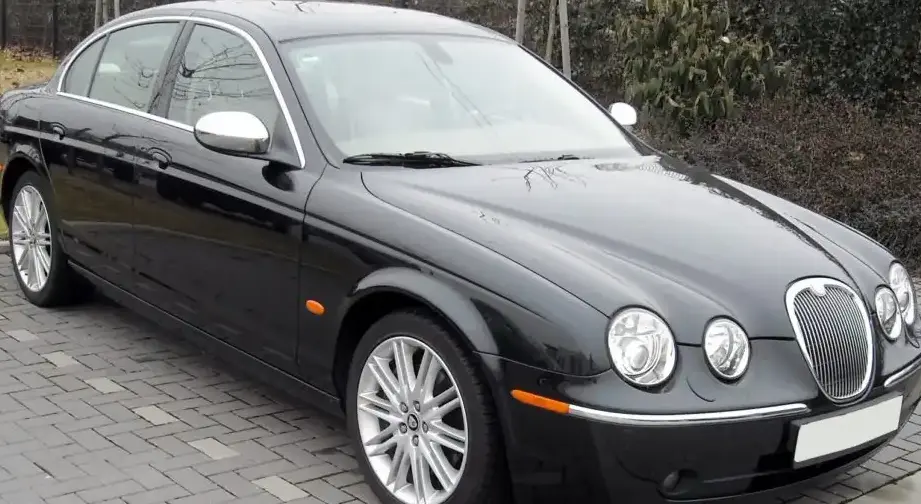
The Jaguar S-Type (CCX) 2.7 D, produced between 2004 and 2007, represented a significant step in Jaguar’s attempt to modernize its lineup while retaining a classic British aesthetic. This variant, powered by a 2.7-liter turbocharged diesel engine producing 207 horsepower, occupied a middle ground within the S-Type range, offering a blend of performance and fuel efficiency. It was positioned as a more economical alternative to the petrol-powered models, appealing to buyers seeking a refined driving experience with lower running costs. The CCX designation refers to the updated S-Type introduced in 2004, featuring revised styling and improved technology.
Technical Specifications
| Brand | Jaguar |
| Model | S-type |
| Generation | S-type (CCX) |
| Type (Engine) | 2.7 D (207 Hp) |
| Start of production | 2004 |
| End of production | 2007 |
| Powertrain Architecture | Internal Combustion engine |
| Body type | Sedan |
| Seats | 5 |
| Doors | 4 |
| Fuel consumption (urban) | 9.7 l/100 km (24.2 US mpg) |
| Fuel consumption (extra urban) | 5.7 l/100 km (41.3 US mpg) |
| Fuel Type | Diesel |
| Acceleration 0 – 100 km/h | 8.5 sec |
| Acceleration 0 – 62 mph | 8.5 sec |
| Acceleration 0 – 60 mph | 8.1 sec |
| Maximum speed | 230 km/h (142.92 mph) |
| Weight-to-power ratio | 8.3 kg/Hp |
| Weight-to-torque ratio | 4 kg/Nm |
| Power | 207 Hp @ 4000 rpm |
| Torque | 435 Nm @ 1900 rpm (320.84 lb.-ft. @ 1900 rpm) |
| Engine layout | Front, Longitudinal |
| Engine Model/Code | AJD |
| Engine displacement | 2720 cm3 (165.98 cu. in.) |
| Number of cylinders | 6 |
| Engine configuration | V-engine |
| Cylinder Bore | 81 mm (3.19 in.) |
| Piston Stroke | 88 mm (3.46 in.) |
| Compression ratio | 17.3:1 |
| Number of valves per cylinder | 4 |
| Fuel injection system | Diesel Commonrail |
| Engine aspiration | Turbocharger, Intercooler |
| Engine oil capacity | 6.6 l (6.97 US qt | 5.81 UK qt) |
| Coolant capacity | 10.4 l (10.99 US qt | 9.15 UK qt) |
| Kerb Weight | 1722 kg (3796.36 lbs.) |
| Max. weight | 2255 kg (4971.42 lbs.) |
| Max load | 533 kg (1175.06 lbs.) |
| Trunk (boot) space – minimum | 370 l (13.07 cu. ft.) |
| Trunk (boot) space – maximum | 810 l (28.6 cu. ft.) |
| Fuel tank capacity | 68 l (17.96 US gal | 14.96 UK gal) |
| Length | 4861 mm (191.38 in.) |
| Width | 1819 mm (71.61 in.) |
| Height | 1441 mm (56.73 in.) |
| Wheelbase | 2909 mm (114.53 in.) |
| Front track | 1537 mm (60.51 in.) |
| Rear track | 1544 mm (60.79 in.) |
| Drivetrain Architecture | Rear wheel drive |
| Number of gears | 6 |
| Gearbox type | Manual transmission |
| Front suspension | Double wishbone |
| Rear suspension | Double wishbone |
| Front brakes | Ventilated discs |
| Rear brakes | Ventilated discs |
| Assisting systems | ABS (Anti-lock braking system) |
| Steering type | Steering rack and pinion |
| Power steering | Hydraulic Steering |
| Tires size | 235/50 R17 |
Powertrain & Engine Architecture
The heart of the S-Type 2.7 D is Jaguar’s AJD engine, a 2.7-liter V6 diesel. This engine was developed in collaboration with PSA Peugeot Citroën and utilizes a common-rail direct injection system, delivering fuel at extremely high pressure for improved combustion efficiency and reduced emissions. The engine features a single turbocharger with an intercooler, boosting power output to 207 horsepower and 321 lb-ft of torque. The AJD engine is known for its relatively smooth operation and refined power delivery, characteristics that aligned well with Jaguar’s brand image. The six-speed manual transmission, while not as common as the automatic options, provided drivers with greater control and a more engaging driving experience. The engine’s longitudinal mounting and rear-wheel-drive configuration contributed to the S-Type’s balanced handling characteristics.
Driving Characteristics
The 2.7 D offered a noticeably different driving experience compared to the higher-powered S-Type variants. While it lacked the outright acceleration of the 4.2-liter V8 models, the 2.7 D provided ample torque for comfortable cruising and effortless overtaking. The six-speed manual transmission allowed drivers to keep the engine in its optimal power band, maximizing efficiency and responsiveness. The gear ratios were well-chosen, providing a good balance between acceleration and fuel economy. Compared to the automatic transmission options, the manual version offered a more connected feel and greater driver involvement. However, the 2.7 D was still a relatively heavy car, and its performance was not as sprightly as some of its competitors.
Equipment & Trim Levels
The S-Type 2.7 D typically came equipped with a respectable level of standard features, including leather upholstery, climate control, power windows and mirrors, and an audio system. Higher trim levels offered additional luxuries such as wood veneer trim, heated seats, and a premium sound system. Optional extras included satellite navigation, a sunroof, and upgraded wheels. The interior design of the S-Type was characterized by its classic British styling, with a focus on comfort and refinement. The dashboard layout was straightforward and easy to use, with well-placed controls and clear instrumentation.
Chassis & Braking
The S-Type 2.7 D utilized a double wishbone suspension system at both the front and rear, providing a comfortable ride and good handling characteristics. The suspension was tuned to prioritize ride quality over outright sportiness, making it well-suited for long-distance cruising. Ventilated disc brakes were fitted to all four wheels, providing ample stopping power. Anti-lock braking system (ABS) was standard, enhancing safety and stability. The S-Type’s chassis was relatively robust, but its weight could be a limiting factor in dynamic handling situations.
Market Reception & Comparison
The S-Type 2.7 D was generally well-received by critics, who praised its fuel efficiency, refined engine, and comfortable ride. However, some reviewers noted that its performance was not as exciting as that of the petrol-powered models. Compared to other diesel-powered executive cars of the time, the S-Type 2.7 D offered a compelling combination of luxury, performance, and economy. Its fuel economy was competitive, and its reliability was generally good. The manual transmission version was particularly appreciated by driving enthusiasts.
Legacy
The Jaguar S-Type 2.7 D has proven to be a relatively reliable and durable car, with many examples still on the road today. The AJD engine is known for its longevity, provided it is properly maintained. However, like all diesel engines, it is susceptible to issues related to the fuel injection system and turbocharger. In the used car market, the S-Type 2.7 D represents a good value proposition, offering a luxurious and refined driving experience at an affordable price. Its classic styling and comfortable interior continue to appeal to buyers seeking a distinctive and elegant executive car.
