
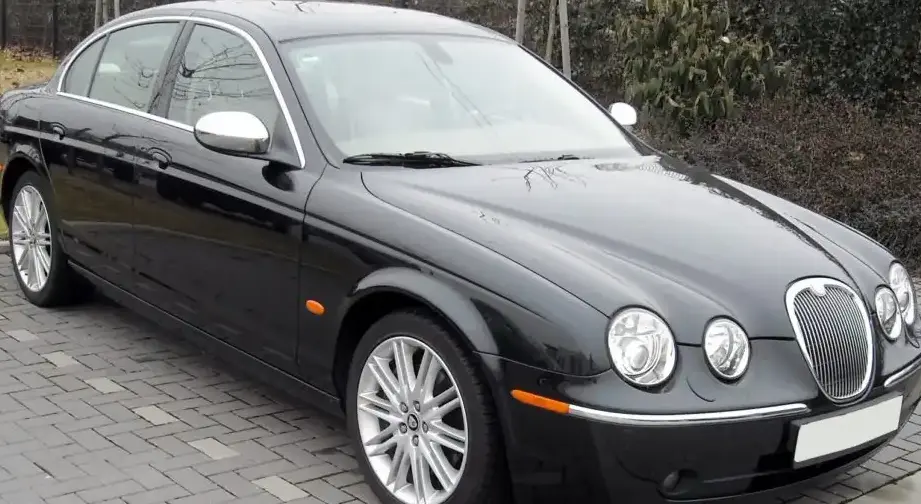
The Jaguar S-Type 2.7 D Automatic, produced between 2004 and 2007, represented a significant step for Jaguar in offering a diesel-powered option within the popular S-Type (CCX) range. This variant aimed to broaden the S-Type’s appeal, particularly in European markets where diesel engines were favored for their fuel efficiency and torque. Positioned as a mid-range offering, it slotted between the entry-level 2.0L petrol models and the higher-performance 4.2L V8 variants. The 2.7 D combined a modern common-rail diesel engine with a six-speed automatic transmission, offering a blend of performance and economy in a traditionally luxury package.
Technical Specifications
| Brand | Jaguar |
| Model | S-Type |
| Generation | S-type (CCX) |
| Type (Engine) | 2.7 D (207 Hp) Automatic |
| Start of production | 2004 |
| End of production | 2007 |
| Powertrain Architecture | Internal Combustion engine |
| Body type | Sedan |
| Seats | 5 |
| Doors | 4 |
| Fuel consumption (urban) | 10.9 l/100 km (21.6 US mpg) |
| Fuel consumption (extra urban) | 6.1 l/100 km (38.6 US mpg) |
| Fuel Type | Diesel |
| Acceleration 0 – 100 km/h | 8.6 sec |
| Acceleration 0 – 62 mph | 8.6 sec |
| Acceleration 0 – 60 mph | 8.2 sec |
| Maximum speed | 227 km/h (141.05 mph) |
| Weight-to-power ratio | 8.3 kg/Hp |
| Weight-to-torque ratio | 4 kg/Nm |
| Power | 207 Hp @ 4000 rpm |
| Torque | 435 Nm @ 1900 rpm (320.84 lb.-ft. @ 1900 rpm) |
| Engine layout | Front, Longitudinal |
| Engine Model/Code | AJD |
| Engine displacement | 2720 cm3 (165.98 cu. in.) |
| Number of cylinders | 6 |
| Engine configuration | V-engine |
| Cylinder Bore | 81 mm (3.19 in.) |
| Piston Stroke | 88 mm (3.46 in.) |
| Compression ratio | 17.3:1 |
| Number of valves per cylinder | 4 |
| Fuel injection system | Diesel Commonrail |
| Engine aspiration | Turbocharger, Intercooler |
| Engine oil capacity | 6.6 l (6.97 US qt | 5.81 UK qt) |
| Coolant capacity | 10.4 l (10.99 US qt | 9.15 UK qt) |
| Kerb Weight | 1722 kg (3796.36 lbs.) |
| Max. weight | 2255 kg (4971.42 lbs.) |
| Max load | 533 kg (1175.06 lbs.) |
| Trunk (boot) space – minimum | 370 l (13.07 cu. ft.) |
| Trunk (boot) space – maximum | 810 l (28.6 cu. ft.) |
| Fuel tank capacity | 68 l (17.96 US gal | 14.96 UK gal) |
| Length | 4861 mm (191.38 in.) |
| Width | 1819 mm (71.61 in.) |
| Height | 1441 mm (56.73 in.) |
| Wheelbase | 2909 mm (114.53 in.) |
| Front track | 1537 mm (60.51 in.) |
| Rear track | 1544 mm (60.79 in.) |
| Drivetrain Architecture | Rear wheel drive |
| Number of gears | 6 |
| Gearbox type | Automatic transmission |
| Front suspension | Double wishbone |
| Rear suspension | Double wishbone |
| Front brakes | Ventilated discs |
| Rear brakes | Ventilated discs |
| Assisting systems | ABS (Anti-lock braking system) |
| Steering type | Steering rack and pinion |
| Power steering | Hydraulic Steering |
| Tires size | 235/50 R17 |
| Wheel rims size | 17 |
Powertrain & Engine Architecture
The heart of the S-Type 2.7 D was the AJD engine, a 2.7-liter V6 diesel. This engine was developed by Jaguar in collaboration with PSA Peugeot Citroën, and it represented a significant investment in diesel technology for the brand. The AJD featured a cast iron block with aluminum cylinder heads, a configuration chosen for its balance of strength and weight. It employed a common-rail direct injection system, delivering fuel at extremely high pressure for improved combustion efficiency and reduced emissions. A variable geometry turbocharger with an intercooler further enhanced performance, providing increased boost pressure at lower engine speeds for improved responsiveness. The engine produced 207 horsepower at 4000 rpm and a substantial 321 lb-ft of torque at just 1900 rpm. This torque output was a key selling point, providing strong acceleration and effortless cruising. The engine was paired with a six-speed automatic transmission, designed to handle the engine’s torque output and provide smooth gear changes. This transmission featured a ‘J-gate’ selector, a Jaguar design element that allowed for both automatic and manual gear selection.
Driving Characteristics
The S-Type 2.7 D Automatic offered a distinctly different driving experience compared to the petrol-powered versions. While lacking the outright acceleration of the 4.2L V8, the 2.7 D provided ample power for everyday driving and overtaking. The high torque output meant that strong acceleration was available from low engine speeds, making it a relaxed and effortless cruiser. The automatic transmission, while smooth, wasn’t particularly sporty, prioritizing comfort over rapid gear changes. Compared to the manual transmission versions of the 2.7 D, the automatic offered greater convenience but slightly reduced fuel economy and a less engaging driving experience. The gear ratios were tuned for fuel efficiency and smooth cruising, rather than outright performance. The rear-wheel-drive configuration provided a balanced handling feel, typical of Jaguar sedans.
Equipment & Trim Levels
The S-Type 2.7 D Automatic typically came equipped with a generous level of standard features. These included leather upholstery, automatic climate control, a premium audio system, and alloy wheels. Optional extras included navigation systems, heated seats, sunroofs, and upgraded audio systems. Trim levels varied depending on the market, but generally, the 2.7 D Automatic was positioned as a mid-range offering, bridging the gap between the more basic 2.0L models and the luxurious 4.2L V8 variants. Interior appointments were generally well-finished, reflecting Jaguar’s reputation for luxury and craftsmanship. The dashboard layout was traditional Jaguar, with wood and chrome accents creating a sophisticated ambiance.
Chassis & Braking
The S-Type 2.7 D Automatic utilized a double wishbone suspension system at both the front and rear, providing a comfortable and controlled ride. The suspension was tuned to prioritize ride quality over outright handling sharpness. Braking duties were handled by ventilated disc brakes on all four wheels, providing ample stopping power. Anti-lock Braking System (ABS) was standard, enhancing safety and stability during emergency braking. The chassis was designed to provide a balance of rigidity and weight, contributing to the car’s overall handling characteristics. Stabilizer bars were fitted to both the front and rear axles to reduce body roll during cornering.
Market Reception & Comparison
The S-Type 2.7 D Automatic was generally well-received by critics, who praised its fuel efficiency, torque output, and comfortable ride. However, some reviewers noted that the automatic transmission could feel sluggish at times, and the engine lacked the refinement of some of its competitors. Compared to the petrol-powered S-Type models, the 2.7 D offered significantly better fuel economy, making it a more practical choice for long-distance drivers. Compared to other diesel-powered luxury sedans of the time, such as the BMW 5 Series and Mercedes-Benz E-Class, the S-Type 2.7 D offered a competitive combination of performance, economy, and luxury. Reliability was generally good, although some owners reported issues with the diesel particulate filter (DPF) and the common-rail injection system.
Legacy
The Jaguar S-Type 2.7 D Automatic represents an important step in Jaguar’s history, marking the brand’s commitment to diesel technology. While the S-Type itself was discontinued in 2007, the 2.7 D engine continued to be used in other Jaguar and Land Rover models. Today, the S-Type 2.7 D Automatic remains a relatively affordable luxury sedan on the used car market. Its combination of comfort, economy, and performance makes it an attractive option for buyers seeking a stylish and practical vehicle. However, potential buyers should be aware of the potential for issues with the DPF and injection system, and regular maintenance is essential to ensure long-term reliability.
