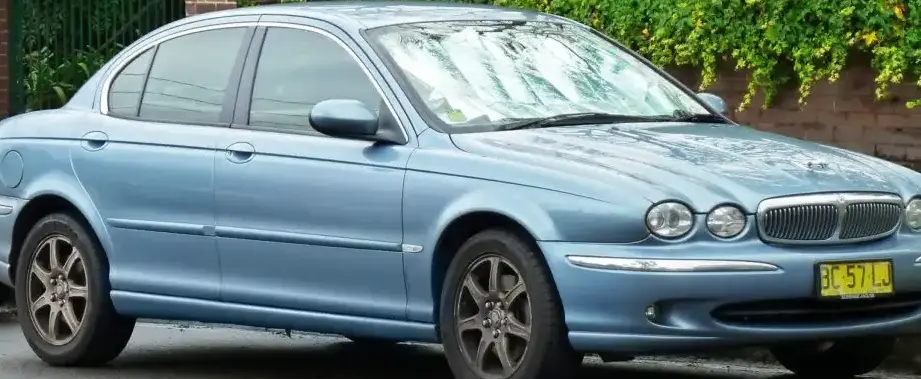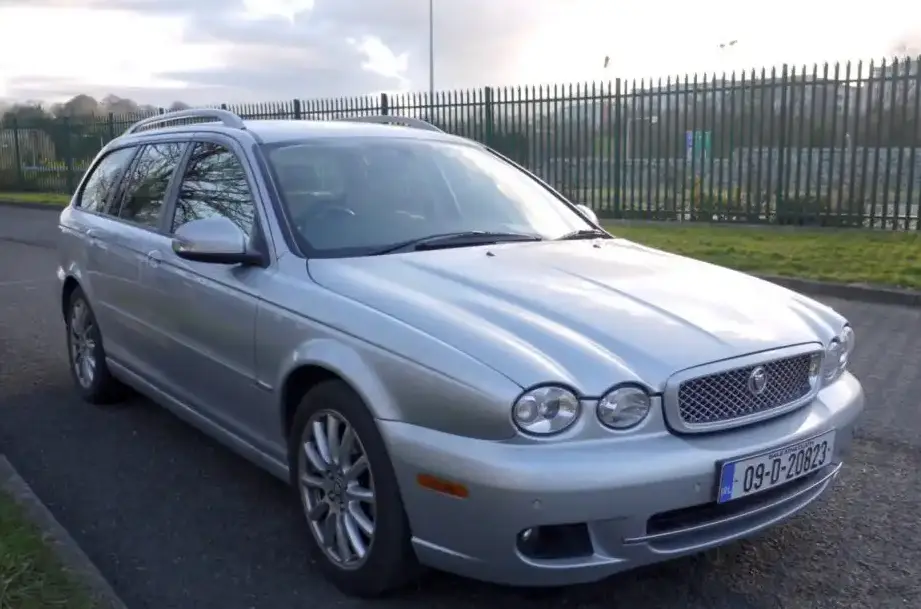
The Jaguar X-Type Estate 2.0 TDi (130 hp) was a station wagon variant produced between 2003 and 2009, representing Jaguar’s entry into the compact executive estate market. Positioned as a more practical alternative to the X-Type sedan, the Estate offered increased cargo capacity while retaining the model’s sporting character and British luxury. This particular 2.0-liter turbodiesel engine, producing 130 horsepower, was a key offering in many European markets, balancing fuel efficiency with acceptable performance. It sat in the mid-range of the X-Type Estate lineup, below the more powerful petrol variants and above the base-level diesel.
Technical Specifications
| Brand | Jaguar |
| Model | X-Type |
| Generation | X-Type Estate |
| Type (Engine) | 2.0 TDi (130 Hp) |
| Start of production | 2003 |
| End of production | 2009 |
| Powertrain Architecture | Internal Combustion engine |
| Body type | Station wagon (estate) |
| Seats | 5 |
| Doors | 5 |
| Fuel consumption (urban) | 7.8 l/100 km (30.2 US mpg) |
| Fuel consumption (extra urban) | 4.7 l/100 km (50 US mpg) |
| Fuel Type | Diesel |
| Acceleration 0 – 100 km/h | 10.2 sec |
| Acceleration 0 – 62 mph | 10.2 sec |
| Acceleration 0 – 60 mph | 9.7 sec |
| Maximum speed | 198 km/h (123.03 mph) |
| Weight-to-power ratio | 12.1 kg/Hp |
| Weight-to-torque ratio | 4.8 kg/Nm |
| Power | 130 Hp @ 3800 rpm |
| Torque | 330 Nm @ 1800 rpm (243.4 lb.-ft. @ 1800 rpm) |
| Engine layout | Front, Transverse |
| Engine Model/Code | FMBA, FMBB |
| Engine displacement | 1998 cm3 (121.93 cu. in.) |
| Number of cylinders | 4 |
| Engine configuration | Inline |
| Cylinder Bore | 86 mm (3.39 in.) |
| Piston Stroke | 86 mm (3.39 in.) |
| Compression ratio | 18.2:1 |
| Number of valves per cylinder | 4 |
| Fuel injection system | Diesel Commonrail |
| Engine aspiration | Turbocharger, Intercooler |
| Engine oil capacity | 6 l (6.34 US qt | 5.28 UK qt) |
| Coolant capacity | 10 l (10.57 US qt | 8.8 UK qt) |
| Kerb Weight | 1575 kg (3472.28 lbs.) |
| Max. weight | 2050 kg (4519.48 lbs.) |
| Max load | 475 kg (1047.2 lbs.) |
| Trunk (boot) space – minimum | 445 l (15.72 cu. ft.) |
| Trunk (boot) space – maximum | 1415 l (49.97 cu. ft.) |
| Fuel tank capacity | 61 l (16.11 US gal | 13.42 UK gal) |
| Length | 4716 mm (185.67 in.) |
| Width | 1789 mm (70.43 in.) |
| Height | 1483 mm (58.39 in.) |
| Wheelbase | 2710 mm (106.69 in.) |
| Front track | 1522 mm (59.92 in.) |
| Rear track | 1537 mm (60.51 in.) |
| Drivetrain Architecture | Front wheel drive |
| Number of gears | 5 |
| Gearbox type | Manual transmission |
| Front suspension | Spring Strut |
| Rear suspension | Coil spring |
| Front brakes | Ventilated discs |
| Rear brakes | Disc |
| Assisting systems | ABS (Anti-lock braking system) |
| Steering type | Steering rack and pinion |
| Tires size | 205/55 R16 |
Powertrain & Engine Architecture
The X-Type Estate 2.0 TDi utilized the FMBA or FMBB engine code, a 1998cc inline-four cylinder diesel engine. This engine was part of the Ford/PSA joint venture diesel program, and was also found in various Ford and Peugeot/Citroen models. It featured a common rail direct injection system, delivering fuel at extremely high pressure for improved combustion efficiency and reduced emissions. The engine was turbocharged and intercooled, boosting power output and torque. The intercooler helped to cool the intake air, increasing its density and further enhancing performance. The engine’s valvetrain employed four valves per cylinder, contributing to improved breathing and power delivery. The five-speed manual transmission was the standard offering for this variant, providing a balance between fuel economy and driver control. The transmission was front-wheel drive, typical for vehicles in this class.
Driving Characteristics
The 130 hp 2.0 TDi engine in the X-Type Estate provided adequate, though not exhilarating, performance. Acceleration from 0-60 mph took approximately 9.7 seconds, and top speed was around 123 mph. The engine’s 330 Nm (243 lb-ft) of torque, available from 1800 rpm, provided good low-end grunt, making it suitable for everyday driving and overtaking maneuvers. Compared to the higher-output petrol versions of the X-Type, the 2.0 TDi felt noticeably slower, particularly at higher speeds. However, the diesel offered significantly better fuel economy. The five-speed manual transmission was well-matched to the engine’s characteristics, offering smooth gear changes and a reasonable spread of ratios. The gear ratios were tuned for fuel efficiency and drivability rather than outright performance.
Equipment & Trim Levels
The 2.0 TDi Estate typically came equipped with a reasonable level of standard features. These included air conditioning, power windows, power mirrors, a CD player, and alloy wheels. Interior upholstery was typically cloth, although leather options were available. Dashboard trim was generally wood veneer or metallic finish. Optional extras included a sunroof, navigation system, premium sound system, and heated front seats. Trim levels varied depending on the market, but generally followed a progression from base models to more luxurious SE or Sport variants. The 2.0 TDi often served as a base for these higher trim levels, allowing customers to add optional features to create a more personalized vehicle.
Chassis & Braking
The X-Type Estate’s chassis was based on the Jaguar X400 platform, a modified version of the Ford Mondeo platform. Front suspension utilized MacPherson struts, while the rear employed a multi-link setup. This configuration provided a comfortable ride and reasonably good handling. Braking systems consisted of ventilated discs at the front and solid discs at the rear. Anti-lock Braking System (ABS) was standard. The suspension was tuned to prioritize comfort over outright sportiness, reflecting the X-Type’s positioning as a luxury vehicle. Stabilizer bars were fitted front and rear to reduce body roll during cornering.
Market Reception & Comparison
The Jaguar X-Type Estate 2.0 TDi was generally well-received by critics as a practical and fuel-efficient option within the compact executive estate segment. However, some reviewers noted that the performance was not as refined as that of its German rivals, such as the Audi A4 Avant or BMW 3 Series Touring. Fuel economy was a strong point, with the 2.0 TDi achieving around 50 mpg on the extra-urban cycle. Reliability was generally good, although some owners reported issues with the diesel particulate filter (DPF) and the common rail injection system. Compared to the petrol versions of the X-Type, the 2.0 TDi offered significantly better fuel economy but less performance. The 2.0 TDi was often seen as a more sensible choice for drivers who prioritized economy and practicality over outright driving thrills.
Legacy
The X-Type Estate, and particularly the 2.0 TDi variant, has become a relatively affordable used car option. The engine, while not known for being exceptionally powerful, has proven to be reasonably durable with proper maintenance. Common issues, such as DPF blockages, can be costly to repair, so prospective buyers should carefully inspect the vehicle’s service history. Today, the X-Type Estate 2.0 TDi represents a unique blend of British luxury and practicality, offering a comfortable and economical driving experience for those seeking a stylish and versatile estate car.