
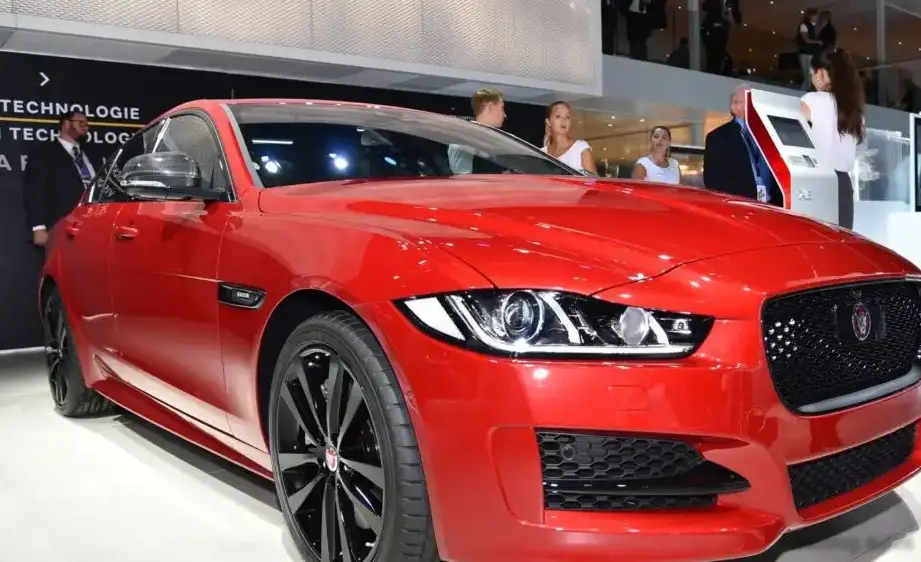
The Jaguar XE 2.0 (240 hp) Automatic, produced between 2015 and 2017, represents a key variant within the first generation (X760) of Jaguar’s entry-level luxury sedan. Introduced as a direct competitor to the BMW 3 Series, Audi A4, and Mercedes-Benz C-Class, the XE aimed to recapture Jaguar’s sporting heritage while offering a more modern and technologically advanced package. The 2.0-liter, 240 horsepower version, paired exclusively with an eight-speed automatic transmission, occupied a mid-range position in the XE lineup, offering a balance between performance and fuel efficiency. It served as a popular choice for buyers seeking a refined driving experience without the higher price tag of the supercharged variants.
Technical Specifications
| Brand | Jaguar |
| Model | XE |
| Generation | XE (X760) |
| Type (Engine) | 2.0 (240 Hp) Automatic |
| Start of production | 2015 |
| End of production | 2017 |
| Powertrain Architecture | Internal Combustion engine |
| Body type | Sedan |
| Seats | 5 |
| Doors | 4 |
| Fuel consumption (urban) | 10.2 l/100 km (23.1 US mpg) |
| Fuel consumption (extra urban) | 6 l/100 km (39.2 US mpg) |
| Fuel consumption (combined) | 7.5 l/100 km (31.4 US mpg) |
| CO2 emissions | 179 g/km |
| Fuel Type | Petrol (Gasoline) |
| Acceleration 0 – 100 km/h | 6.9 sec |
| Acceleration 0 – 62 mph | 6.9 sec |
| Acceleration 0 – 60 mph | 6.6 sec |
| Maximum speed | 250 km/h (155.34 mph) |
| Weight-to-power ratio | 6.4 kg/Hp |
| Weight-to-torque ratio | 4.5 kg/Nm |
| Power | 240 Hp @ 5500 rpm |
| Torque | 340 Nm @ 1750-4000 rpm (250.77 lb.-ft.) |
| Engine layout | Front, Longitudinal |
| Engine Model/Code | EcoBoost / 204PT |
| Engine displacement | 1999 cm3 (121.99 cu. in.) |
| Number of cylinders | 4 |
| Engine configuration | Inline |
| Fuel injection system | Direct injection |
| Engine oil capacity | 5.4 l (5.71 US qt | 4.75 UK qt) |
| Coolant capacity | 8.5 l (8.98 US qt | 7.48 UK qt) |
| Kerb Weight | 1530 kg (3373.07 lbs.) |
| Max. weight | 2120 kg (4673.8 lbs.) |
| Max load | 590 kg (1300.73 lbs.) |
| Trunk (boot) space – minimum | 455 l (16.07 cu. ft.) |
| Fuel tank capacity | 63 l (16.64 US gal | 13.86 UK gal) |
| Length | 4672 mm (183.94 in.) |
| Width | 1850 mm (72.83 in.) |
| Width including mirrors | 2075 mm (81.69 in.) |
| Height | 1416 mm (55.75 in.) |
| Wheelbase | 2835 mm (111.61 in.) |
| Minimum turning circle | 11.66 m (38.25 ft.) |
| Drivetrain Architecture | Rear wheel drive |
| Number of gears | 8 |
| Gearbox type | Automatic transmission |
| Front brakes | Ventilated discs |
| Rear brakes | Disc |
Powertrain & Engine Architecture
The heart of the XE 2.0 (240 hp) is Jaguar Land Rover’s Ingenium engine family. Specifically, it utilizes the 204PT variant, a 1.999-liter turbocharged inline-four cylinder engine. This engine features direct injection, a twin-scroll turbocharger, and variable valve timing. The turbocharger design minimizes turbo lag, providing a more responsive driving experience. The engine produces 240 horsepower at 5500 rpm and 250 lb-ft of torque between 1750 and 4000 rpm. This power is delivered to the rear wheels via a ZF-sourced eight-speed automatic transmission. This transmission is known for its smooth shifts and quick response times. The engine’s longitudinal mounting and rear-wheel-drive configuration contribute to the XE’s balanced handling characteristics.
Driving Characteristics
The 2.0-liter, 240 hp XE Automatic offers a comfortable and engaging driving experience. While not as overtly sporty as the supercharged variants, it provides ample power for everyday driving and highway passing. The eight-speed automatic transmission is well-tuned, offering smooth and timely gear changes. The gear ratios are optimized for both fuel efficiency and performance. Compared to the six-speed manual transmission available on some XE models, the automatic prioritizes convenience and ease of use. Acceleration from 0 to 60 mph takes approximately 6.6 seconds, making it competitive within its class. The rear-wheel-drive layout contributes to a balanced feel, although it can be less forgiving in slippery conditions compared to all-wheel-drive competitors.
Equipment & Trim Levels
The XE 2.0 (240 hp) Automatic typically came standard with features such as leather upholstery, dual-zone climate control, a touchscreen infotainment system, and a suite of safety features including emergency braking and lane departure warning. Trim levels varied depending on the market, but generally included options for upgraded sound systems, navigation, heated seats, and parking assistance. Optional packages often bundled together several features, allowing buyers to customize their XE to their specific needs and preferences. Interior materials were generally of high quality, reflecting Jaguar’s commitment to luxury.
Chassis & Braking
The XE’s chassis is constructed primarily of aluminum, contributing to its relatively lightweight construction. The suspension utilizes a double wishbone front suspension and a multi-link rear suspension, providing a comfortable ride and precise handling. The 2.0-liter models typically featured ventilated front discs and solid rear discs. Anti-lock brakes (ABS) and electronic stability control (ESC) were standard equipment. Steering is rack and pinion, offering a direct and responsive feel. Stabilizer bars were fitted front and rear to reduce body roll during cornering.
Market Reception & Comparison
The Jaguar XE 2.0 (240 hp) Automatic was generally well-received by automotive critics. It was praised for its stylish design, comfortable interior, and engaging driving dynamics. However, some reviewers noted that the rear seat space was somewhat limited compared to its competitors. Fuel economy was considered respectable, averaging around 31.4 US mpg in combined driving. Compared to the higher-output supercharged variants, the 2.0-liter model offered a more affordable entry point into the XE range, but at the expense of outright performance. The 2.0-liter diesel models offered comparable fuel economy but with a different power delivery characteristic.
Legacy
The Jaguar XE 2.0 (240 hp) Automatic has proven to be a relatively reliable vehicle in the used car market. The Ingenium engine has generally demonstrated good durability, although regular maintenance is crucial. Common issues reported by owners include occasional software glitches with the infotainment system and potential problems with the electric parking brake. Overall, the XE 2.0 Automatic represents a compelling option for buyers seeking a stylish, comfortable, and well-equipped luxury sedan at a reasonable price point. Its blend of performance, efficiency, and refinement continues to make it an attractive choice in the used car market today.
