
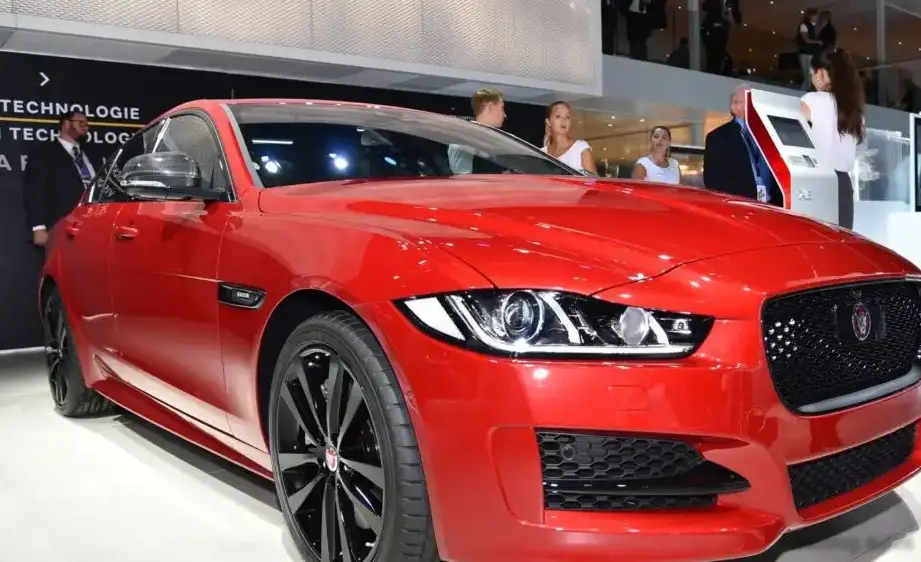
The Jaguar XE (X760) 2.0, producing 250 horsepower, represented a significant offering in Jaguar’s entry-level luxury sedan lineup. Introduced for the 2017 and 2018 model years, this variant occupied a mid-range position within the XE family, slotting between the base 2.0-liter models with lower outputs and the performance-oriented models like the XE S. It was designed to appeal to buyers seeking a balance of performance, refinement, and technology within the competitive sports sedan segment. The X760 designation refers to the first generation of the XE, built on Jaguar Land Rover’s iQ[Al] aluminum-intensive platform.
Technical Specifications
| Brand | Jaguar |
| Model | XE |
| Generation | XE (X760) |
| Type (Engine) | 2.0 (250 Hp) Automatic |
| Start of production | 2017 |
| End of production | 2018 |
| Powertrain Architecture | Internal Combustion engine |
| Body type | Sedan |
| Seats | 5 |
| Doors | 4 |
| Fuel consumption (combined) | 6.3 l/100 km (37.3 US mpg, 44.8 UK mpg, 15.9 km/l) |
| CO2 emissions | 144 g/km |
| Fuel Type | Petrol (Gasoline) |
| Acceleration 0 – 100 km/h | 6.3 sec |
| Acceleration 0 – 62 mph | 6.3 sec |
| Acceleration 0 – 60 mph | 6 sec |
| Maximum speed | 250 km/h (155.34 mph) |
| Emission standard | Euro 6 |
| Weight-to-power ratio | 6.2 kg/Hp, 162.3 Hp/tonne |
| Weight-to-torque ratio | 4.2 kg/Nm, 237 Nm/tonne |
| Power | 250 Hp @ 5500 rpm |
| Power per litre | 125.2 Hp/l |
| Torque | 365 Nm @ 1200-4500 rpm (269.21 lb.-ft. @ 1200-4500 rpm) |
| Engine layout | Front, Longitudinal |
| Engine Model/Code | Ingenium / PT204 |
| Engine displacement | 1997 cm3 (121.86 cu. in.) |
| Number of cylinders | 4 |
| Engine configuration | Inline |
| Cylinder Bore | 83 mm (3.27 in.) |
| Piston Stroke | 92.4 mm (3.64 in.) |
| Compression ratio | 10.5:1 |
| Number of valves per cylinder | 4 |
| Fuel injection system | Direct injection |
| Engine aspiration | Twin-Turbo, Intercooler |
| Valvetrain | DOHC |
| Engine oil capacity | 7 l (7.4 US qt | 6.16 UK qt) |
| Coolant | 11.2 l (11.83 US qt | 9.85 UK qt) |
| Kerb Weight | 1540 kg (3395.12 lbs.) |
| Trunk (boot) space – minimum | 455 l (16.07 cu. ft.) |
| Fuel tank capacity | 63 l (16.64 US gal | 13.86 UK gal) |
| Length | 4672 mm (183.94 in.) |
| Width with mirrors folded | 1967 mm (77.44 in.) |
| Width including mirrors | 2075 mm (81.69 in.) |
| Height | 1425 mm (56.1 in.) |
| Wheelbase | 2835 mm (111.61 in.) |
| Front track | 1597-1602 mm (62.87 – 63.07 in.) |
| Rear (Back) track | 1598-1603 mm (62.91 – 63.11 in.) |
| Drivetrain Architecture | Rear wheel drive |
| Number of gears and type of gearbox | 8 gears, automatic transmission |
| Front suspension | Double wishbone |
| Rear suspension | Independent coil spring |
| Front brakes | Ventilated discs |
| Rear brakes | Ventilated discs |
| Assisting systems | ABS (Anti-lock braking system) |
| Steering type | Steering rack and pinion |
| Power steering | Electric Steering |
Introduction
The Jaguar XE 2.0 (250 Hp) Automatic, produced from 2017 to 2018, was a key component of Jaguar’s attempt to establish a stronger foothold in the compact executive car market. Built on the X760 platform, it aimed to deliver a compelling blend of British luxury, dynamic handling, and modern technology. This variant was positioned as a step up from the base 2.0-liter models, offering increased performance and a more refined driving experience. The XE line was Jaguar’s first rear-wheel-drive sedan in decades, marking a return to the brand’s sporting roots.
Powertrain & Engine Architecture
At the heart of the XE 2.0 (250 Hp) lies Jaguar Land Rover’s Ingenium engine family, specifically the PT204 2.0-liter turbocharged inline-four. This engine utilizes direct injection and a twin-scroll turbocharger to deliver 250 horsepower at 5500 rpm and 365 Nm (269.21 lb-ft) of torque between 1200 and 4500 rpm. The Ingenium engines were designed for modularity and efficiency, allowing for a range of outputs and configurations. The engine features a DOHC (Dual Overhead Camshaft) valvetrain and a compression ratio of 10.5:1.
The engine is paired with an 8-speed automatic transmission, sourced from ZF. This transmission is known for its smooth shifting and responsiveness. The automatic transmission was calibrated to provide a balance between fuel efficiency and performance, with gear ratios optimized for both city driving and highway cruising. While a manual transmission was offered on some XE models, the 250 hp variant was exclusively available with the 8-speed automatic.
Driving Characteristics
The XE 2.0 (250 Hp) Automatic offered a noticeably more engaging driving experience than the lower-powered variants. The increased horsepower and torque allowed for quicker acceleration – 0-60 mph in around 6 seconds – and more confident overtaking maneuvers. The rear-wheel-drive configuration contributed to a balanced chassis and responsive handling. The 8-speed automatic transmission generally shifted smoothly and efficiently, although some reviewers noted a slight hesitation in certain situations. Compared to the higher-performance XE S models, the 2.0 (250 Hp) provided a more comfortable and refined ride, making it a better choice for daily commuting and long-distance travel. The gear ratios were tuned for a blend of acceleration and fuel economy, prioritizing usability over outright performance.
Equipment & Trim Levels
The XE 2.0 (250 Hp) Automatic typically came standard with a generous array of features, including leather upholstery, a touchscreen infotainment system with navigation, automatic climate control, and a suite of safety technologies such as emergency braking and lane departure warning. Higher trim levels offered additional features like premium audio systems, heated and ventilated seats, and adaptive cruise control. Optional extras included a panoramic sunroof, metallic paint finishes, and various interior trim options. The interior design emphasized a sporty and luxurious aesthetic, with a focus on high-quality materials and craftsmanship.
Chassis & Braking
The XE’s chassis was a key element of its appeal, utilizing extensive aluminum construction to minimize weight and maximize rigidity. The suspension system featured double wishbones at the front and an independent coil spring setup at the rear. The 2.0 (250 Hp) variant typically came equipped with ventilated disc brakes on all four wheels, providing ample stopping power. ABS (Anti-lock Braking System) was standard, along with electronic stability control and traction control. The steering system was an electric power-assisted rack and pinion, offering precise and responsive steering feel.
Market Reception & Comparison
Critics generally praised the XE 2.0 (250 Hp) Automatic for its stylish design, engaging driving dynamics, and comfortable interior. However, some reviewers noted that the rear seat space was somewhat limited compared to competitors like the BMW 3 Series and Audi A4. Fuel economy was respectable, averaging around 37.3 US mpg in combined driving, but not class-leading. Compared to the base 2.0-liter XE models, the 250 hp variant offered a significant performance upgrade, justifying the higher price tag for buyers prioritizing driving enjoyment. Against the XE S, it offered a more balanced compromise between performance and comfort.
Legacy
The Jaguar XE 2.0 (250 Hp) Automatic, while only produced for two model years, remains a desirable option in the used car market. The Ingenium engine has proven to be relatively reliable, although regular maintenance is crucial. Common issues reported by owners include occasional software glitches with the infotainment system and potential problems with the cooling system. Overall, the XE 2.0 (250 Hp) offers a compelling combination of British luxury, performance, and technology at a competitive price point, making it a viable alternative to its German rivals.
