
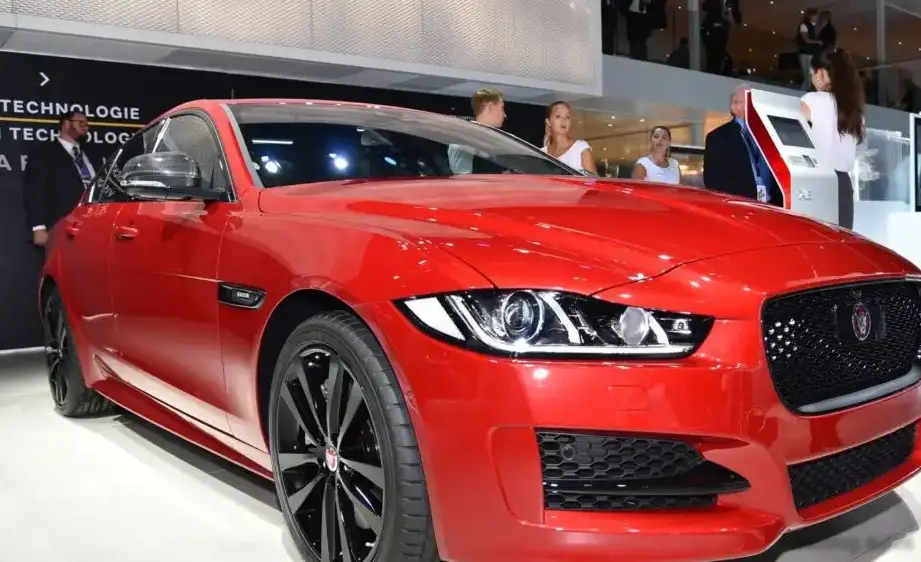
The Jaguar XE (X760) 2.0d, producing 163 horsepower, was a key variant in Jaguar’s entry into the compact executive car segment. Introduced in 2015 and remaining in production through 2018, this model represented a significant departure for Jaguar, aiming to compete directly with established German rivals like the BMW 3 Series, Audi A4, and Mercedes-Benz C-Class. The 2.0d variant, equipped with an automatic transmission, served as a balance between fuel efficiency and acceptable performance, targeting a broader customer base than the more powerful, performance-oriented trims. It was positioned as a mid-range offering within the XE lineup, slotting below the 2.0t petrol models and the higher-output diesel variants.
Technical Specifications
| Brand | Jaguar |
| Model | XE |
| Generation | XE (X760) |
| Type (Engine) | 2.0d (163 Hp) Automatic |
| Start of production | 2015 |
| End of production | 2018 |
| Powertrain Architecture | Internal Combustion engine |
| Body type | Sedan |
| Seats | 5 |
| Doors | 4 |
| CO2 emissions | 104 g/km |
| Fuel Type | Diesel |
| Acceleration 0 – 100 km/h | 8.2 sec |
| Acceleration 0 – 62 mph | 8.2 sec |
| Acceleration 0 – 60 mph | 7.8 sec |
| Maximum speed | 227 km/h (141.05 mph) |
| Weight-to-power ratio | 9 kg/Hp, 110.6 Hp/tonne |
| Weight-to-torque ratio | 3.9 kg/Nm, 257.8 Nm/tonne |
| Power | 163 Hp @ 4000 rpm |
| Power per litre | 81.5 Hp/l |
| Torque | 380 Nm @ 1750-2500 rpm (280.27 lb.-ft. @ 1750-2500 rpm) |
| Engine layout | Front, Longitudinal |
| Engine Model/Code | Ingenium / 204DTD |
| Engine displacement | 1999 cm3 (121.99 cu. in.) |
| Number of cylinders | 4 |
| Engine configuration | Inline |
| Fuel injection system | Diesel Commonrail |
| Engine aspiration | Turbocharger, Intercooler |
| Engine oil capacity | 6.5 l (6.87 US qt | 5.72 UK qt) |
| Coolant | 7 l (7.4 US qt | 6.16 UK qt) |
| Kerb Weight | 1474 kg (3249.61 lbs) |
| Max. weight | 2100 kg (4629.71 lbs) |
| Max load | 626 kg (1380.09 lbs) |
| Trunk (boot) space – minimum | 455 l (16.07 cu. ft) |
| Fuel tank capacity | 47 l (12.42 US gal | 10.34 UK gal) |
| Length | 4672 mm (183.94 in) |
| Width | 1850 mm (72.83 in) |
| Width including mirrors | 2075 mm (81.69 in) |
| Height | 1416 mm (55.75 in) |
| Wheelbase | 2835 mm (111.61 in) |
| Minimum turning circle | 11.66 m (38.25 ft) |
| Drivetrain Architecture | Rear wheel drive |
| Number of gears | 8 gears, automatic transmission |
| Front brakes | Ventilated discs |
| Rear brakes | Disc |
| Assisting systems | ABS (Anti-lock braking system) |
| Steering type | Steering rack and pinion |
Powertrain & Engine Architecture
The heart of the XE 2.0d was Jaguar’s Ingenium engine family, specifically the 204DTD code. This 2.0-liter inline-four diesel engine utilized a sophisticated common-rail direct injection system, delivering fuel at extremely high pressures for optimized combustion. A single turbocharger, coupled with an intercooler, provided forced induction, boosting power and torque. The engine featured a 16-valve DOHC (Double Overhead Camshaft) valvetrain. The eight-speed automatic transmission, sourced from ZF, was a crucial component, offering smooth and relatively quick shifts. This transmission was known for its efficiency and responsiveness, contributing to the car’s overall drivability. The engine was mounted longitudinally, driving the rear wheels, a configuration traditional for Jaguar.
Driving Characteristics
The 163 hp output, combined with the 380 Nm (280 lb-ft) of torque, provided adequate performance for everyday driving. Acceleration from 0-60 mph took around 7.8 to 8.2 seconds, depending on testing conditions. While not a sports car, the XE 2.0d offered a comfortable and refined driving experience. The automatic transmission was well-tuned, providing seamless gear changes. Compared to the more powerful 180 hp diesel or the 2.0t petrol variants, the 163 hp model felt less urgent in acceleration, particularly during overtaking maneuvers. However, the lower power output also translated to improved fuel economy. The rear-wheel-drive configuration contributed to balanced handling, although it wasn’t as playful as some of its competitors with all-wheel drive.
Equipment & Trim Levels
The XE 2.0d Automatic typically came equipped with a respectable level of standard features. These included leather upholstery, automatic climate control, a touchscreen infotainment system (Jaguar InControl Touch), and alloy wheels. Higher trim levels offered additional features such as heated seats, a panoramic sunroof, premium audio systems, and advanced driver-assistance systems like adaptive cruise control and lane departure warning. Interior trim options varied, with choices in wood veneers and aluminum accents. The dashboard layout was generally clean and modern, prioritizing usability and a premium feel.
Chassis & Braking
The XE’s chassis was a key selling point, utilizing a lightweight aluminum construction. This contributed to the car’s relatively low weight, enhancing handling and fuel efficiency. The suspension consisted of double wishbones at the front and multi-link suspension at the rear. The 2.0d variant typically featured ventilated front discs and solid rear discs. Anti-lock Braking System (ABS) was standard, providing enhanced braking performance and stability. Stabilizer bars were fitted front and rear to reduce body roll during cornering. The suspension tuning was geared towards comfort, providing a smooth ride over most road surfaces.
Market Reception & Comparison
The Jaguar XE 2.0d Automatic received generally positive reviews from automotive critics. It was praised for its stylish design, comfortable interior, and refined driving experience. However, some critics noted that the 163 hp engine felt somewhat underpowered compared to its rivals, particularly on the highway. Fuel economy was a strong point, with the XE 2.0d achieving around 50-60 mpg on the combined cycle. Compared to the higher-output diesel variants, the 163 hp model offered a more affordable entry point into the XE range, but at the expense of performance. Reliability was generally good, although some owners reported minor issues with the infotainment system.
Legacy
The Jaguar XE 2.0d Automatic, while superseded by newer models, remains a popular choice in the used car market. The Ingenium engine has proven to be relatively reliable, and parts availability is generally good. The car’s stylish design and comfortable interior continue to appeal to buyers looking for a premium compact executive car. The 2.0d variant represents a good balance of affordability, fuel efficiency, and refinement, making it a practical and enjoyable vehicle for everyday use. Its contribution to Jaguar’s attempt to establish itself in the competitive compact executive segment should not be understated, paving the way for future models and solidifying the brand’s commitment to innovation and driving pleasure.
