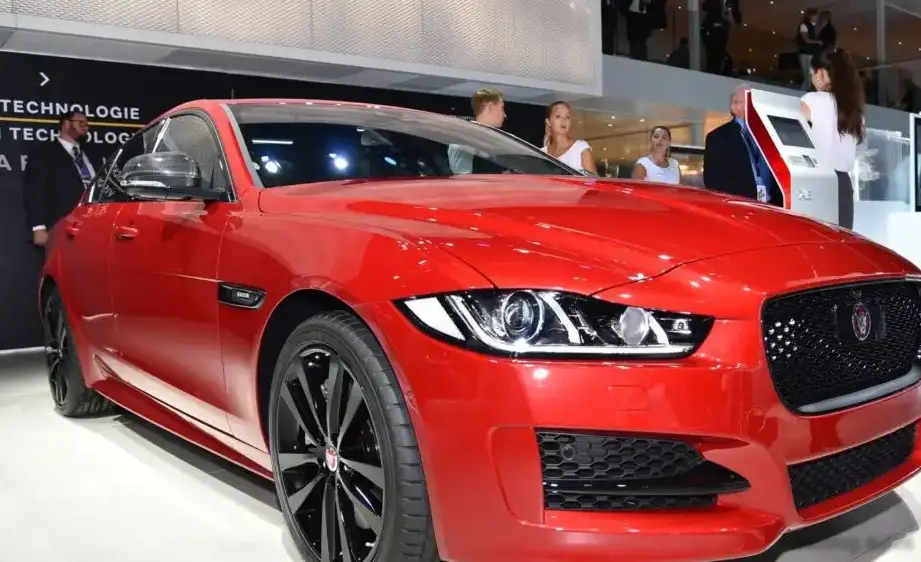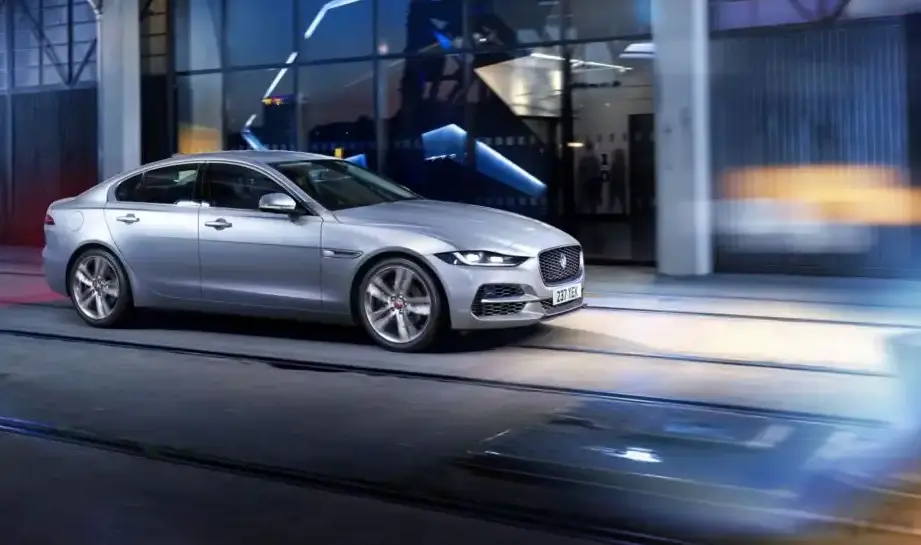
The Jaguar XE 2.0d (204 Hp) Mild Hybrid Automatic, produced from October 2020 to 2024, represents a significant iteration of Jaguar’s compact executive sedan. This variant, part of the X760 facelift generation, aimed to balance performance, efficiency, and refinement within the XE lineup. Positioned as a mid-range offering, it catered to buyers seeking a more economical alternative to the higher-powered petrol engines while still providing a premium driving experience. The introduction of mild hybrid technology further enhanced fuel economy and reduced emissions, aligning with increasingly stringent environmental regulations.
Technical Specifications
| Brand | Jaguar |
| Model | XE |
| Generation | XE (X760, facelift 2020) |
| Type (Engine) | 2.0d (204 Hp) Mild Hybrid Automatic |
| Start of production | October, 2020 |
| End of production | 2024 |
| Powertrain Architecture | MHEV (Mild Hybrid Electric Vehicle) |
| Body type | Sedan |
| Seats | 5 |
| Doors | 4 |
| Combined fuel consumption (WLTP) | 4.8-5.4 l/100 km (49 – 43.6 US mpg, 58.9 – 52.3 UK mpg, 20.8 – 18.5 km/l) |
| CO2 emissions (WLTP) | 127-142 g/km |
| Fuel Type | Diesel |
| Acceleration 0 – 100 km/h | 7.3 sec |
| Acceleration 0 – 62 mph | 7.3 sec |
| Acceleration 0 – 60 mph | 6.9 sec |
| Maximum speed | 235 km/h (146.02 mph) |
| Emission standard | Euro 6d |
| Weight-to-power ratio | 8.1 kg/Hp, 123.9 Hp/tonne |
| Weight-to-torque ratio | 3.8 kg/Nm, 261.1 Nm/tonne |
| Power | 204 Hp @ 4250 rpm |
| Power per litre | 102.2 Hp/l |
| Torque | 430 Nm @ 1750-2500 rpm (317.15 lb.-ft. @ 1750-2500 rpm) |
| Engine layout | Front, Longitudinal |
| Engine Model/Code | AJ21D4 |
| Engine displacement | 1997 cm3 (121.86 cu. in.) |
| Number of cylinders | 4 |
| Engine configuration | Inline |
| Cylinder Bore | 83 mm (3.27 in.) |
| Piston Stroke | 92.31 mm (3.63 in.) |
| Compression ratio | 16.5:1 |
| Number of valves per cylinder | 4 |
| Fuel injection system | Diesel Commonrail |
| Engine aspiration | Turbocharger, Intercooler |
| Engine oil capacity | 6.5 l (6.87 US qt | 5.72 UK qt) |
| Coolant | 7 l (7.4 US qt | 6.16 UK qt) |
| Kerb Weight | 1647 kg (3631.01 lbs.) |
| Trunk (boot) space – minimum | 356 l (12.57 cu. ft.) |
| Trunk (boot) space – maximum | 1236 l (43.65 cu. ft.) |
| Fuel tank capacity | 56 l (14.79 US gal | 12.32 UK gal) |
| Permitted trailer load with brakes (12%) | 1800 kg (3968.32 lbs.) |
| Permitted trailer load without brakes | 750 kg (1653.47 lbs.) |
| Length | 4678 mm (184.17 in.) |
| Width with mirrors folded | 1967 mm (77.44 in.) |
| Width including mirrors | 2075 mm (81.69 in.) |
| Height | 1410 mm (55.51 in.) |
| Wheelbase | 2835 mm (111.61 in.) |
| Front track | 1605 mm (63.19 in.) |
| Rear (Back) track | 1608 mm (63.31 in.) |
| Front overhang | 841 mm (33.11 in.) |
| Rear overhang | 1002 mm (39.45 in.) |
| Drag coefficient (Cd) | 0.26 |
| Minimum turning circle (turning diameter) | 11.23 m (36.84 ft.) |
| Drivetrain Architecture | Rear wheel drive. MHEV. ICE and electric motor drive the rear wheels. |
| Number of gears and type of gearbox | 8 gears, automatic transmission ZF |
| Front suspension | Double wishbone |
| Rear suspension | Independent coil spring |
| Front brakes | Ventilated discs, 325 mm |
| Rear brakes | Ventilated discs, 325 mm |
INTRODUCTION
The Jaguar XE 2.0d (204 Hp) Mild Hybrid Automatic, launched in late 2020, was a key component of the facelifted X760 series. The X760 generation, introduced in 2019, represented a significant refresh of the original XE (X760) launched in 2015. This variant aimed to broaden the XE’s appeal by offering a more fuel-efficient and environmentally conscious option within the premium compact sedan segment. The integration of a 48V mild hybrid system was a central feature, designed to improve real-world fuel economy and reduce CO2 emissions without compromising the Jaguar driving experience. It slotted into the XE range between the entry-level petrol models and the more potent, performance-focused variants.
Powertrain & Engine Architecture
At the heart of the XE 2.0d is Jaguar Land Rover’s AJ21D4 engine, a 2.0-liter inline-four cylinder diesel. This engine utilizes a sophisticated common-rail direct injection system, delivering fuel at extremely high pressures for optimized combustion. A single turbocharger, coupled with an intercooler, provides forced induction, boosting power and torque. The engine produces 204 horsepower at 4250 rpm and a substantial 430 Nm (317 lb-ft) of torque between 1750 and 2500 rpm. The mild hybrid system consists of a Belt-integrated Starter Generator (BiSG) and a 48V electrical system. The BiSG assists the engine during acceleration, capturing energy during deceleration and braking, and enabling smoother start-stop functionality. The transmission is an eight-speed automatic gearbox sourced from ZF, known for its smooth and responsive shifts. This transmission is calibrated to work seamlessly with the engine’s torque curve and the mild hybrid system.
Driving Characteristics
The 204 hp diesel engine, paired with the eight-speed automatic, delivers a respectable 0-60 mph time of around 6.9 seconds. While not as overtly sporty as the higher-powered petrol versions, the 2.0d offers ample performance for everyday driving and comfortable highway cruising. The mild hybrid system contributes to a more refined driving experience, particularly during start-stop cycles and low-speed maneuvers. The automatic transmission provides smooth gear changes, and the engine’s strong low-end torque makes overtaking effortless. Compared to the manual transmission versions of the same engine, the automatic prioritizes convenience and ease of use, although it may slightly diminish fuel economy. The rear-wheel-drive configuration contributes to the XE’s balanced handling characteristics.
Equipment & Trim Levels
The XE 2.0d Automatic typically came equipped with a generous level of standard features. These included leather upholstery, a touchscreen infotainment system with Apple CarPlay and Android Auto compatibility, navigation, automatic climate control, and a suite of driver-assistance systems such as lane departure warning and autonomous emergency braking. Optional extras included a panoramic sunroof, premium sound system, heated and ventilated seats, and adaptive cruise control. Trim levels varied depending on the market, but generally offered progressive upgrades in terms of interior materials, exterior styling, and technology features. The interior design focused on a minimalist aesthetic with high-quality materials and a driver-centric layout.
Chassis & Braking
The XE utilizes a lightweight aluminum chassis, contributing to its agile handling. The front suspension features a double wishbone setup, while the rear employs an independent coil spring arrangement. This suspension configuration provides a good balance between ride comfort and handling precision. Braking duties are handled by ventilated discs on all four wheels, measuring 325mm in diameter. The braking system is assisted by ABS, electronic brakeforce distribution, and emergency brake assist. The XE’s steering is electrically assisted, providing a responsive and precise feel.
Market Reception & Comparison
The Jaguar XE 2.0d Mild Hybrid Automatic was generally well-received by automotive critics. It was praised for its refined driving experience, comfortable ride, and improved fuel economy compared to the non-hybrid versions. However, some reviewers noted that the interior, while well-appointed, lacked the cutting-edge technology found in some of its German rivals. Compared to the petrol-powered XE variants, the 2.0d offered a more economical option for high-mileage drivers. Against competitors like the BMW 320d and Audi A4 2.0 TDI, the XE 2.0d offered a compelling alternative with its distinctive British styling and engaging driving dynamics. Fuel economy figures of 4.8-5.4 l/100km were competitive within its class.
Legacy
The Jaguar XE 2.0d Mild Hybrid Automatic represents an important step in Jaguar’s transition towards electrification. The AJ21D4 engine, while not the most technologically advanced diesel on the market, proved to be relatively reliable. The mild hybrid system added a layer of refinement and efficiency, enhancing the overall ownership experience. On the used car market, these models offer a good balance of performance, economy, and luxury. Regular maintenance, including adherence to Jaguar’s recommended service intervals, is crucial for ensuring the long-term reliability of the engine and transmission. The X760 facelift, including this 2.0d variant, helped to maintain the XE’s presence in the competitive compact executive sedan segment.