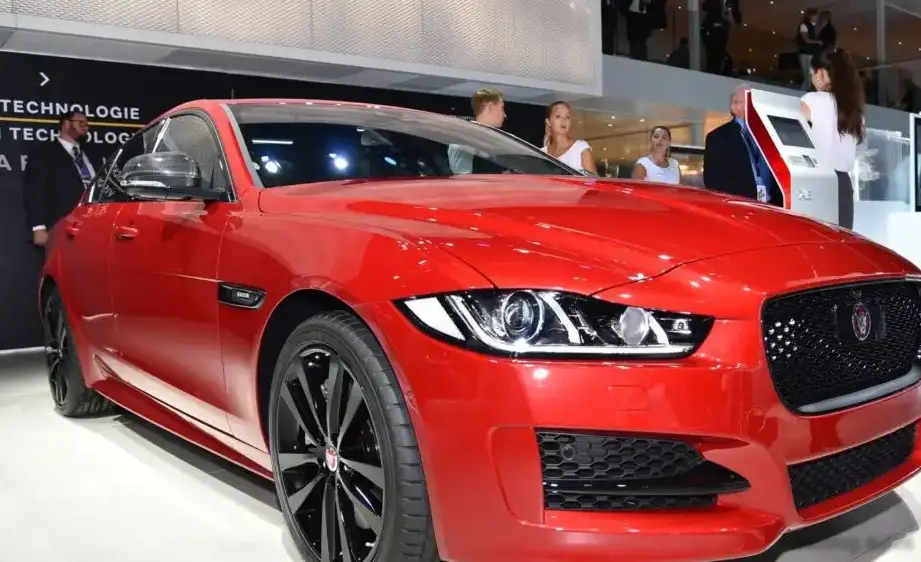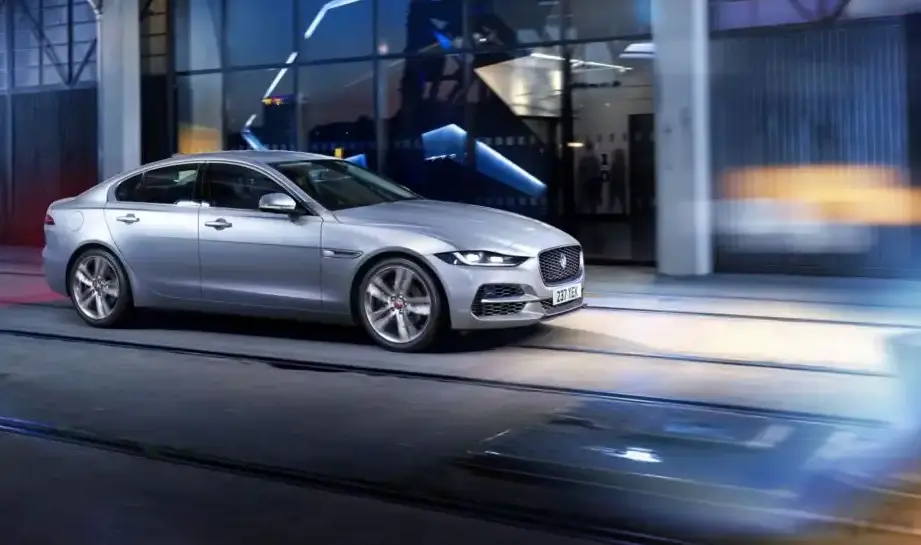
The Jaguar XE (X760) facelift, introduced in October 2020, represented a significant refresh of Jaguar’s compact executive sedan. Among the various powertrain options available, the 2.0i (250 hp) AWD Automatic variant occupied a prominent position in the lineup, offering a balance of performance, luxury, and all-weather capability. Produced through 2024, this version aimed to appeal to buyers seeking a refined driving experience with a degree of sporting intent. It sat comfortably within the mid-range of the XE offerings, positioned above the entry-level models and below the more potent P300 and P400 variants.
Technical Specifications
| Brand | Jaguar |
| Model | XE |
| Generation | XE (X760, facelift 2020) |
| Type (Engine) | 2.0i (250 Hp) AWD Automatic |
| Start of production | October, 2020 |
| End of production | 2024 |
| Powertrain Architecture | Internal Combustion engine |
| Body type | Sedan |
| Seats | 5 |
| Doors | 4 |
| Fuel Type | Petrol (Gasoline) |
| Acceleration 0 – 100 km/h | 6.8 sec |
| Acceleration 0 – 62 mph | 6.8 sec |
| Acceleration 0 – 60 mph | 6.4 sec |
| Maximum speed | 242 km/h (150.37 mph) |
| Emission standard | Euro 6d |
| Weight-to-power ratio | 6.2 kg/Hp, 160.8 Hp/tonne |
| Weight-to-torque ratio | 4.3 kg/Nm, 234.7 Nm/tonne |
| Power | 250 Hp @ 5500 rpm |
| Power per litre | 125.2 Hp/l |
| Torque | 365 Nm @ 1300-4500 rpm (269.21 lb.-ft. @ 1300-4500 rpm) |
| Engine layout | Front, Longitudinal |
| Engine Model/Code | Ingenium / PT204 |
| Engine displacement | 1997 cm3 (121.86 cu. in.) |
| Number of cylinders | 4 |
| Engine configuration | Inline |
| Cylinder Bore | 83 mm (3.27 in.) |
| Piston Stroke | 92.29 mm (3.63 in.) |
| Compression ratio | 10.5:1 |
| Number of valves per cylinder | 4 |
| Fuel injection system | Direct injection |
| Engine aspiration | Turbocharger, Intercooler |
| Engine oil capacity | 7 l (7.4 US qt | 6.16 UK qt) |
| Coolant | 11.2 l (11.83 US qt | 9.85 UK qt) |
| Kerb Weight | 1555 kg (3428.19 lbs.) |
| Trunk (boot) space – minimum | 394 l (13.91 cu. ft.) |
| Trunk (boot) space – maximum | 1275 l (45.03 cu. ft.) |
| Fuel tank capacity | 62 l (16.38 US gal | 13.64 UK gal) |
| Permitted trailer load with brakes (12%) | 1800 kg (3968.32 lbs.) |
| Permitted trailer load without brakes | 750 kg (1653.47 lbs.) |
| Length | 4678 mm (184.17 in.) |
| Width with mirrors folded | 1967 mm (77.44 in.) |
| Width including mirrors | 2075 mm (81.69 in.) |
| Height | 1410 mm (55.51 in.) |
| Wheelbase | 2835 mm (111.61 in.) |
| Front track | 1608 mm (63.31 in.) |
| Rear (Back) track | 1606 mm (63.23 in.) |
| Front overhang | 841 mm (33.11 in.) |
| Rear overhang | 1002 mm (39.45 in.) |
| Drag coefficient (Cd) | 0.30 |
| Minimum turning circle (turning diameter) | 11.23 m (36.84 ft.) |
| Drivetrain Architecture | The Internal combustion engine (ICE) drives the rear wheels permanently, and the front wheels are driven through an electrically or mechanically operated clutch if necessary. |
| Drive wheel | All wheel drive (4×4) |
| Number of gears and type of gearbox | 8 gears, automatic transmission ZF |
| Front suspension | Double wishbone |
| Rear suspension | Independent coil spring |
| Front brakes | Ventilated discs, 325-350 mm |
| Rear brakes | Ventilated discs, 325 mm |
| Assisting systems | ABS (Anti-lock braking system) |
| Steering type | Steering rack and pinion |
| Power steering | Electric Steering |
| Wheel rims size | 17; 18 |
INTRODUCTION
The Jaguar XE (X760) facelift, launched in 2020, represented a significant evolution of Jaguar’s entry-level sedan. The 2.0i (250 hp) AWD Automatic model was a key component of this refresh, designed to broaden the XE’s appeal. Built on the Ingenium platform, this variant combined a turbocharged four-cylinder engine with a sophisticated all-wheel-drive system and a ZF-sourced eight-speed automatic transmission. It aimed to deliver a compelling blend of performance, refinement, and practicality within the competitive executive car segment. This model year saw updates to the exterior styling, interior technology, and powertrain options, positioning the XE as a more modern and desirable offering.
Powertrain & Engine Architecture
At the heart of the XE 2.0i AWD Automatic lies Jaguar’s Ingenium engine family, specifically the PT204 2.0-liter inline-four cylinder. This engine utilizes direct injection and a single twin-scroll turbocharger to produce 250 horsepower at 5500 rpm and 365 Nm (269.21 lb-ft) of torque between 1300 and 4500 rpm. The engine features a relatively high compression ratio of 10.5:1, contributing to its efficiency and responsiveness. The Ingenium engine is known for its lightweight construction, utilizing aluminum components to reduce overall weight. The eight-speed automatic transmission, manufactured by ZF, is a crucial element of this powertrain. It provides smooth and rapid gear changes, contributing to both performance and fuel economy. The transmission is electronically controlled and features selectable driving modes, allowing the driver to tailor the shift points to their preferences. The all-wheel-drive system employs an intelligent system that primarily drives the rear wheels, engaging the front wheels when traction is needed, providing enhanced stability and control in various driving conditions.
Driving Characteristics
The 2.0i AWD Automatic XE delivers a composed and refined driving experience. While not as overtly sporty as the higher-powered variants, the 250 hp engine provides ample performance for everyday driving and confident overtaking. The 0-60 mph acceleration time of around 6.4 seconds is respectable for this class. The ZF eight-speed automatic transmission contributes to a seamless power delivery, with minimal hesitation during gear changes. The all-wheel-drive system enhances traction, particularly in inclement weather, providing a surefooted feel. Compared to the manual transmission versions, the automatic offers greater convenience, especially in urban environments. However, some enthusiasts may find the automatic slightly less engaging than the manual. Compared to the P300, the 2.0i offers a more balanced and fuel-efficient driving experience, sacrificing some outright performance for improved economy.
Equipment & Trim Levels
The XE 2.0i AWD Automatic typically came well-equipped, reflecting Jaguar’s commitment to luxury and technology. Standard features often included leather upholstery, a touchscreen infotainment system with Apple CarPlay and Android Auto compatibility, navigation, automatic climate control, and a suite of driver-assistance systems such as lane departure warning and emergency braking. Higher trim levels offered additional features such as a premium sound system, heated and ventilated seats, a panoramic sunroof, and adaptive cruise control. Interior trim options varied, with choices in wood veneers and metal accents. The dashboard layout was generally clean and modern, with a focus on intuitive controls.
Chassis & Braking
The XE’s chassis is based on a lightweight aluminum architecture, contributing to its agility and handling. The front suspension utilizes a double wishbone design, while the rear features an independent coil spring setup. This configuration provides a good balance of ride comfort and handling precision. The 2.0i AWD Automatic models typically featured ventilated disc brakes on all four wheels, providing ample stopping power. Front brake rotor sizes ranged from 325-350mm depending on the specific trim level. The electronic stability control system and anti-lock braking system (ABS) worked in conjunction to enhance safety and control. Steering was provided by an electric power steering system, offering a responsive and precise feel.
Market Reception & Comparison
The Jaguar XE 2.0i AWD Automatic was generally well-received by automotive critics. It was praised for its refined driving experience, comfortable interior, and stylish design. However, some reviewers noted that it lacked the outright performance of its rivals, such as the BMW 3 Series and Audi A4. Fuel economy was considered competitive for its class, with combined figures typically around 28-32 mpg. Reliability was a mixed bag, with some owners reporting minor issues with the infotainment system and electrical components. Compared to the XE P300, the 2.0i offered a more affordable entry point into the Jaguar lineup, appealing to buyers who prioritized comfort and efficiency over outright performance.
Legacy
The Jaguar XE 2.0i AWD Automatic represents a significant step forward in Jaguar’s efforts to compete in the executive car segment. While production ended in 2024, these models continue to appear on the used car market. The Ingenium engine has proven to be a reliable and efficient powerplant, and the ZF eight-speed automatic transmission is known for its durability. However, potential buyers should be aware of potential issues with the infotainment system and electrical components. Overall, the XE 2.0i AWD Automatic remains a compelling option for buyers seeking a stylish, refined, and capable executive sedan.