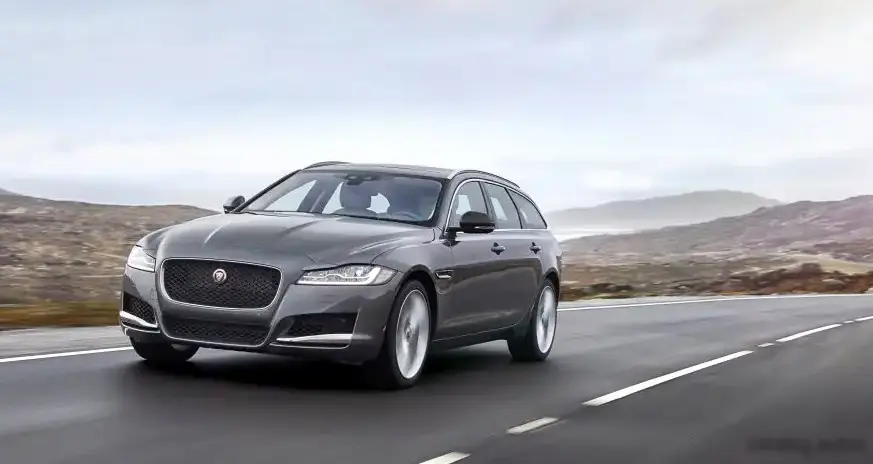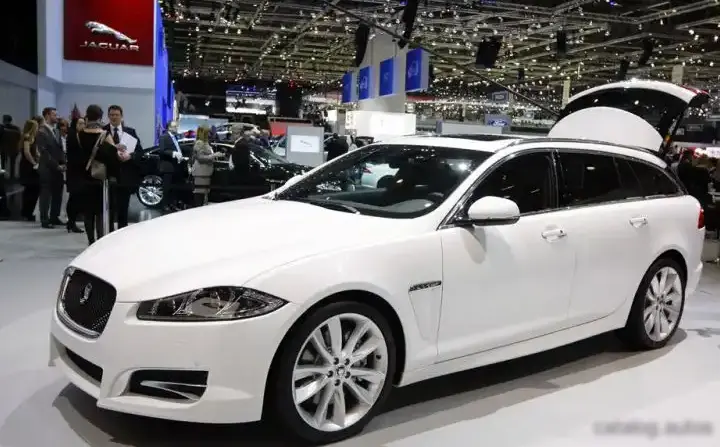
The Jaguar XF Sportbrake (X250) 2.2d, produced between 2012 and 2015, represents Jaguar’s entry into the premium wagon (estate) market. Based on the XF sedan, the Sportbrake offered a compelling blend of luxury, performance, and practicality. This particular variant, powered by a 2.2-liter four-cylinder diesel engine producing 163 horsepower, was positioned as the more fuel-efficient and accessible option within the Sportbrake lineup, appealing to buyers prioritizing economy without sacrificing the Jaguar experience. It was part of the X250 generation, which itself was a significant update to the original XF, introducing a more refined interior and improved technology.
Technical Specifications
| Brand | Jaguar |
| Model | XF |
| Generation | XF Sportbrake (X250) |
| Type (Engine) | 2.2d (163 Hp) Automatic |
| Start of production | 2012 |
| End of production | 2015 |
| Powertrain Architecture | Internal Combustion engine |
| Body type | Station wagon (estate) |
| Seats | 5 |
| Doors | 5 |
| Fuel consumption (combined) | 5.1 l/100 km |
| Fuel consumption (US mpg) | 46.1 US mpg |
| Fuel consumption (UK mpg) | 55.4 UK mpg |
| Fuel consumption (km/l) | 19.6 km/l |
| CO2 emissions | 135 g/km |
| Fuel Type | Diesel |
| Acceleration 0 – 100 km/h | 10.9 sec |
| Acceleration 0 – 62 mph | 10.9 sec |
| Acceleration 0 – 60 mph | 10.4 sec |
| Maximum speed | 200 km/h (124.27 mph) |
| Power | 163 Hp @ 3500 rpm |
| Power per litre | 74.8 Hp/l |
| Torque | 400 Nm @ 2000 rpm (295.02 lb.-ft. @ 2000 rpm) |
| Engine layout | Front, Longitudinal |
| Engine Model/Code | 224DT |
| Engine displacement | 2179 cm3 (132.97 cu. in.) |
| Number of cylinders | 4 |
| Engine configuration | Inline |
| Cylinder Bore | 85 mm (3.35 in.) |
| Piston Stroke | 96 mm (3.78 in.) |
| Fuel injection system | Diesel Commonrail |
| Engine aspiration | Turbocharger, Intercooler |
| Engine oil capacity | 5.9 l (6.23 US qt | 5.19 UK qt) |
| Coolant | 11.5 l (12.15 US qt | 10.12 UK qt) |
| Trunk (boot) space – minimum | 550 l (19.42 cu. ft.) |
| Trunk (boot) space – maximum | 1675 l (59.15 cu. ft.) |
| Fuel tank capacity | 70.1 l (18.52 US gal | 15.42 UK gal) |
| Length | 4966 mm (195.51 in.) |
| Width | 1877 mm (73.9 in.) |
| Wheelbase | 2909 mm (114.53 in.) |
| Front track | 1559 mm (61.38 in.) |
| Rear track | 1605 mm (63.19 in.) |
| Drivetrain Architecture | Rear wheel drive |
| Number of gears | 8 |
| Gearbox type | Automatic transmission |
| Front brakes | Ventilated discs |
| Rear brakes | Ventilated discs |
Powertrain & Engine Architecture
The heart of the XF Sportbrake 2.2d is Jaguar’s 224DT engine, a 2.2-liter inline-four cylinder diesel. This engine, developed in collaboration with PSA Peugeot Citroën, utilizes a common-rail direct injection system and a variable geometry turbocharger with an intercooler. The 224DT engine code signifies a specific iteration of this engine, optimized for Jaguar’s performance and refinement standards. Peak power of 163 horsepower is achieved at 3500 rpm, while a substantial 400 Nm (295 lb-ft) of torque is available from just 2000 rpm, providing strong low-end and mid-range acceleration. The engine features a 16-valve DOHC (Double Overhead Camshaft) valvetrain. Paired with this engine is a ZF 8HP80 eight-speed automatic transmission, known for its smooth shifting and efficiency. This transmission offers a wide range of gear ratios, contributing to both fuel economy and responsive performance.
Driving Characteristics
The 163 hp 2.2d automatic configuration of the XF Sportbrake delivers a comfortable and refined driving experience. While not as overtly sporty as the higher-powered variants (like the 3.0-liter V6), it provides ample power for everyday driving and long-distance cruising. The eight-speed automatic transmission is a key contributor to the driving experience, offering seamless gear changes and keeping the engine within its optimal power band. Acceleration from 0-60 mph takes around 10.4 seconds, which is respectable for a wagon of this size and weight. The rear-wheel-drive layout contributes to balanced handling, although it doesn’t offer the all-weather confidence of an all-wheel-drive system. Compared to the manual transmission versions of the same engine, the automatic offers greater convenience, but slightly diminishes the sense of driver engagement. The 2.2d is noticeably less powerful than the 3.0-liter V6 models, resulting in slower acceleration and a less exhilarating overall driving experience.
Equipment & Trim Levels
The XF Sportbrake 2.2d typically came well-equipped, reflecting Jaguar’s commitment to luxury. Standard features included leather upholstery, dual-zone climate control, a touchscreen infotainment system, and parking sensors. Trim levels varied depending on the market, but generally included ‘SE’, ‘Portfolio’, and ‘R-Sport’ options. The ‘SE’ trim was the entry-level offering, while ‘Portfolio’ added more luxurious features like upgraded leather and wood trim. ‘R-Sport’ focused on a more athletic appearance with unique styling cues. Optional extras included a panoramic sunroof, heated seats, a premium sound system, and advanced driver-assistance systems like adaptive cruise control and blind-spot monitoring.
Chassis & Braking
The XF Sportbrake utilizes a sophisticated chassis design, featuring a double wishbone front suspension and a multi-link rear suspension. This setup provides a comfortable ride while maintaining good handling characteristics. The 2.2d models typically featured ventilated disc brakes on all four wheels, providing ample stopping power. Anti-lock Braking System (ABS) and Electronic Stability Control (ESC) were standard safety features. Stabilizer bars were fitted front and rear to reduce body roll during cornering. The suspension tuning was generally softer on the 2.2d models compared to the higher-performance variants, prioritizing ride comfort over outright handling prowess.
Market Reception & Comparison
The Jaguar XF Sportbrake 2.2d was generally well-received by automotive critics. It was praised for its stylish design, luxurious interior, and refined driving experience. The 2.2-liter diesel engine was commended for its fuel efficiency and strong torque output. However, some critics noted that the engine lacked the outright performance of the larger V6 options. Compared to rivals like the BMW 5 Series Touring and Audi A6 Avant, the XF Sportbrake offered a unique blend of British luxury and practicality. In terms of fuel economy, the 2.2d consistently outperformed the V6 models, achieving around 46 mpg on the combined cycle. Reliability was generally good, although some owners reported minor issues with the infotainment system.
Legacy
The Jaguar XF Sportbrake 2.2d has proven to be a relatively reliable vehicle in the used car market. The 224DT engine, while not without its potential issues (like diesel particulate filter problems common to many modern diesels), is generally robust when properly maintained. The ZF 8HP80 transmission is also known for its durability. Today, these vehicles represent a compelling value proposition for buyers seeking a luxurious and practical wagon at a reasonable price. The XF Sportbrake, in general, helped establish Jaguar as a serious contender in the premium wagon segment, and the 2.2d variant broadened its appeal to a wider range of buyers.