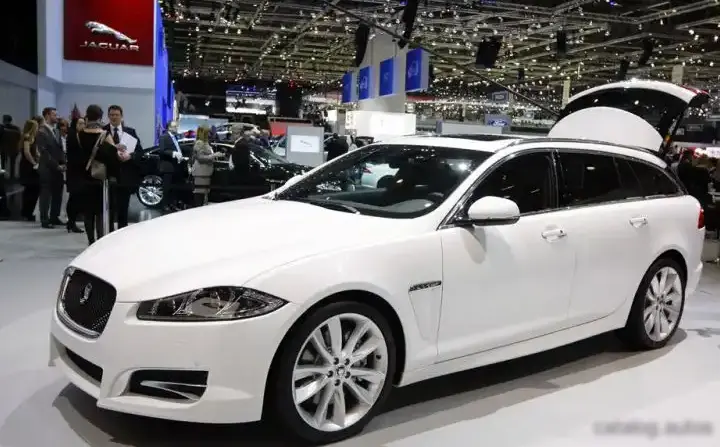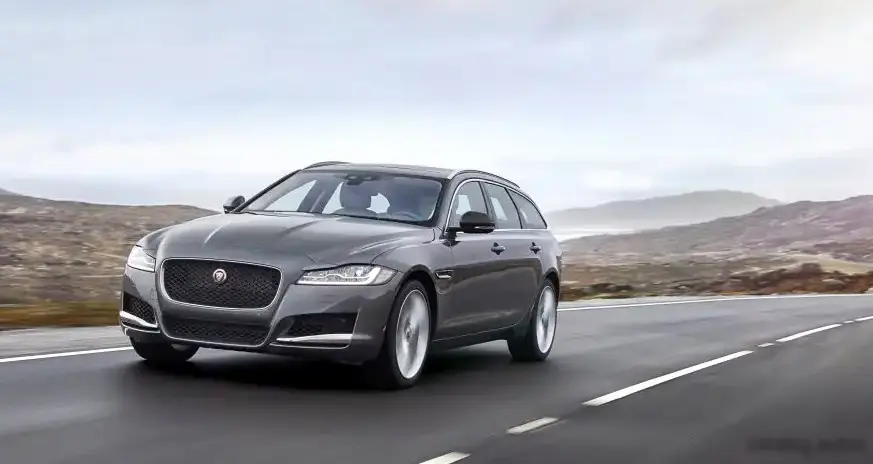
The Jaguar XF Sportbrake (X260) 20d, produced from 2019 to October 2020, represents a compelling blend of practicality and luxury within the Jaguar lineup. Positioned as a mid-range offering in the Sportbrake (estate) body style, this variant featured a 2.0-liter Ingenium diesel engine producing 180 horsepower, paired exclusively with an eight-speed automatic transmission. It aimed to provide a more fuel-efficient and accessible entry point into the XF Sportbrake range, appealing to buyers prioritizing economy without sacrificing the Jaguar driving experience. The X260 generation, launched in 2015, brought a significant redesign to the XF, moving away from the previous model’s shared platform with the S-Type and focusing on lightweight construction and a more dynamic driving character.
Technical Specifications
| Brand | Jaguar |
| Model | XF |
| Generation | XF Sportbrake (X260) |
| Type (Engine) | 20d (180 Hp) Automatic |
| Start of production | 2019 |
| End of production | October, 2020 |
| Powertrain Architecture | Internal Combustion engine |
| Body type | Station wagon (estate) |
| Seats | 5 |
| Doors | 5 |
| Fuel consumption (urban) | 6.5-6.7 l/100 km (36.2 – 35.1 US mpg, 43.5 – 42.2 UK mpg, 15.4 – 14.9 km/l) |
| Fuel consumption (extra urban) | 4.6-4.7 l/100 km (51.1 – 50 US mpg, 61.4 – 60.1 UK mpg, 21.7 – 21.3 km/l) |
| Fuel consumption (combined) | 5.3-5.4 l/100 km (44.4 – 43.6 US mpg, 53.3 – 52.3 UK mpg, 18.9 – 18.5 km/l) |
| CO2 emissions | 139-143 g/km |
| Fuel Type | Diesel |
| Acceleration 0 – 100 km/h | 8.5 sec |
| Acceleration 0 – 62 mph | 8.5 sec |
| Acceleration 0 – 60 mph | 8.1 sec |
| Maximum speed | 221 km/h (137.32 mph) |
| Emission standard | Euro 6d-Temp |
| Weight-to-power ratio | 9.5 kg/Hp, 105 Hp/tonne |
| Weight-to-torque ratio | 4 kg/Nm, 250.9 Nm/tonne |
| Power | 180 Hp @ 4000 rpm |
| Power per litre | 90 Hp/l |
| Torque | 430 Nm @ 1750-2500 rpm (317.15 lb.-ft. @ 1750-2500 rpm) |
| Engine layout | Front, Longitudinal |
| Engine Model/Code | Ingenium / 204DTH |
| Engine displacement | 1999 cm3 (121.99 cu. in.) |
| Number of cylinders | 4 |
| Engine configuration | Inline |
| Cylinder Bore | 83 mm (3.27 in.) |
| Piston Stroke | 92.4 mm (3.64 in.) |
| Compression ratio | 15.5:1 |
| Number of valves per cylinder | 4 |
| Fuel injection system | Diesel Commonrail |
| Engine aspiration | Turbocharger, Intercooler |
| Engine oil capacity | 6.5 l (6.87 US qt | 5.72 UK qt) |
| Kerb Weight | 1714 kg (3778.72 lbs.) |
| Max. weight | 2320 kg (5114.72 lbs.) |
| Max load | 606 kg (1336 lbs.) |
| Fuel tank capacity | 66 l (17.44 US gal | 14.52 UK gal) |
| Permitted trailer load with brakes (12%) | 2000 kg (4409.25 lbs.) |
| Permitted trailer load without brakes | 750 kg (1653.47 lbs.) |
| Length | 4955 mm (195.08 in.) |
| Width | 1987 mm (78.23 in.) |
| Width including mirrors | 2091 mm (82.32 in.) |
| Height | 1496 mm (58.9 in.) |
| Wheelbase | 2960 mm (116.54 in.) |
| Front track | 1605 mm (63.19 in.) |
| Rear (Back) track | 1607 mm (63.27 in.) |
| Minimum turning circle | 11.94 m (39.17 ft.) |
| Drivetrain Architecture | Rear wheel drive |
| Number of gears | 8 |
| Gearbox type | Automatic transmission |
| Front brakes | Disc |
| Rear brakes | Disc |
| Tires size | 225/55 R17; 245/45 R18 |
| Wheel rims size | 7.5J x 17; 8J x 18 |
Powertrain & Engine Architecture
The heart of the XF Sportbrake 20d is Jaguar Land Rover’s Ingenium engine family. Specifically, the 204DTH is a 2.0-liter inline-four cylinder diesel engine. This engine utilizes a sophisticated turbocharger and direct injection system to deliver a balance of power and efficiency. The common rail direct injection system operates at extremely high pressures, optimizing fuel atomization for cleaner combustion and improved performance. The engine also features variable valve timing (VVT) to enhance responsiveness across the rev range. The eight-speed automatic transmission, sourced from ZF, is a key component of the powertrain. Known for its smooth and quick shifts, it contributes significantly to the car’s refined driving experience. The transmission is programmed for both efficiency and performance, adapting to driving conditions and driver input.
Driving Characteristics
The 180 horsepower and 430 Nm (317 lb-ft) of torque provided by the 20d powertrain deliver respectable, though not exhilarating, performance. Acceleration from 0-60 mph takes around 8.1 seconds, making it suitable for everyday driving and highway cruising. Compared to the more powerful XF Sportbrake variants, such as those equipped with the 3.0-liter V6 engines, the 20d feels less urgent in its acceleration. However, the readily available torque at low engine speeds makes it feel responsive in typical driving situations. The eight-speed automatic transmission helps to keep the engine in its optimal power band, providing smooth and efficient gear changes. The rear-wheel-drive configuration contributes to a balanced handling feel, although it doesn’t offer the all-weather confidence of an all-wheel-drive system.
Equipment & Trim Levels
The 20d trim typically came well-equipped, offering a good level of standard features. These generally included leather upholstery, dual-zone climate control, a touchscreen infotainment system with navigation, and a suite of driver-assistance technologies such as lane departure warning and autonomous emergency braking. Optional extras included a panoramic sunroof, upgraded sound system, adaptive cruise control, and premium leather options. Interior trim levels varied, with choices in wood or metal veneers available to personalize the cabin. The dashboard layout was generally consistent across the XF Sportbrake range, featuring a driver-focused design with intuitive controls.
Chassis & Braking
The XF Sportbrake utilizes a sophisticated chassis design, featuring a lightweight aluminum construction. The suspension system consists of double wishbones at the front and multi-link suspension at the rear, providing a comfortable ride and good handling characteristics. The 20d variant typically came equipped with disc brakes on all four wheels, providing ample stopping power. Anti-lock Braking System (ABS) and Electronic Stability Control (ESC) were standard features, enhancing safety and control. Stabilizer bars were fitted front and rear to reduce body roll during cornering.
Market Reception & Comparison
The XF Sportbrake 20d was generally well-received by automotive critics as a practical and efficient alternative to traditional luxury estates. Its fuel economy was a significant selling point, particularly in Europe where diesel engines were more popular. Compared to the higher-powered XF Sportbrake models, the 20d offered a lower price point, making it more accessible to a wider range of buyers. However, some critics noted that the engine lacked the refinement and performance of its larger counterparts. In terms of reliability, the Ingenium engine family has proven to be generally robust, although some owners have reported issues with the diesel particulate filter (DPF) system, particularly on vehicles used primarily for short journeys.
Legacy
The Jaguar XF Sportbrake 20d represents a significant step in Jaguar’s efforts to offer a more fuel-efficient and environmentally friendly lineup. The Ingenium engine family has become a cornerstone of Jaguar Land Rover’s powertrain strategy, and the XF Sportbrake 20d remains a popular choice in the used car market. Its combination of practicality, luxury, and reasonable running costs makes it an appealing option for buyers seeking a premium estate car. While newer models have introduced hybrid and electric powertrains, the 20d continues to offer a compelling value proposition for those seeking a well-equipped and reliable vehicle.