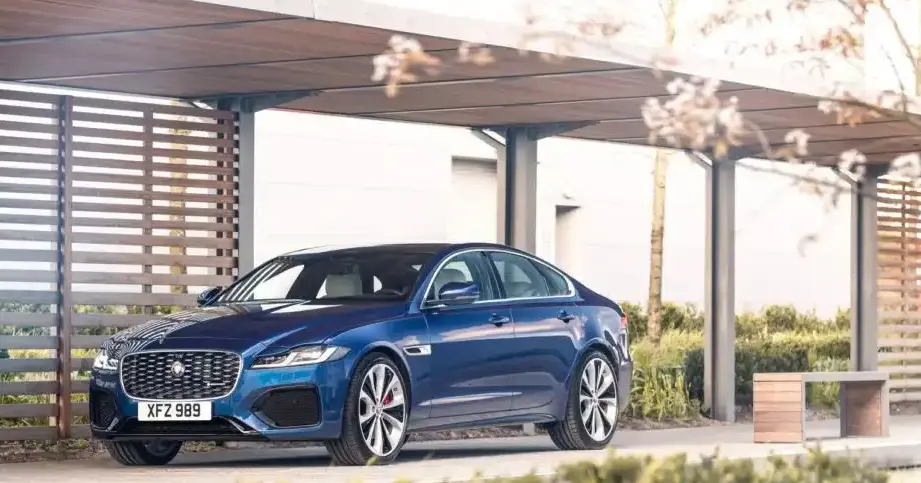
The Jaguar XF (X260) facelift, produced from October 2020 to 2024, represented a significant refresh of the second-generation XF. Among the engine options available, the 2.0i (250 hp) with all-wheel drive and an automatic transmission was a popular choice, particularly in markets seeking a balance between performance, efficiency, and all-weather capability. This variant occupied a mid-range position within the XF lineup, slotting below the more powerful six-cylinder models and above the entry-level diesel options. It aimed to provide a refined driving experience with respectable performance for daily commuting and longer journeys.
Technical Specifications
| Brand | Jaguar |
| Model | XF |
| Generation | XF (X260, facelift 2020) |
| Type (Engine) | 2.0i (250 Hp) AWD Automatic |
| Start of production | October, 2020 |
| End of production | 2024 |
| Powertrain Architecture | Internal Combustion engine |
| Body type | Sedan |
| Seats | 5 |
| Doors | 4 |
| Fuel Type | Petrol (Gasoline) |
| Acceleration 0 – 100 km/h | 7.0 sec |
| Acceleration 0 – 62 mph | 7.0 sec |
| Acceleration 0 – 60 mph | 6.6 sec |
| Maximum speed | 240 km/h (149.13 mph) |
| Emission standard | Euro 6d |
| Weight-to-power ratio | 6.8 kg/Hp, 146.2 Hp/tonne |
| Weight-to-torque ratio | 4.7 kg/Nm, 213.5 Nm/tonne |
| Power | 250 Hp @ 5500 rpm |
| Power per litre | 125.2 Hp/l |
| Torque | 365 Nm @ 1300-4500 rpm (269.21 lb.-ft. @ 1300-4500 rpm) |
| Engine layout | Front, Longitudinal |
| Engine Model/Code | Ingenium / PT204 |
| Engine displacement | 1997 cm3 (121.86 cu. in.) |
| Number of cylinders | 4 |
| Engine configuration | Inline |
| Cylinder Bore | 83 mm (3.27 in.) |
| Piston Stroke | 92.29 mm (3.63 in.) |
| Compression ratio | 10.5:1 |
| Number of valves per cylinder | 4 |
| Fuel injection system | Direct injection |
| Engine aspiration | Turbocharger, Intercooler |
| Engine oil capacity | 7 l (7.4 US qt | 6.16 UK qt) |
| Kerb Weight | 1710 kg (3769.9 lbs.) |
| Trunk (boot) space – minimum | 459 l (16.21 cu. ft.) |
| Trunk (boot) space – maximum | 1484 l (52.41 cu. ft.) |
| Fuel tank capacity | 74 l (19.55 US gal | 16.28 UK gal) |
| Permitted trailer load without brakes | 750 kg (1653.47 lbs.) |
| Length | 4962 mm (195.35 in.) |
| Width with mirrors folded | 1982 mm (78.03 in.) |
| Width including mirrors | 2089 mm (82.24 in.) |
| Height | 1456 mm (57.32 in.) |
| Wheelbase | 2960 mm (116.54 in.) |
| Front track | 1602 mm (63.07 in.) |
| Rear (Back) track | 1605 mm (63.19 in.) |
| Front overhang | 847 mm (33.35 in.) |
| Rear overhang | 1155 mm (45.47 in.) |
| Drag coefficient (Cd) | 0.26 |
| Minimum turning circle (turning diameter) | 11.63 m (38.16 ft.) |
| Drivetrain Architecture | The Internal combustion engine (ICE) drives the rear wheels permanently, and the front wheels are driven through an electrically or mechanically operated clutch if necessary. |
| Drive wheel | All wheel drive (4×4) |
| Number of gears and type of gearbox | 8 gears, automatic transmission ZF |
| Front suspension | Double wishbone |
| Rear suspension | Independent coil spring |
| Front brakes | Ventilated discs, 350 mm |
| Rear brakes | Ventilated discs, 325 mm |
| Assisting systems | ABS (Anti-lock braking system) |
| Steering type | Steering rack and pinion |
| Power steering | Electric Steering |
| Wheel rims size | 18 |
Powertrain & Engine Architecture
At the heart of the XF 2.0i AWD was Jaguar’s Ingenium engine family, specifically the PT204 2.0-liter turbocharged inline-four. This engine, a cornerstone of Jaguar Land Rover’s modular engine strategy, featured direct injection and a twin-scroll turbocharger. The engine produced 250 horsepower at 5500 rpm and 365 Nm (269.21 lb-ft) of torque from a low 1300 rpm, sustaining peak torque through 4500 rpm. This broad torque curve contributed to strong mid-range acceleration. The engine utilized a relatively high 10.5:1 compression ratio for improved thermal efficiency. The eight-speed automatic transmission, sourced from ZF, was a crucial component of this powertrain. Known for its smooth and quick shifts, the ZF 8HP transmission offered a wide range of gear ratios, optimizing both performance and fuel economy. The all-wheel-drive system employed a full-time system with intelligent torque distribution, prioritizing rear-wheel drive for a sporty feel but seamlessly engaging the front wheels when traction was needed.
Driving Characteristics
The 2.0i AWD XF offered a comfortable and capable driving experience. While not as overtly sporty as the higher-powered six-cylinder variants, the 250 hp engine provided ample power for everyday driving and confident overtaking. The eight-speed automatic transmission contributed to smooth acceleration, and the all-wheel-drive system instilled confidence in various weather conditions. The gear ratios were tuned for a balance between responsiveness and fuel efficiency, with lower gears providing brisk acceleration and higher gears optimizing cruising economy. Compared to the manual transmission options (not widely available in the US market), the automatic offered greater convenience, particularly in urban environments. The 0-60 mph time of around 6.6 seconds was respectable for a luxury sedan of this size and weight.
Equipment & Trim Levels
The 2.0i AWD XF typically came well-equipped, reflecting Jaguar’s focus on luxury and refinement. Standard features often included leather upholstery, a touchscreen infotainment system with navigation, Apple CarPlay and Android Auto compatibility, a premium sound system, and a suite of driver-assistance technologies such as lane-keeping assist, adaptive cruise control, and automatic emergency braking. Optional extras could include a panoramic sunroof, upgraded leather trim, heated and ventilated seats, and a head-up display. Trim levels varied by market, but generally offered increasing levels of luxury and technology. The base trim provided a comfortable and well-equipped experience, while higher trims added more premium features and cosmetic enhancements.
Chassis & Braking
The XF (X260) featured a lightweight aluminum-intensive construction, contributing to its relatively low curb weight of 1710 kg (3769.9 lbs). The suspension system consisted of double wishbones at the front and an independent coil spring setup at the rear, providing a comfortable ride and good handling characteristics. The braking system utilized ventilated discs on all four wheels, with larger discs at the front (350mm) compared to the rear (325mm). Anti-lock braking system (ABS) was standard, along with electronic stability control and traction control. The steering system was an electric power-assisted rack and pinion, offering precise and responsive steering feel.
Market Reception & Comparison
The Jaguar XF 2.0i AWD was generally well-received by automotive critics. It was praised for its comfortable ride, refined interior, and strong engine performance. Fuel economy was considered competitive for its class, achieving around 25-30 mpg in mixed driving conditions. Compared to its rivals, such as the BMW 5 Series and Mercedes-Benz E-Class, the XF offered a distinctive British character and a more engaging driving experience. However, some critics noted that the infotainment system could be less intuitive than those offered by its German competitors. Compared to the XF’s six-cylinder options, the 2.0i offered a more affordable entry point into the XF range, albeit with slightly less outright performance.
Legacy
The Ingenium engine family, including the PT204 2.0-liter unit, has proven to be relatively reliable, although preventative maintenance is crucial. Common issues reported include occasional oil leaks and potential problems with the timing chain tensioner on earlier iterations of the engine. The ZF 8HP transmission is also known for its durability, provided it is serviced regularly. On the used car market, the XF 2.0i AWD represents a good value proposition, offering a luxurious and well-equipped sedan at a competitive price. Its blend of performance, efficiency, and all-weather capability makes it a practical and appealing choice for buyers seeking a refined and capable luxury car.