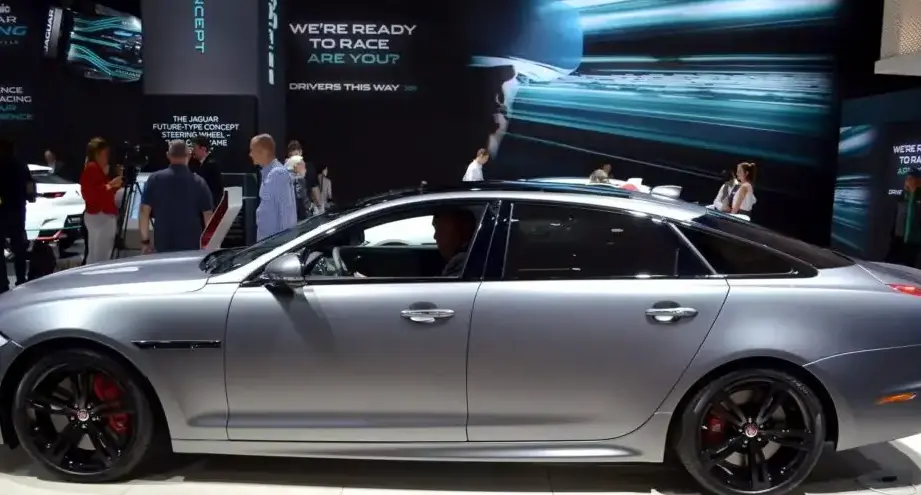
The Jaguar XJ Long (X351 facelift) 2.0, produced from 2015 to 2018, represented a significant shift for the flagship Jaguar sedan. While traditionally powered by larger displacement engines, this variant introduced a turbocharged four-cylinder option to the XJ lineup, aiming to broaden its appeal with improved fuel efficiency and lower running costs without sacrificing the luxury and refinement expected of the model. Positioned as the entry point to the XJ Long range, it offered a compelling alternative to its six and eight-cylinder siblings, particularly in markets where fuel economy and emissions regulations were becoming increasingly stringent. The X351 facelift brought updated styling, enhanced technology, and this new engine option to the already sophisticated XJ platform.
Technical Specifications
| Brand | Jaguar |
| Model | XJ |
| Generation | XJ Long (X351 facelift 2015) |
| Type (Engine) | 2.0 (240 Hp) Automatic |
| Start of production | 2015 |
| End of production | 2018 |
| Powertrain Architecture | Internal Combustion engine |
| Body type | Sedan |
| Seats | 5 |
| Doors | 4 |
| Fuel consumption (combined) | 8.4 l/100 km |
| Fuel consumption (US mpg) | 28 US mpg |
| Fuel consumption (UK mpg) | 33.6 UK mpg |
| Fuel consumption (km/l) | 11.9 km/l |
| CO2 emissions | 199 g/km |
| Fuel Type | Petrol (Gasoline) |
| Acceleration 0 – 100 km/h | 7.9 sec |
| Acceleration 0 – 62 mph | 7.9 sec |
| Acceleration 0 – 60 mph | 7.5 sec |
| Maximum speed | 241 km/h (149.75 mph) |
| Emission standard | Euro 6 |
| Weight-to-power ratio | 7.3 kg/Hp |
| Power | 240 Hp @ 5500 rpm |
| Power per litre | 120.1 Hp/l |
| Torque | 340 Nm @ 2000-4000 rpm (250.77 lb.-ft. @ 2000-4000 rpm) |
| Engine layout | Front, Longitudinal |
| Engine Model/Code | EcoBoost / 204PT |
| Engine displacement | 1999 cm3 (121.99 cu. in.) |
| Number of cylinders | 4 |
| Engine configuration | Inline |
| Cylinder Bore | 87.5 mm (3.44 in.) |
| Piston Stroke | 83.1 mm (3.27 in.) |
| Compression ratio | 10:1 |
| Number of valves per cylinder | 4 |
| Fuel injection system | Direct injection |
| Engine aspiration | Turbocharger, Intercooler |
| Valvetrain | DOHC |
| Engine oil capacity | 5.4 l (5.71 US qt | 4.75 UK qt) |
| Coolant capacity | 8.1 l (8.56 US qt | 7.13 UK qt) |
| Kerb Weight | 1755 kg (3869.11 lbs.) |
| Fuel tank capacity | 80 l (21.13 US gal | 17.6 UK gal) |
| Length | 5255 mm (206.89 in.) |
| Width | 1899 mm (74.76 in.) |
| Width including mirrors | 2105 mm (82.87 in.) |
| Height | 1460 mm (57.48 in.) |
| Wheelbase | 3157 mm (124.29 in.) |
| Front track | 1626 mm (64.02 in.) |
| Rear track | 1604 mm (63.15 in.) |
| Drivetrain | Rear wheel drive |
| Number of gears | 8 |
| Gearbox type | Automatic transmission |
| Front suspension | Double wishbone |
| Rear suspension | Double wishbone |
| Front brakes | Ventilated discs |
| Rear brakes | Ventilated discs |
| Steering type | Steering rack and pinion |
| Power steering | Electric |
Powertrain & Engine Architecture
The heart of this XJ variant is Jaguar’s 2.0-liter turbocharged inline-four engine, internally designated as the 204PT. This engine, part of the Ingenium engine family, utilizes direct injection and a twin-scroll turbocharger to deliver a respectable 240 horsepower and 250 lb-ft of torque. The engine’s aluminum block and cylinder head contribute to weight savings, aiding in overall efficiency. The eight-speed automatic transmission, sourced from ZF, is a crucial component of the powertrain. Known for its smooth and responsive shifts, the ZF 8HP transmission features a wide gear ratio spread, optimizing both acceleration and fuel economy. The transmission is electronically controlled, adapting to driving conditions and driver input.
Driving Characteristics
The 2.0-liter XJ Long offers a distinctly different driving experience compared to its higher-powered siblings. While it doesn’t possess the outright acceleration of the supercharged V6 or V8 models, it provides ample power for everyday driving and comfortable highway cruising. The 0-60 mph time of around 7.5 seconds is more than adequate for most drivers. The eight-speed automatic transmission plays a key role in maximizing the engine’s output, keeping the engine within its optimal torque band. Compared to the manual transmissions offered on other XJ variants, the automatic prioritizes smoothness and ease of use, making it well-suited for the XJ’s luxury positioning. The rear-wheel-drive configuration maintains the traditional Jaguar driving feel, offering a balanced and engaging experience.
Equipment & Trim Levels
The 2.0-liter XJ Long typically came equipped with a generous level of standard features, befitting its luxury status. These included leather upholstery, wood veneer trim, a premium audio system, and a comprehensive suite of safety technologies. Standard features often included heated front seats, a power-adjustable steering column, and automatic climate control. Optional extras could include upgraded leather, a panoramic sunroof, rear-seat entertainment, and advanced driver-assistance systems such as adaptive cruise control and lane-keeping assist. Trim levels were often differentiated by the availability of these optional packages and the choice of interior finishes.
Chassis & Braking
The XJ Long’s chassis utilizes a lightweight aluminum construction, contributing to its overall agility and handling. The suspension system employs double wishbones at both the front and rear, providing a comfortable and controlled ride. The braking system features ventilated discs on all four wheels, providing ample stopping power. Anti-lock braking system (ABS) is standard, enhancing safety and stability. While the 2.0-liter model doesn’t receive the larger brakes found on the higher-performance variants, the braking system is more than capable of handling the car’s weight and power.
Market Reception & Comparison
The introduction of the 2.0-liter XJ Long was met with mixed reviews. Critics generally praised the engine’s refinement and fuel efficiency, acknowledging its suitability for drivers prioritizing economy. However, some reviewers noted that the engine lacked the character and performance of the traditional Jaguar powerplants. Compared to the V6 and V8 models, the 2.0-liter offered significantly better fuel economy – around 28 mpg combined – but at the expense of outright performance. In terms of reliability, the Ingenium engine family has proven to be generally robust, although some early models experienced minor software glitches that were addressed through updates.
Legacy
The 2.0-liter XJ Long represents a pivotal moment in the XJ’s history, demonstrating Jaguar’s willingness to adapt to changing market demands. While it wasn’t the best-selling variant, it broadened the XJ’s appeal and introduced a new audience to the brand. On the used car market, these models offer a more affordable entry point into XJ ownership, providing a luxurious and refined experience at a lower price point. The Ingenium engine’s proven reliability and relatively low running costs make it an attractive option for buyers seeking a comfortable and efficient luxury sedan. The X351 facelift, including the 2.0-liter variant, remains a desirable and well-regarded example of British automotive engineering.