
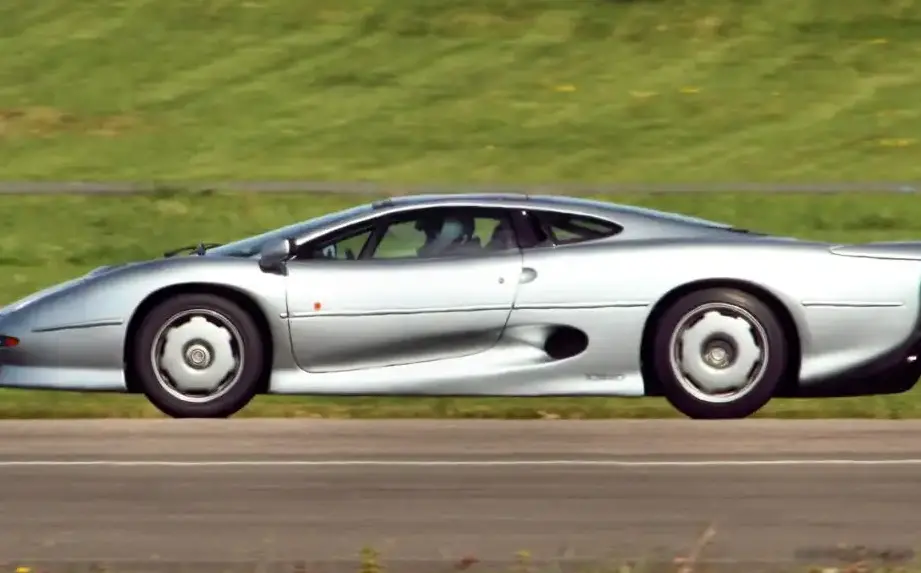
The Jaguar XJ220 3.5 BiTurbo V6, produced between 1992 and 1994, represents a bold and ambitious undertaking by Jaguar. Initially conceived as a potential Le Mans racer, the XJ220 evolved into a limited-production, ultra-high-performance road car. It stands as a testament to British engineering prowess and a unique chapter in Jaguar’s history. While originally planned with a V12 engine, financial constraints and engineering considerations led to the adoption of a turbocharged V6, ultimately resulting in a vehicle that redefined the boundaries of speed and performance for its time. The XJ220 was a flagship model, showcasing Jaguar’s capabilities and competing directly with rivals like the McLaren F1 and Porsche 959.
Technical Specifications
| Brand | Jaguar |
| Model | XJ220 |
| Generation | XJ220 |
| Type (Engine) | 3.5 BiTurbo V6 (542 Hp) |
| Start of production | 1992 |
| End of production | 1994 |
| Powertrain Architecture | Internal Combustion engine |
| Body type | Coupe |
| Seats | 2 |
| Doors | 2 |
| Fuel Type | Petrol (Gasoline) |
| Acceleration 0 – 100 km/h | 3.8 sec |
| Acceleration 0 – 62 mph | 3.8 sec |
| Acceleration 0 – 60 mph | 3.6 sec |
| Maximum speed | 342 km/h (212.51 mph) |
| Weight-to-power ratio | 2.5 kg/Hp, 401.5 Hp/tonne |
| Weight-to-torque ratio | 2.1 kg/Nm, 474.1 Nm/tonne |
| Power | 542 Hp @ 7200 rpm |
| Power per litre | 154.9 Hp/l |
| Torque | 640 Nm @ 4500 rpm (472.04 lb.-ft. @ 4500 rpm) |
| Engine layout | Middle, Longitudinal |
| Engine displacement | 3498 cm3 (213.46 cu. in.) |
| Number of cylinders | 6 |
| Engine configuration | V-engine |
| Cylinder Bore | 94 mm (3.7 in.) |
| Piston Stroke | 84 mm (3.31 in.) |
| Compression ratio | 8.3:1 |
| Number of valves per cylinder | 4 |
| Engine aspiration | BiTurbo, Intercooler |
| Kerb Weight | 1350 kg (2976.24 lbs.) |
| Length | 4930 mm (194.09 in.) |
| Width | 2000 mm (78.74 in.) |
| Width including mirrors | 2220 mm (87.4 in.) |
| Height | 1150 mm (45.28 in.) |
| Wheelbase | 2640 mm (103.94 in.) |
| Drivetrain Architecture | Rear wheel drive |
| Number of gears and type of gearbox | 5 gears, manual transmission |
| Front suspension | Double wishbone |
| Rear suspension | Independent multi-link suspension |
| Front brakes | Ventilated discs, 330 mm |
| Rear brakes | Ventilated discs, 300 mm |
| Assisting systems | ABS (Anti-lock braking system) |
| Steering type | Steering rack and pinion |
| Front wheel tires | 255/45 ZR17 |
| Rear wheel tires | 345/35 ZR18 |
| Front wheel rims | 9J x 17 |
| Rear wheel rims | 14J x 18 |
Powertrain & Engine Architecture
The heart of the XJ220 is its 3.5-liter twin-turbocharged V6 engine, designated the JV6. This engine was a significant departure from the initially planned V12, but proved to be a robust and powerful alternative. The engine utilizes a 60-degree V-angle and features a cast iron block with aluminum cylinder heads. The twin Garrett T25 turbochargers, coupled with an intercooler, force air into the engine, dramatically increasing power output. Fuel delivery is managed by a Bosch Motronic engine management system, controlling sequential fuel injection. The engine boasts four valves per cylinder, operated by double overhead camshafts. The manual transmission is a 5-speed unit, specifically designed to handle the immense torque produced by the engine. The engine’s longitudinal mid-engine layout contributes to the car’s balanced handling characteristics.
Driving Characteristics
The XJ220 delivers a visceral driving experience. The twin-turbochargers provide a noticeable surge of power, though some turbo lag is present. The 5-speed manual transmission requires a skilled driver to extract the most performance, but offers precise control. Acceleration is breathtaking, with 0-60 mph times consistently under 4 seconds. The car feels planted and stable at high speeds, thanks to its aerodynamic design and sophisticated suspension. Compared to potential V12 versions, the V6 offered a lower center of gravity, contributing to improved handling. While not as refined as some contemporary grand tourers, the XJ220 prioritizes raw performance and driver engagement.
Equipment & Trim Levels
The XJ220 was offered with a relatively limited range of options, reflecting its status as a high-performance, exclusive vehicle. Standard features included leather upholstery, power windows, and air conditioning. A premium sound system was also included. Optional extras were limited to choices of exterior colors and some minor interior trim variations. The interior, while functional, was spartan compared to other luxury cars of the era, prioritizing weight reduction and a focused driving environment. The dashboard layout is driver-centric, with clearly visible gauges and controls.
Chassis & Braking
The XJ220 features a lightweight aluminum chassis, bonded and riveted for exceptional rigidity. The suspension utilizes double wishbones at the front and an independent multi-link setup at the rear, providing excellent handling and ride quality. Braking is provided by ventilated disc brakes on all four wheels, assisted by an anti-lock braking system (ABS). The large diameter discs and powerful calipers ensure ample stopping power, even under extreme conditions. The car’s wide track and low center of gravity contribute to its stability and cornering ability. The tires, specifically developed for the XJ220, provide exceptional grip.
Market Reception & Comparison
Upon its release, the XJ220 received mixed reviews. While its performance was universally praised, some critics lamented the adoption of the V6 engine in place of the originally promised V12. However, the V6 proved to be a reliable and potent powerplant. Compared to rivals like the McLaren F1, the XJ220 offered a different driving experience – more raw and visceral, while the F1 prioritized refinement and overall sophistication. The XJ220’s fuel economy, while not a primary concern for its target audience, was surprisingly reasonable for a car of its performance capabilities. Reliability has generally been good, with well-maintained examples proving to be durable.
Legacy
The Jaguar XJ220 remains a highly sought-after collector’s car. Its limited production run (only 275 were built) and unique design contribute to its desirability. The XJ220 demonstrated Jaguar’s engineering capabilities and willingness to push boundaries. The car’s innovative use of materials and technologies, such as its aluminum chassis and twin-turbocharged engine, influenced future Jaguar models. Today, the XJ220 is celebrated as a landmark achievement in automotive history, representing a golden age of high-performance supercars. Well-maintained examples command significant prices in the used car market, reflecting their rarity and historical significance. The XJ220 continues to captivate enthusiasts and serves as a reminder of Jaguar’s commitment to performance and innovation.
