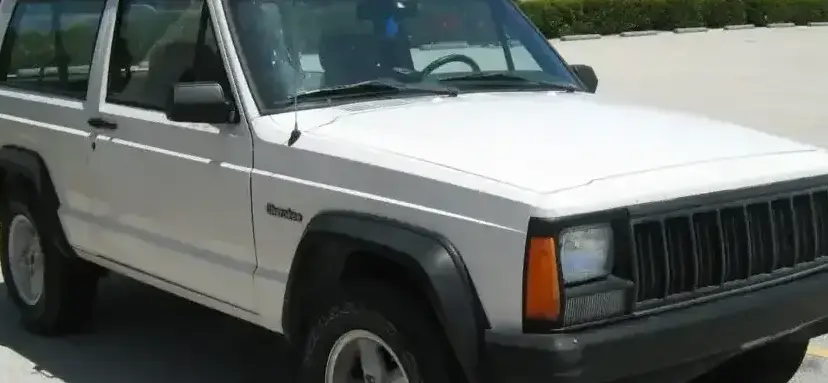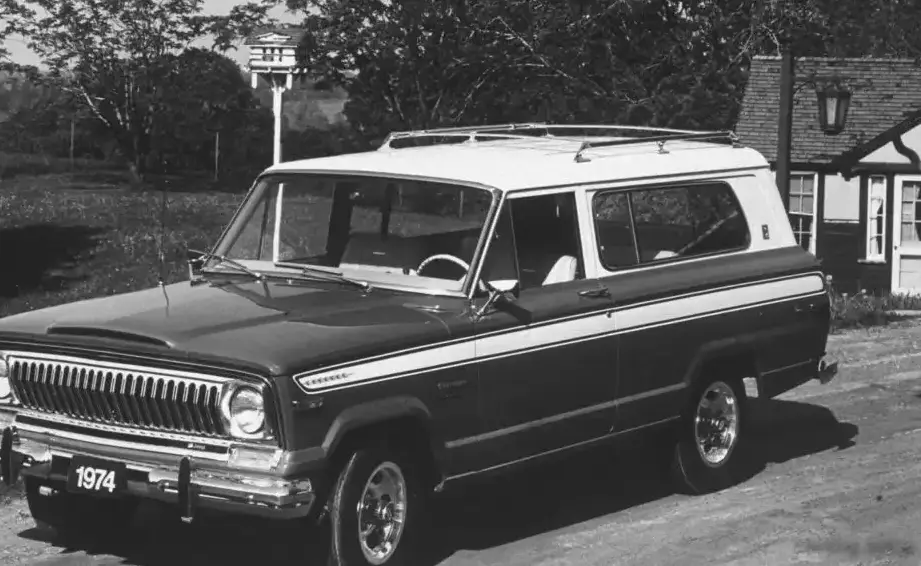
The Jeep Cherokee SJ, particularly the short-wheelbase three-door model produced from 1976 to 1978 equipped with the 4.2-liter (258 cubic inch) inline-six engine producing 103 horsepower, represents a pivotal point in the evolution of the modern sport utility vehicle. This variant, built on the unibody 1HX0 platform, was a key offering in Jeep’s lineup during a period of increasing demand for four-wheel-drive vehicles capable of both on-road comfort and off-road utility. It served as a more compact and affordable alternative to the full-size Wagoneer, appealing to a broader customer base seeking a versatile vehicle for both daily driving and recreational pursuits. This configuration positioned itself as the entry-level offering for those desiring the Cherokee’s 4WD capability.
Technical Specifications
| Brand | Jeep |
| Model | Cherokee |
| Generation | Cherokee I (SJ) 3-door |
| Type (Engine) | 4.2 (103 Hp) 4WD |
| Start of production | 1976 |
| End of production | 1978 |
| Powertrain Architecture | Internal Combustion engine |
| Body type | SUV |
| Seats | 5 |
| Doors | 3 |
| Fuel Type | Petrol (Gasoline) |
| Maximum speed | 115 km/h (71.46 mph) |
| Weight-to-power ratio | 17.7 kg/Hp, 56.6 Hp/tonne |
| Power | 103 Hp @ 3600 rpm |
| Power per litre | 24.3 Hp/l |
| Engine layout | Front, Longitudinal |
| Engine Model/Code | AMC A |
| Engine displacement | 4233 cm3 (258.31 cu. in.) |
| Number of cylinders | 6 |
| Engine configuration | Inline |
| Cylinder Bore | 95.25 mm (3.75 in.) |
| Piston Stroke | 99.06 mm (3.9 in.) |
| Compression ratio | 8:1 |
| Fuel injection system | Carburettor |
| Engine aspiration | Naturally aspirated engine |
| Engine oil capacity | 5.7 l (6.02 US qt | 5.02 UK qt) |
| Coolant | 9.9 l (10.46 US qt | 8.71 UK qt) |
| Kerb Weight | 1820 kg (4012.41 lbs.) |
| Max. weight | 2170 kg (4784.03 lbs.) |
| Max load | 350 kg (771.62 lbs.) |
| Trunk (boot) space – maximum | 2693 l (95.1 cu. ft.) |
| Fuel tank capacity | 83 l (21.93 US gal | 18.26 UK gal) |
| Permitted trailer load without brakes | 680 kg (1499.14 lbs.) |
| Length | 4660 mm (183.46 in.) |
| Width | 1920 mm (75.59 in.) |
| Height | 1720 mm (67.72 in.) |
| Wheelbase | 2770 mm (109.06 in.) |
| Front track | 1520 mm (59.84 in.) |
| Rear (Back) track | 1470 mm (57.87 in.) |
| Front overhang | 760 mm (29.92 in.) |
| Rear overhang | 1130 mm (44.49 in.) |
| Ride height (ground clearance) | 196 mm (7.72 in.) |
| Minimum turning circle (turning diameter) | 11.5 m (37.73 ft.) |
| Drivetrain Architecture | The Internal combustion engine (ICE) drives the rear wheels permanently, and the front wheels are driven through an electrically or mechanically operated clutch if necessary. |
| Drive wheel | All wheel drive (4×4) |
| Number of gears and type of gearbox | 3 gears, manual transmission |
| Front suspension | Leaf spring |
| Rear suspension | Leaf spring |
| Front brakes | Disc, 304.8 mm |
| Rear brakes | Drum, 279.4×50.8 mm |
| Steering type | Cone worm with recirculation balls |
| Wheel rims size | 6J x 15 |
Powertrain & Engine Architecture
The heart of this Cherokee variant is the AMC 4.2-liter inline-six engine, designated as the AMC A engine. This engine, a long-stroke design, was known for its durability and relatively simple construction. It utilized a single barrel carburetor for fuel delivery, a configuration common for the era, prioritizing simplicity over outright performance. The engine featured a cast iron block and cylinder head, contributing to its robust nature. The valvetrain employed a pushrod design, further simplifying the engine’s internal mechanics. The 103 horsepower output was achieved at 3600 rpm, and the engine produced a respectable amount of torque for its displacement, making it well-suited for off-road driving and towing. The engine was mated to a three-speed manual transmission, delivering power to all four wheels via a part-time four-wheel-drive system. The 4WD system allowed the driver to select between two-wheel drive (rear-wheel drive) and four-wheel drive, with a low-range gear for enhanced off-road capability.
Driving Characteristics
The 1976-1978 Jeep Cherokee 3-door with the 4.2-liter engine and manual transmission offered a driving experience characterized by its ruggedness and capability rather than outright speed. Acceleration was modest, with the 103 horsepower engine requiring a deliberate effort to achieve brisk speeds. The three-speed manual transmission, while durable, had relatively wide gear ratios, meaning the engine often operated at higher rpm during highway cruising. Compared to potential upgrades like the later fuel-injected versions of the 4.2L or the more powerful V8 options available in other Cherokee models, this configuration prioritized fuel economy and simplicity. The part-time 4WD system provided excellent traction in off-road conditions, but the lack of a center differential meant it was not intended for use on dry pavement. The leaf spring suspension, while providing a comfortable ride on rough roads, resulted in noticeable body roll during cornering.
Equipment & Trim Levels
The Cherokee 3-door 4.2L typically came with a fairly basic level of standard equipment. Interior appointments were functional and durable, with vinyl or cloth upholstery and a simple dashboard layout. Standard features included a heater and defroster, basic instrumentation (speedometer, fuel gauge, temperature gauge), and a two-spoke steering wheel. Optional extras included air conditioning, an AM radio, and upgraded interior trim. The trim level was generally considered the base model for the Cherokee line, focusing on providing essential features at an affordable price point. The emphasis was on utility and durability rather than luxury.
Chassis & Braking
The Cherokee SJ utilized a body-on-frame construction, providing a robust and durable chassis. The suspension system consisted of leaf springs at both the front and rear, offering a comfortable ride and good load-carrying capacity. The front brakes were disc brakes, providing adequate stopping power, while the rear brakes were drum brakes. The steering system was a cone worm and recirculating ball setup, offering a relatively direct steering feel. The 6J x 15 inch steel wheels were standard, and tire selection was typically geared towards all-terrain use. The relatively high ground clearance of 196mm (7.72 inches) contributed to the Cherokee’s off-road capability.
Market Reception & Comparison
The 1976-1978 Jeep Cherokee 3-door 4.2L was generally well-received by consumers seeking a compact and capable four-wheel-drive vehicle. Critics praised its ruggedness, off-road capability, and relatively affordable price. However, the engine’s modest power output and the basic interior appointments were often noted. Compared to the larger Wagoneer, the Cherokee offered a more manageable size and lower price point. Compared to other SUVs of the era, such as the Chevrolet Blazer or Ford Bronco, the Cherokee offered a unique combination of comfort, capability, and affordability. Fuel economy, while not a primary concern for many buyers, was reasonable for a vehicle of its size and type.
Legacy
The AMC 4.2-liter inline-six engine, as found in this Cherokee variant, proved to be remarkably durable and reliable. Many examples of these engines are still in service today, a testament to their robust construction. The Cherokee SJ, in general, established Jeep as a leader in the SUV market and laid the foundation for the modern Cherokee models. In the used car market, these early Cherokee models are sought after by enthusiasts and collectors, particularly those who appreciate their classic styling and off-road capability. While maintenance can be required due to the vehicle’s age, parts availability remains relatively good, ensuring that these iconic SUVs can continue to be enjoyed for years to come. The 3-door model, with the 4.2L engine, represents a sweet spot for those seeking a simple, reliable, and capable classic Jeep.