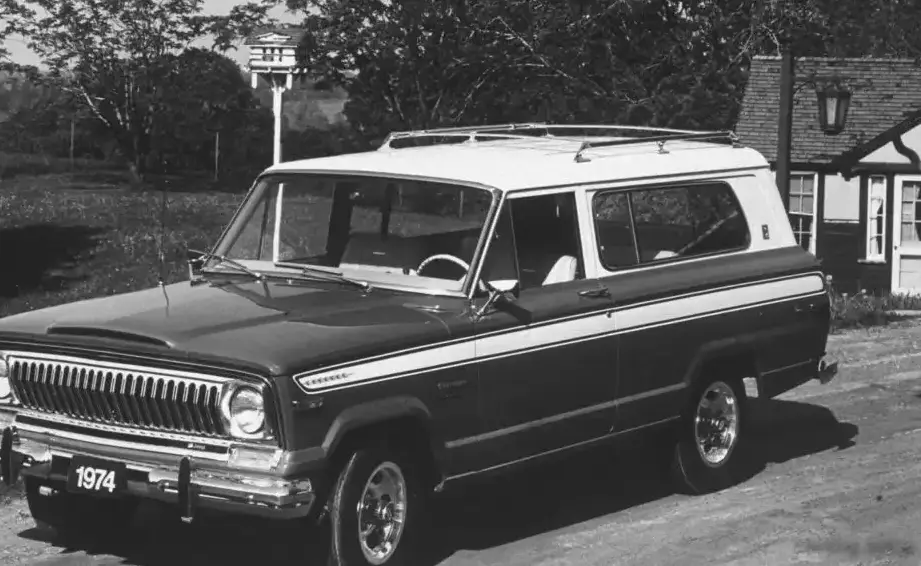
The Jeep Cherokee II (XJ) 3-door 4.0i Sport, produced between 1999 and 2001, represents a final iteration of the highly successful XJ series Cherokee. This particular variant, equipped with the 4.0-liter inline-six engine and a five-speed manual transmission, occupied a middle ground in the Cherokee lineup, offering a balance between capability, affordability, and performance. The XJ Cherokee, renowned for its robust construction and off-road prowess, was a mainstay of the Jeep brand for over a decade, and the 3-door Sport model provided a more compact and agile option for buyers. It was primarily sold in North America, where it competed with other compact and mid-size SUVs like the Ford Explorer and Chevrolet Blazer.
Technical Specifications
| Brand | Jeep |
| Model | Cherokee |
| Generation | Cherokee II (XJ) 3-door |
| Type (Engine) | 4.0 i Sport (192 Hp) |
| Start of production | 1999 |
| End of production | 2001 |
| Powertrain Architecture | Internal Combustion engine |
| Body type | SUV |
| Seats | 5 |
| Doors | 3/5 |
| Fuel consumption (urban) | 13.1 l/100 km (18 US mpg, 21.6 UK mpg, 7.6 km/l) |
| Fuel consumption (extra urban) | 10.7 l/100 km (22 US mpg, 26.4 UK mpg, 9.3 km/l) |
| Fuel Type | Petrol (Gasoline) |
| Weight-to-power ratio | 7.7 kg/Hp, 130.2 Hp/tonne |
| Weight-to-torque ratio | 4.6 kg/Nm, 215.6 Nm/tonne |
| Power | 192 Hp @ 4600 rpm |
| Power per litre | 48.5 Hp/l |
| Torque | 318 Nm @ 3000 rpm (234.54 lb.-ft. @ 3000 rpm) |
| Engine layout | Front, Longitudinal |
| Engine displacement | 3956 cm3 (241.41 cu. in.) |
| Number of cylinders | 6 |
| Engine configuration | Inline |
| Cylinder Bore | 98.4 mm (3.87 in.) |
| Piston Stroke | 86.7 mm (3.41 in.) |
| Compression ratio | 8.8:1 |
| Number of valves per cylinder | 2 |
| Fuel injection system | Multi-port manifold injection |
| Engine aspiration | Naturally aspirated engine |
| Engine oil capacity | 5.7 l (6.02 US qt | 5.02 UK qt) |
| Coolant capacity | 11.4 l (12.05 US qt | 10.03 UK qt) |
| Kerb Weight | 1475 kg (3251.82 lbs.) |
| Max. weight | 2223 kg (4900.88 lbs.) |
| Max load | 748 kg (1649.06 lbs.) |
| Trunk (boot) space – minimum | 932 l (32.91 cu. ft.) |
| Trunk (boot) space – maximum | 1954 l (69 cu. ft.) |
| Fuel tank capacity | 76 l (20.08 US gal | 16.72 UK gal) |
| Length | 4254 mm (167.48 in.) |
| Width | 1763 mm (69.41 in.) |
| Height | 1624 mm (63.94 in.) |
| Wheelbase | 2576 mm (101.42 in.) |
| Front track | 1473 mm (57.99 in.) |
| Rear track | 1473 mm (57.99 in.) |
| Drivetrain Architecture | Rear wheel drive |
| Number of gears and type of gearbox | 5 gears, manual transmission |
| Front suspension | Coil spring |
| Rear suspension | Leaf spring |
| Front brakes | Ventilated discs |
| Rear brakes | Drum |
| Assisting systems | ABS (Anti-lock braking system), Hydraulic Power Steering |
| Tires size | 225/75 R15 |
Powertrain & Engine Architecture
The heart of the Cherokee 4.0i Sport is the 4.0-liter (3956 cc) inline-six cylinder engine, internally designated as the Renix 4.0L. This engine, a staple of Jeep vehicles for many years, is known for its durability and relatively simple design. It features a cast iron block and cylinder head, a two-valve per cylinder configuration, and a multi-port fuel injection system. The engine produces 192 horsepower at 4,600 rpm and 234.54 lb-ft of torque at 3,000 rpm. The five-speed manual transmission provides a direct and engaging driving experience, with gear ratios tailored for both on-road cruising and off-road crawling. The transmission’s gear ratios are relatively closely spaced, allowing the engine to stay within its optimal power band.
Driving Characteristics
The 4.0-liter engine and five-speed manual transmission combination delivers a respectable level of performance for its time. While not a sports car, the Cherokee 4.0i Sport offers ample power for everyday driving and confident acceleration. The manual transmission allows for greater driver control and engagement compared to the available automatic option. The rear-wheel-drive configuration contributes to a more balanced feel, although it does require more careful throttle control in slippery conditions. The Cherokee’s solid axles and robust suspension provide excellent off-road capability, making it a popular choice for those who enjoy venturing off the beaten path. Compared to the higher-output versions, the 4.0L provides a more economical driving experience.
Equipment & Trim Levels
The Cherokee 4.0i Sport trim level typically included features such as air conditioning, power steering, AM/FM stereo, and cloth upholstery. Optional extras included a sunroof, upgraded sound system, and alloy wheels. The interior design was functional and durable, prioritizing practicality over luxury. The 3-door configuration offered a more compact interior compared to the 5-door model, but still provided adequate space for five passengers. The Sport trim was positioned as a mid-range offering, providing a good balance of features and affordability.
Chassis & Braking
The Cherokee II (XJ) utilizes a body-on-frame construction, providing a robust and durable chassis. The front suspension consists of coil springs, while the rear suspension employs leaf springs. This setup provides a comfortable ride and excellent off-road articulation. The braking system features ventilated discs at the front and drum brakes at the rear. Anti-lock brakes (ABS) were standard, enhancing safety and control during emergency braking situations. The tires, typically 225/75 R15, were chosen for their balance of on-road comfort and off-road traction.
Market Reception & Comparison
The Cherokee 4.0i Sport was generally well-received by automotive critics, who praised its ruggedness, off-road capability, and value for money. The 4.0-liter engine was lauded for its durability and smooth power delivery. However, some critics noted that the interior was somewhat dated and lacked the refinement of some competitors. Compared to the automatic transmission version, the manual transmission offered better fuel economy and a more engaging driving experience. The 4.0L engine was also more reliable than some of the other engine options available in the Cherokee lineup.
Legacy
The Jeep Cherokee II (XJ) series, including the 4.0i Sport variant, has earned a devoted following among Jeep enthusiasts. The 4.0-liter inline-six engine is particularly well-regarded for its longevity and ease of maintenance. Today, well-maintained examples of the Cherokee 4.0i Sport are sought after by collectors and off-road enthusiasts. The XJ Cherokee remains a popular platform for modifications and restoration projects, and its enduring popularity is a testament to its robust design and timeless appeal. The simplicity of the 4.0L engine makes it relatively easy and inexpensive to repair, contributing to its continued viability in the used car market.