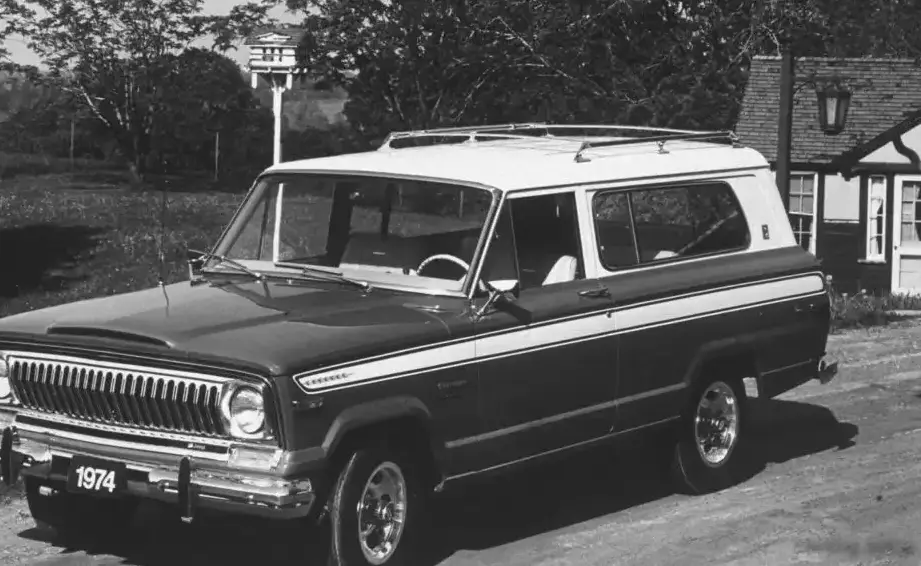
The Jeep Cherokee II (XJ), produced from 1998 to 2001, represented a continuation of the highly successful XJ series, a vehicle that had become synonymous with the compact SUV segment. This particular variant, the 5-door model equipped with the 2.5-liter inline-four engine producing 118 horsepower, served as the entry-level offering in the Cherokee lineup. It aimed to provide affordable four-wheel-drive capability and practicality for families and individuals seeking a versatile vehicle. The XJ platform, introduced in 1984, was renowned for its robust unibody construction and solid front and rear axles, offering a blend of on-road comfort and off-road prowess. This generation continued that legacy, albeit with incremental updates to meet evolving safety and emissions standards.
Technical Specifications
| Brand | Jeep |
| Model | Cherokee |
| Generation | Cherokee II (XJ) 5-door |
| Type (Engine) | 2.5 i (118 Hp) |
| Start of production | 1998 year |
| End of production | 2001 year |
| Powertrain Architecture | Internal Combustion engine |
| Body type | SUV |
| Seats | 5 |
| Doors | 5 |
| Fuel consumption (urban) | 15.6 l/100 km (15.1 US mpg, 18.1 UK mpg, 6.4 km/l) |
| Fuel consumption (extra urban) | 9 l/100 km (26.1 US mpg, 31.4 UK mpg, 11.1 km/l) |
| Fuel Type | Petrol (Gasoline) |
| Acceleration 0 – 100 km/h | 13 sec |
| Acceleration 0 – 62 mph | 13 sec |
| Acceleration 0 – 60 mph | 12.4 sec |
| Maximum speed | 165 km/h (102.53 mph) |
| Weight-to-power ratio | 12.8 kg/Hp, 77.9 Hp/tonne |
| Weight-to-torque ratio | 7.7 kg/Nm, 130.7 Nm/tonne |
| Power | 118 Hp @ 5200 rpm |
| Power per litre | 47.9 Hp/l |
| Torque | 198 Nm @ 3450 rpm (146.04 lb.-ft. @ 3450 rpm) |
| Engine layout | Front, Longitudinal |
| Engine displacement | 2464 cm3 (150.36 cu. in.) |
| Number of cylinders | 4 |
| Engine configuration | Inline |
| Cylinder Bore | 98.4 mm (3.87 in.) |
| Piston Stroke | 81 mm (3.19 in.) |
| Compression ratio | 9.2:1 |
| Number of valves per cylinder | 2 |
| Fuel injection system | Multi-port manifold injection |
| Engine aspiration | Naturally aspirated engine |
| Engine oil capacity | 3.8 l (4.02 US qt | 3.34 UK qt) |
| Coolant | 9.5 l (10.04 US qt | 8.36 UK qt) |
| Kerb Weight | 1515 kg (3340 lbs.) |
| Max. weight | 2105 kg (4640.73 lbs.) |
| Max load | 590 kg (1300.73 lbs.) |
| Trunk (boot) space – minimum | 965 l (34.08 cu. ft.) |
| Trunk (boot) space – maximum | 2010 l (70.98 cu. ft.) |
| Fuel tank capacity | 76 l (20.08 US gal | 16.72 UK gal) |
| Length | 4255 mm (167.52 in.) |
| Width | 1725 mm (67.91 in.) |
| Height | 1630 mm (64.17 in.) |
| Wheelbase | 2576 mm (101.42 in.) |
| Front track | 1473 mm (57.99 in.) |
| Rear (Back) track | 1473 mm (57.99 in.) |
| Drive wheel | All wheel drive (4×4) |
| Number of gears and type of gearbox | 5 gears, manual transmission |
| Front suspension | Coil spring |
| Rear suspension | Leaf spring |
| Front brakes | Ventilated discs |
| Rear brakes | Drum |
| Assisting systems | ABS (Anti-lock braking system) |
| Steering type | Steering rack and pinion |
| Power steering | Hydraulic Steering |
| Tires size | 215/75 R15 |
Powertrain & Engine Architecture
The heart of this Cherokee variant was the 2.5-liter (2464 cc) inline-four cylinder engine. This engine, often referred to as the 4.0L despite its actual displacement, was a relatively simple and robust design. It featured a cast iron block and aluminum cylinder head, with two valves per cylinder operated by a single overhead camshaft. Fuel delivery was handled by a multi-port fuel injection system, providing adequate, though not exceptional, performance. The engine produced 118 horsepower at 5200 rpm and 198 Nm (146 lb-ft) of torque at 3450 rpm. The engine’s relatively low compression ratio of 9.2:1 was a factor in its ability to run on regular unleaded gasoline. The standard transmission was a 5-speed manual, providing a reasonable balance between fuel economy and drivability. The transmission was known for its durability, but its shift quality wasn’t particularly refined compared to more modern units.
Driving Characteristics
The 118 hp 2.5-liter engine, paired with the 5-speed manual transmission, provided adequate, but not exhilarating, performance. Acceleration from 0 to 60 mph took around 12.4 seconds, and top speed was limited to approximately 102.5 mph. The engine felt somewhat strained when accelerating hard or climbing hills, and passing maneuvers required careful planning. The manual transmission’s gear ratios were spaced to prioritize fuel economy and low-end torque, making it suitable for off-road driving and everyday commuting. Compared to the more powerful 4.0-liter inline-six engine option, this variant felt significantly slower. However, it offered better fuel economy and a lighter front end, which some drivers preferred for handling.
Equipment & Trim Levels
The 2.5-liter Cherokee typically came with a fairly basic level of equipment. Standard features generally included air conditioning, a basic AM/FM radio, cloth upholstery, and manual windows and locks. Power steering and anti-lock brakes (ABS) were often standard, but could vary depending on regional specifications. Optional extras included a cassette or CD player, upgraded sound systems, cruise control, and a sunroof. Interior trim was typically utilitarian, with durable plastics and a focus on practicality rather than luxury. The exterior featured black plastic cladding around the lower body panels, a hallmark of the XJ Cherokee’s rugged appearance.
Chassis & Braking
The Cherokee II (XJ) utilized a traditional body-on-frame construction, providing a robust and durable platform. The front suspension consisted of coil springs and a stabilizer bar, while the rear suspension employed leaf springs. This setup provided a comfortable ride on paved roads, while still offering sufficient articulation for off-road use. The braking system featured ventilated discs at the front and drum brakes at the rear. While adequate for everyday driving, the braking performance wasn’t particularly strong, especially when the vehicle was fully loaded. The four-wheel-drive system was part-time, requiring the driver to manually engage four-wheel drive when needed.
Market Reception & Comparison
The 2.5-liter Cherokee was generally well-received as an affordable and capable entry-level SUV. Critics praised its ruggedness, practicality, and off-road capability. However, the engine’s lack of power was a common criticism. Compared to the 4.0-liter inline-six version, the 2.5-liter model offered significantly better fuel economy – around 15.6 l/100km in the city and 9 l/100km on the highway – but at the expense of performance. The 2.5L was often favored by buyers who prioritized fuel efficiency and affordability over outright speed.
Legacy
The Jeep Cherokee II (XJ) 2.5-liter variant has proven to be a remarkably durable and reliable vehicle. Many examples are still on the road today, a testament to the quality of its construction and the simplicity of its powertrain. The 2.5-liter engine, while not particularly powerful, is known for its longevity and relatively low maintenance costs. In the used car market, these Cherokees are often sought after by enthusiasts and those looking for a capable and affordable off-road vehicle. However, potential buyers should be aware of common issues such as rust, particularly in areas with harsh winters, and potential wear and tear on the suspension components.