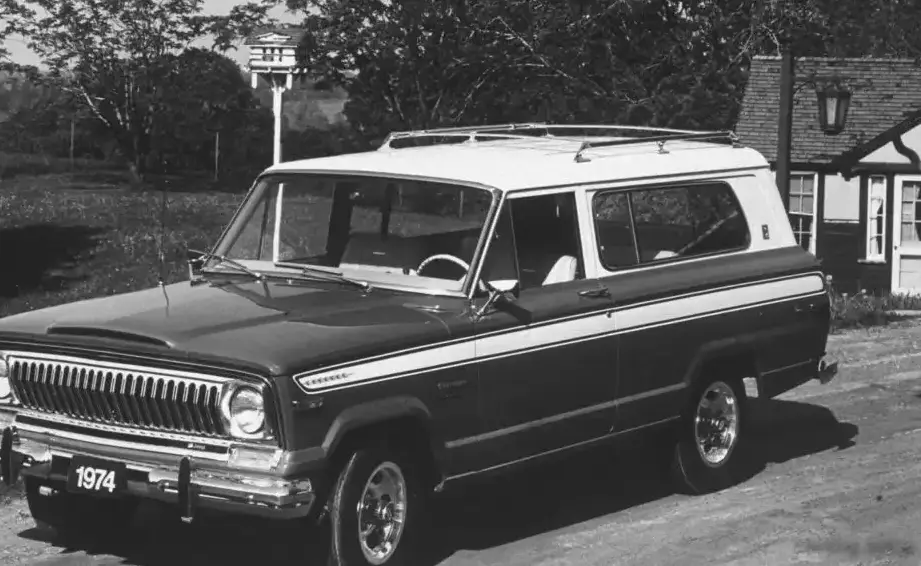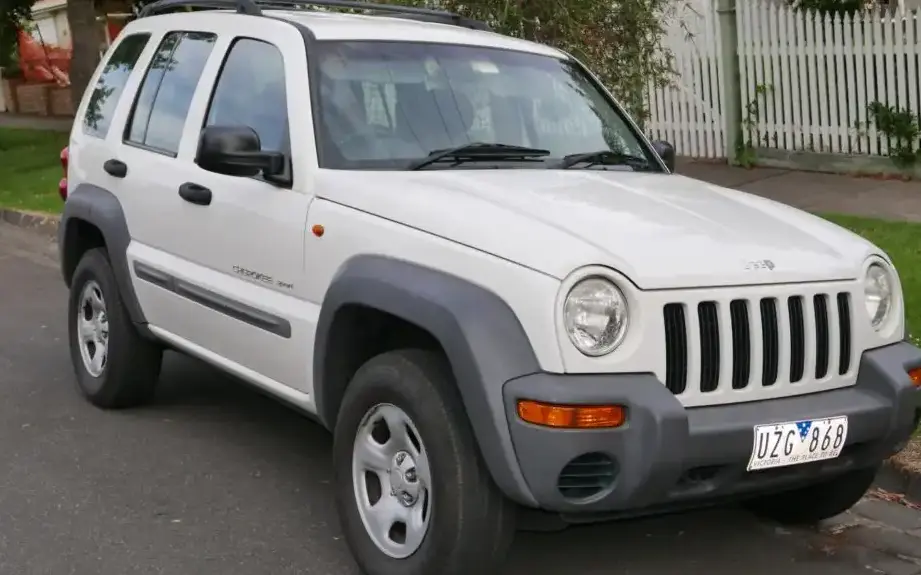
The Jeep Cherokee III (KJ), produced from 2001 to 2005, represented a significant departure from its unibody predecessor, returning to a traditional body-on-frame construction. The 2.4i 16V AWD variant, powered by the ED1 engine, occupied the entry-level position in the Cherokee KJ lineup in many markets. While not the most powerful option, it offered a balance of affordability and capability, appealing to buyers seeking a versatile SUV with all-wheel drive. This model was primarily sold in Europe and other international markets, offering a more economical alternative to the larger engine options.
Technical Specifications
| Brand | Jeep |
| Model | Cherokee |
| Generation | Cherokee III (KJ) |
| Type (Engine) | 2.4i 16V (147 Hp) AWD |
| Start of production | 2001 |
| End of production | 2005 |
| Powertrain Architecture | Internal Combustion engine |
| Body type | SUV |
| Seats | 5 |
| Doors | 5 |
| Fuel consumption (urban) | 16.4 l/100 km (14.3 US mpg, 17.2 UK mpg, 6.1 km/l) |
| Fuel consumption (extra urban) | 9.4 l/100 km (25 US mpg, 30.1 UK mpg, 10.6 km/l) |
| Fuel consumption (combined) | 11.8 l/100 km (19.9 US mpg, 23.9 UK mpg, 8.5 km/l) |
| Fuel Type | Petrol (Gasoline) |
| Maximum speed | 167 km/h (103.77 mph) |
| Weight-to-power ratio | 12.3 kg/Hp, 81.5 Hp/tonne |
| Weight-to-torque ratio | 8.4 kg/Nm, 119.2 Nm/tonne |
| Power | 147 Hp @ 5200 rpm |
| Power per litre | 60.5 Hp/l |
| Torque | 215 Nm @ 4000 rpm (158.58 lb.-ft. @ 4000 rpm) |
| Engine layout | Front, Longitudinal |
| Engine Model/Code | ED1 |
| Engine displacement | 2429 cm3 (148.23 cu. in.) |
| Number of cylinders | 4 |
| Engine configuration | Inline |
| Cylinder Bore | 87.5 mm (3.44 in.) |
| Piston Stroke | 101 mm (3.98 in.) |
| Compression ratio | 9.5:1 |
| Number of valves per cylinder | 4 |
| Fuel injection system | Multi-port manifold injection |
| Engine aspiration | Naturally aspirated engine |
| Valvetrain | DOHC |
| Engine oil capacity | 4.7 l (4.97 US qt | 4.14 UK qt) |
| Kerb Weight | 1803 kg (3974.93 lbs.) |
| Max. weight | 2359 kg (5200.7 lbs.) |
| Max load | 556 kg (1225.77 lbs.) |
| Trunk (boot) space – minimum | 909 l (32.1 cu. ft.) |
| Trunk (boot) space – maximum | 1951 l (68.9 cu. ft.) |
| Fuel tank capacity | 70 l (18.49 US gal | 15.4 UK gal) |
| Permitted trailer load with brakes (12%) | 864 kg (1904.79 lbs.) |
| Permitted trailer load without brakes | 750 kg (1653.47 lbs.) |
| Length | 4496 mm (177.01 in.) |
| Width | 1819 mm (71.61 in.) |
| Height | 1866 mm (73.46 in.) |
| Wheelbase | 2650 mm (104.33 in.) |
| Drive wheel | All wheel drive (4×4) |
| Number of gears and type of gearbox | 5 gears, manual transmission |
| Front suspension | Double wishbone |
| Rear suspension | Transverse stabilizer |
| Front brakes | Ventilated discs |
| Rear brakes | Drum |
| Assisting systems | ABS (Anti-lock braking system) |
| Steering type | Steering rack and pinion |
| Power steering | Hydraulic Steering |
| Tires size | 235/70 R16 |
| Wheel rims size | 7J x 16 |
INTRODUCTION
The Jeep Cherokee III (KJ) 2.4i 16V AWD, manufactured between 2001 and 2005, was a key model in Jeep’s lineup, representing a return to traditional SUV design principles. Built on the 1HX0 platform (shared with the Dodge Nitro later on), the KJ Cherokee aimed to blend off-road capability with on-road comfort. The 2.4-liter engine and all-wheel-drive configuration positioned this variant as an accessible entry point into the Cherokee range, particularly in European and international markets where smaller displacement engines were favored due to taxation and fuel costs. It offered a more affordable alternative to the more powerful 3.7L V6 and 4.0L inline-six engines available in other Cherokee trims.
Powertrain & Engine Architecture
The heart of the 2.4i variant is the ED1 engine, a 2.4-liter inline-four cylinder powerplant. This engine utilizes a multi-port fuel injection system, delivering fuel directly into the intake ports. The engine features a double overhead camshaft (DOHC) valvetrain, operating 16 valves (four per cylinder) to optimize airflow and combustion efficiency. The compression ratio is set at 9.5:1. The 2.4L engine produced 147 horsepower at 5200 rpm and 215 Nm (158.58 lb-ft) of torque at 4000 rpm. Paired with this engine was a 5-speed manual transmission, providing a balance between fuel economy and drivability. While an automatic transmission was available in some markets, the 5-speed manual was common in the 2.4i AWD configuration.
Driving Characteristics
The 2.4-liter engine, while adequate for everyday driving, wasn’t known for its blistering performance. Acceleration was modest, and overtaking required careful planning. The 5-speed manual transmission helped to keep the engine in its optimal power band, but the Cherokee’s weight (approximately 1803 kg or 3975 lbs) noticeably impacted its responsiveness. Compared to the V6 models, the 2.4i felt less powerful, especially when fully loaded or tackling steep inclines. However, the all-wheel-drive system provided enhanced traction in slippery conditions, making it a capable vehicle for light off-roading and inclement weather. The gear ratios were tuned for a balance of fuel efficiency and usability, prioritizing smooth cruising over outright speed.
Equipment & Trim Levels
The 2.4i AWD Cherokee typically came with a reasonable level of standard equipment, though it was less lavish than the higher-end trims. Standard features generally included air conditioning, power windows and locks, and an AM/FM radio. Interior upholstery was typically cloth, and the dashboard featured a functional, if somewhat basic, design. Optional extras included alloy wheels, a CD player, upgraded sound system, and a sunroof. The trim level often dictated the availability of these options, with higher sub-trims offering more standard features.
Chassis & Braking
The Cherokee KJ utilized a traditional body-on-frame construction, providing a robust and durable platform. The front suspension featured a double wishbone design, while the rear suspension employed a solid axle with coil springs and a transverse stabilizer bar. This setup offered a good balance of ride comfort and off-road capability. Braking duties were handled by ventilated discs at the front and drum brakes at the rear. Anti-lock Braking System (ABS) was standard, enhancing safety and control during emergency braking situations. The steering system was a hydraulic rack and pinion setup, providing responsive and precise steering feel.
Market Reception & Comparison
The 2.4i AWD Cherokee was generally well-received as an affordable and practical SUV. Critics acknowledged its all-wheel-drive capability and decent fuel economy, but often noted its lack of outright power compared to the V6 models. Compared to the 3.7L V6, the 2.4i offered significantly better fuel economy (around 19.9 US mpg combined vs. approximately 16-18 US mpg for the V6), but at the cost of performance. The 2.4i was also more affordable to purchase and maintain, making it an attractive option for budget-conscious buyers. The 4.0L inline-six offered more torque, but was less fuel-efficient and generally reserved for heavier-duty applications.
Legacy
The Jeep Cherokee KJ 2.4i 16V AWD has proven to be a relatively reliable vehicle, with the ED1 engine generally considered durable. Common maintenance items include regular oil changes, timing belt replacements (typically around 100,000 miles), and inspection of the cooling system. In the used car market, these Cherokees are often sought after for their affordability and all-wheel-drive capability. While not a performance icon, the 2.4i variant remains a practical and capable SUV, offering a good value proposition for buyers seeking a versatile vehicle for everyday use and occasional off-road adventures. Parts availability is generally good, contributing to its continued popularity among Jeep enthusiasts and budget-minded consumers.