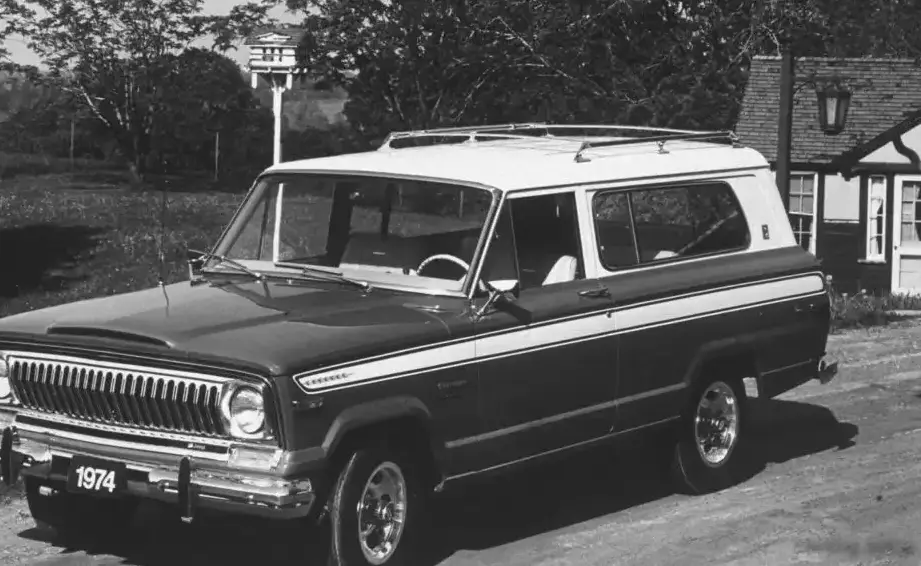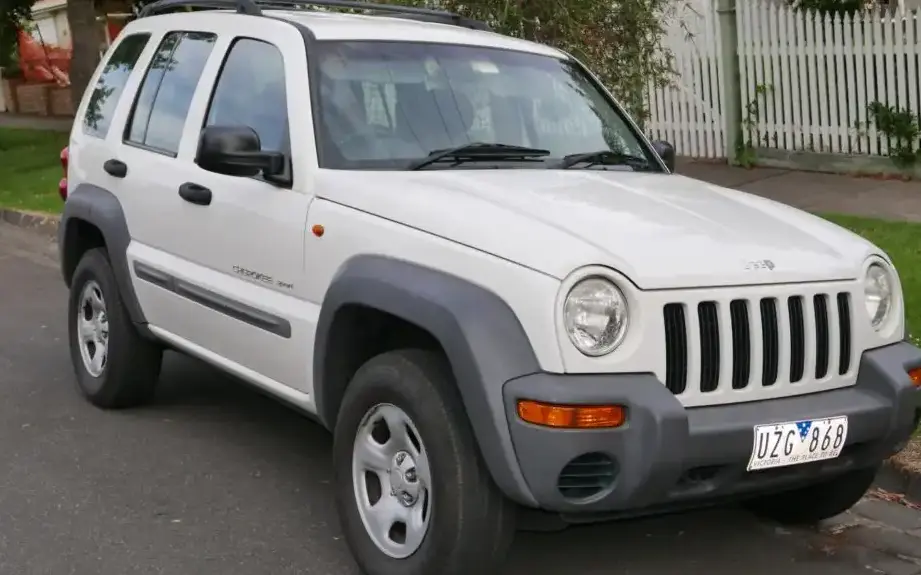
The Jeep Cherokee III (KJ) 3.7L V6 Automatic, produced from 2002 to 2008, represented a significant departure for the iconic Cherokee nameplate. Moving away from the unibody construction of its predecessor, the KJ adopted a traditional body-on-frame design, aligning it more closely with larger Jeep models like the Grand Cherokee and Wrangler. This generation aimed to blend Jeep’s renowned off-road capability with improved on-road comfort and refinement. The 3.7-liter V6 with an automatic transmission occupied a central position in the Cherokee KJ lineup, offering a balance between affordability and performance, making it a popular choice for families and those seeking a versatile SUV.
Technical Specifications
| Brand | Jeep |
| Model | Cherokee |
| Generation | Cherokee III (KJ) |
| Type (Engine) | 3.7 i V6 (210 Hp) Automatic |
| Start of production | 2002 |
| End of production | 2008 |
| Powertrain Architecture | Internal Combustion engine |
| Body type | SUV |
| Seats | 5 |
| Doors | 5 |
| Fuel consumption (urban) | 18.8 l/100 km (12.5 US mpg, 15 UK mpg, 5.3 km/l) |
| Fuel consumption (extra urban) | 11 l/100 km (21.4 US mpg, 25.7 UK mpg, 9.1 km/l) |
| Fuel consumption (combined) | 14 l/100 km (16.8 US mpg, 20.2 UK mpg, 7.1 km/l) |
| Fuel Type | Petrol (Gasoline) |
| Acceleration 0 – 100 km/h | 10.8 sec |
| Acceleration 0 – 62 mph | 10.8 sec |
| Acceleration 0 – 60 mph | 10.3 sec |
| Maximum speed | 180 km/h (111.85 mph) |
| Weight-to-power ratio | 8.4 kg/Hp, 118.6 Hp/tonne |
| Weight-to-torque ratio | 5.8 kg/Nm, 173.4 Nm/tonne |
| Power | 210 Hp @ 5200 rpm |
| Power per litre | 56.8 Hp/l |
| Torque | 307 Nm @ 4000 rpm (226.43 lb.-ft. @ 4000 rpm) |
| Engine layout | Front, Longitudinal |
| Engine Model/Code | EKG |
| Engine displacement | 3700 cm3 (225.79 cu. in.) |
| Number of cylinders | 6 |
| Engine configuration | V-engine |
| Cylinder Bore | 93 mm (3.66 in.) |
| Piston Stroke | 90.8 mm (3.57 in.) |
| Compression ratio | 9.1:1 |
| Number of valves per cylinder | 2 |
| Fuel injection system | Multi-port manifold injection |
| Engine aspiration | Naturally aspirated engine |
| Valvetrain | OHC |
| Engine oil capacity | 4.7 l (4.97 US qt | 4.14 UK qt) |
| Kerb Weight | 1770 kg (3902.18 lbs.) |
| Max. weight | 2390 kg (5269.05 lbs.) |
| Max load | 620 kg (1366.87 lbs.) |
| Trunk (boot) space – minimum | 820 l (28.96 cu. ft.) |
| Trunk (boot) space – maximum | 1950 l (68.86 cu. ft.) |
| Fuel tank capacity | 76 l (20.08 US gal | 16.72 UK gal) |
| Length | 4430 mm (174.41 in.) |
| Width | 1820 mm (71.65 in.) |
| Height | 1865 mm (73.43 in.) |
| Wheelbase | 2650 mm (104.33 in.) |
| Front track | 1525 mm (60.04 in.) |
| Rear (Back) track | 1515 mm (59.65 in.) |
| Drive wheel | All wheel drive (4×4) |
| Number of gears and type of gearbox | 4 gears, automatic transmission |
| Front suspension | Double wishbone |
| Rear suspension | Transverse stabilizer |
| Front brakes | Ventilated discs |
| Rear brakes | Disc |
| Assisting systems | ABS (Anti-lock braking system) |
| Steering type | Steering rack and pinion |
| Power steering | Hydraulic Steering |
| Tires size | 235/70 R16 |
| Wheel rims size | 16 |
Powertrain & Engine Architecture
The heart of the Cherokee KJ 3.7L was the EKG engine, a 3.7-liter (225.79 cubic inches) V6. This engine, part of Chrysler’s PowerTech family, featured a 90-degree V-angle and a cast iron block with aluminum cylinder heads. It utilized a multi-port fuel injection system, delivering fuel directly to each intake port. The engine’s overhead camshaft (OHC) design, with two valves per cylinder, contributed to its relatively smooth operation. The 3.7L V6 produced 210 horsepower at 5200 rpm and 307 Nm (226.43 lb-ft) of torque at 4000 rpm. Paired with a four-speed automatic transmission (typically the 42RE or 45RFE), the powertrain was designed for dependable performance rather than outright speed. The automatic transmission provided smooth shifts, but lacked the responsiveness of a manual gearbox.
Driving Characteristics
The 3.7L V6 automatic Cherokee KJ offered adequate, but not exhilarating, performance. Acceleration from 0-60 mph took around 10.3 seconds, making it competitive with other mid-size SUVs of the era. The automatic transmission’s gear ratios were tuned for everyday drivability and fuel economy, prioritizing comfortable cruising over sporty acceleration. While the engine had sufficient torque for moderate towing and off-road excursions, it could feel strained when fully loaded or tackling steep inclines. Compared to the available 4.0L inline-six engine, the 3.7L offered slightly less low-end torque, but generally provided smoother operation. The 3.7L was a more economical choice than the optional 4.7L V8, but lacked the V8’s substantial power.
Equipment & Trim Levels
The 3.7L V6 Automatic Cherokee KJ was available in various trim levels, including base, Sport, and Limited. The base model typically included features like air conditioning, power windows and locks, and an AM/FM radio. The Sport trim added features such as alloy wheels, upgraded interior trim, and a more comprehensive sound system. The Limited trim offered premium features like leather upholstery, heated front seats, a sunroof, and an upgraded audio system. Optional extras included a navigation system, a rear entertainment system, and various off-road packages. Interior upholstery was typically cloth on base and Sport models, with leather available on the Limited trim.
Chassis & Braking
The Cherokee KJ’s body-on-frame construction provided a robust and durable chassis. The front suspension utilized a double wishbone design, while the rear suspension featured a solid axle with coil springs and a transverse stabilizer bar. This setup offered a good balance between ride comfort and off-road capability. Braking duties were handled by ventilated discs at the front and solid discs at the rear. An Anti-lock Braking System (ABS) was standard equipment. The steering system employed a hydraulic power steering rack and pinion, providing responsive and precise steering feel. The standard tire size was 235/70 R16, mounted on 16-inch wheels.
Market Reception & Comparison
The Cherokee KJ 3.7L V6 Automatic was generally well-received by automotive critics. It was praised for its comfortable ride, spacious interior, and capable off-road performance. However, some critics noted the engine’s lack of power, particularly when compared to larger SUVs. Fuel economy was also a concern, averaging around 16.8 US mpg in combined driving. Compared to other SUVs in its class, such as the Ford Explorer and Toyota 4Runner, the Cherokee KJ offered a more rugged and off-road-focused experience. The 3.7L V6 provided a more affordable entry point into the Cherokee lineup compared to the more powerful 4.7L V8.
Legacy
The Jeep Cherokee KJ 3.7L V6 Automatic has proven to be a relatively reliable vehicle, with many examples still on the road today. The 3.7L V6 engine is generally considered durable, although it is prone to oil leaks and timing chain wear as it ages. The automatic transmission is also generally reliable, but requires regular fluid changes to prevent issues. In the used car market, the Cherokee KJ 3.7L V6 Automatic remains a popular choice for those seeking a capable and affordable SUV. Its blend of off-road capability, comfortable ride, and relatively low maintenance costs make it a compelling option for budget-conscious buyers.