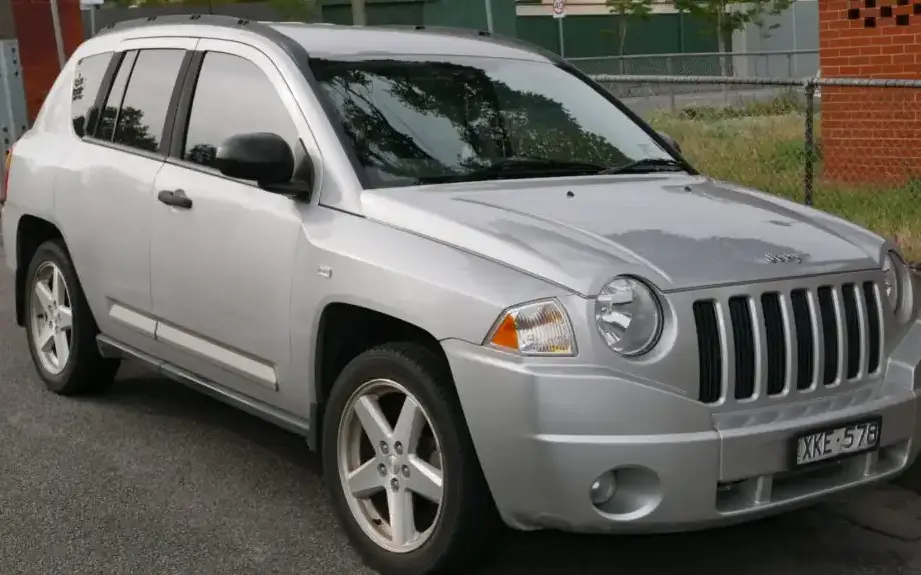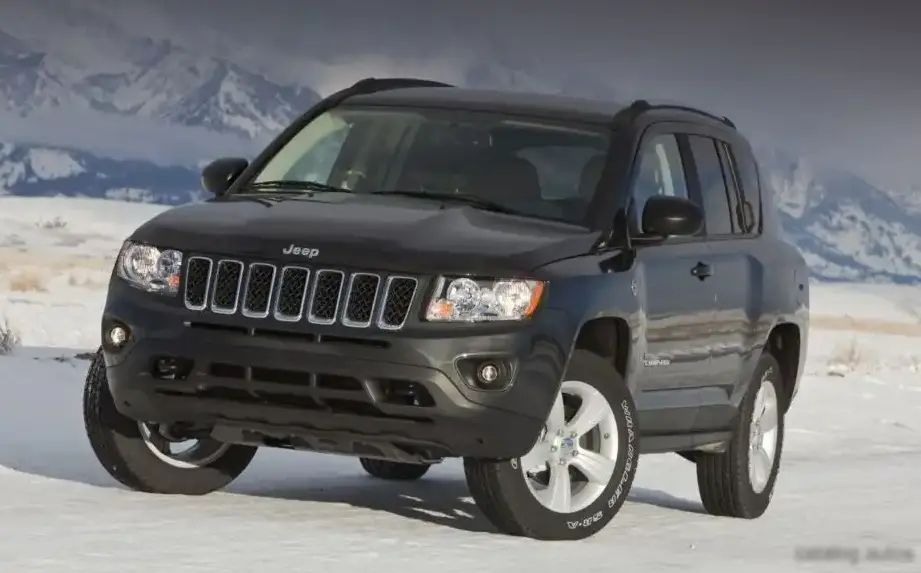
The Jeep Compass II (MP) 2.0 Multijet 4×4, produced from July 2017 to August 2018, represents a significant iteration of Jeep’s compact crossover SUV. Positioned as a mid-range offering within the broader Compass II (MP) lineup – which spanned various engine options and drivetrain configurations – this variant aimed to balance fuel efficiency, all-weather capability, and a reasonable price point for the North American and European markets. It was built on the 551 platform, shared with the Fiat 500X, representing a shift towards more fuel-efficient, globally-sourced components for the Jeep brand. This model year marked a substantial improvement over the first-generation Compass, addressing many criticisms regarding interior quality and driving dynamics.
Technical Specifications
| Brand | Jeep |
| Model | Compass |
| Generation | Compass II (MP) |
| Type (Engine) | 2.0 Multijet (140 Hp) 4×4 |
| Start of production | July, 2017 |
| End of production | August, 2018 |
| Powertrain Architecture | Internal Combustion engine |
| Body type | SUV, Crossover |
| Seats | 5 |
| Doors | 5 |
| Fuel consumption (economy) – urban (NEDC) | 6.1 l/100 km (38.6 US mpg, 46.3 UK mpg, 16.4 km/l) |
| Fuel consumption (economy) – extra urban (NEDC) | 4.7 l/100 km (50 US mpg, 60.1 UK mpg, 21.3 km/l) |
| Fuel consumption (economy) – combined (NEDC) | 5.2 l/100 km (45.2 US mpg, 54.3 UK mpg, 19.2 km/l) |
| CO2 emissions (NEDC) | 138 g/km |
| Fuel Type | Diesel |
| Acceleration 0 – 100 km/h | 10.1 sec |
| Acceleration 0 – 62 mph | 10.1 sec |
| Acceleration 0 – 60 mph | 9.6 sec |
| Maximum speed | 190 km/h (118.06 mph) |
| Emission standard | Euro 6 |
| Weight-to-power ratio | 11 kg/Hp, 90.9 Hp/tonne |
| Weight-to-torque ratio | 4.4 kg/Nm, 227.3 Nm/tonne |
| Power | 140 Hp @ 4000 rpm |
| Power per litre | 71.6 Hp/l |
| Torque | 350 Nm @ 1750 rpm (258.15 lb.-ft. @ 1750 rpm) |
| Engine layout | Front, Transverse |
| Engine Model/Code | EBS, EBT |
| Engine displacement | 1956 cm3 (119.36 cu. in.) |
| Number of cylinders | 4 |
| Engine configuration | Inline |
| Cylinder Bore | 83 mm (3.27 in.) |
| Piston Stroke | 90.4 mm (3.56 in.) |
| Compression ratio | 16.5:1 |
| Number of valves per cylinder | 4 |
| Fuel injection system | Diesel Commonrail |
| Engine aspiration | Turbocharger, Intercooler |
| Valvetrain | DOHC |
| Engine oil capacity | 4.2 l (4.44 US qt | 3.7 UK qt) |
| Coolant | 6.5 l (6.87 US qt | 5.72 UK qt) |
| Kerb Weight | 1540-1724 kg (3395.12 – 3800.77 lbs.) |
| Max. weight | 2131 kg (4698.05 lbs.) |
| Max load | 407-591 kg (897.28 – 1302.93 lbs.) |
| Trunk (boot) space – minimum | 438 l (15.47 cu. ft.) |
| Trunk (boot) space – maximum | 1251 l (44.18 cu. ft.) |
| Fuel tank capacity | 60 l (15.85 US gal | 13.2 UK gal) |
| Max. roof load | 68 kg (149.91 lbs.) |
| Permitted trailer load with brakes (12%) | 1900 kg (4188.78 lbs.) |
| Permitted trailer load without brakes | 545 kg (1201.52 lbs.) |
| Permitted towbar download | 95 kg (209.44 lbs.) |
| Length | 4394 mm (172.99 in.) |
| Width | 1819 mm (71.61 in.) |
| Height | 1644 mm (64.72 in.) |
| Wheelbase | 2636 mm (103.78 in.) |
| Front track | 1550 mm (61.02 in.) |
| Rear (Back) track | 1550 mm (61.02 in.) |
| Ride height (ground clearance) | 215 mm (8.46 in.) |
| Minimum turning circle (turning diameter) | 11.07 m (36.32 ft.) |
| Drivetrain Architecture | The Internal combustion engine (ICE) drives the front wheels permanently, and the rear wheels are driven through an electrically or mechanically operated clutch if necessary. |
| Drive wheel | All wheel drive (4×4) |
| Number of gears and type of gearbox | 6 gears, manual transmission |
| Front suspension | Independent, type McPherson with coil spring and anti-roll bar |
| Rear suspension | Independent coil spring, Transverse stabilizer |
| Front brakes | Ventilated discs |
| Rear brakes | Disc |
Powertrain & Engine Architecture
The heart of this Compass variant is the 2.0-liter Multijet diesel engine, specifically utilizing the EBS or EBT engine codes. This engine is a four-cylinder, inline configuration, featuring a turbocharger with an intercooler to enhance power and efficiency. The engine employs a common-rail direct fuel injection system, delivering fuel at extremely high pressure for optimized combustion. The DOHC (Double Overhead Camshaft) valvetrain, with four valves per cylinder, further contributes to the engine’s breathing efficiency. A compression ratio of 16.5:1 is typical for this type of diesel engine, maximizing energy extraction from the fuel. The 6-speed manual transmission was standard, providing a balance between fuel economy and driver control. The 4×4 system is an electronically controlled system that engages the rear wheels when traction is lost.
Driving Characteristics
The 140 horsepower and 350 Nm (258 lb-ft) of torque offered by the 2.0 Multijet, coupled with the 6-speed manual transmission, provided adequate, though not exhilarating, performance. Acceleration from 0-60 mph took approximately 9.6 seconds, and top speed was around 118 mph. Compared to higher-output versions of the Compass II (like those with gasoline engines), this variant prioritized fuel economy and low-end torque over outright speed. The manual transmission allowed for greater driver engagement, but the gear ratios were tuned for efficiency rather than sporty driving. The 4×4 system provided enhanced traction in slippery conditions, making it a capable all-weather vehicle. The ride quality was generally comfortable, though the suspension could feel somewhat firm over rough surfaces.
Equipment & Trim Levels
The 2.0 Multijet 4×4 trim typically included standard features such as air conditioning, power windows and locks, a basic audio system with USB connectivity, and steel wheels with wheel covers. Higher trim levels, available as options, added features like alloy wheels, a touchscreen infotainment system with navigation, rear parking sensors, and a panoramic sunroof. Interior upholstery was typically cloth, with the option of leather seats on higher-spec models. Safety features included ABS brakes, electronic stability control, and multiple airbags.
Chassis & Braking
The Compass II (MP) utilized an independent suspension setup, with McPherson struts at the front and an independent coil spring arrangement at the rear, incorporating a transverse stabilizer bar for reduced body roll. Braking duties were handled by ventilated discs at the front and solid discs at the rear. The braking system was assisted by ABS (Anti-lock Braking System) and electronic stability control, enhancing safety and control during emergency braking situations.
Market Reception & Comparison
The 2.0 Multijet 4×4 variant of the Jeep Compass II (MP) was generally well-received as a practical and fuel-efficient option within the compact SUV segment. Critics praised its improved interior quality and driving dynamics compared to the first-generation Compass. However, some reviewers noted that the engine could feel underpowered when fully loaded or tackling steep inclines. Compared to the gasoline-powered versions, the diesel offered significantly better fuel economy, making it a popular choice for drivers who prioritized efficiency. The 4×4 system provided a competitive advantage over front-wheel-drive rivals, particularly in regions with inclement weather.
Legacy
The 2.0 Multijet engine, in various iterations, has proven to be a relatively reliable powertrain. However, like all diesel engines, it’s susceptible to issues related to the diesel particulate filter (DPF) if not properly maintained with regular long-distance drives. On the used car market, these Compass models are generally considered a good value, offering a blend of practicality, capability, and affordability. Maintenance costs are typically moderate, and parts availability is generally good. The 2.0 Multijet 4×4 variant remains a viable option for buyers seeking a compact SUV with all-weather capability and reasonable fuel economy.