Technical Specifications
| Brand | Jeep |
| Model | Compass |
| Generation | Compass II (MP, facelift 2021) |
| Type (Engine) | 1.3 GSE T4 (150 Hp) DCT |
| Start of production | April, 2021 |
| End of production | December, 2021 |
| Powertrain Architecture | Internal Combustion engine |
| Body type | SUV, Crossover |
| Seats | 5 |
| Doors | 5 |
| Fuel consumption (urban) | 6.6 l/100 km (35.6 US mpg) |
| Fuel consumption (extra urban) | 5 l/100 km (47 US mpg) |
| Fuel consumption (combined) | 6.6-7 l/100 km (35.6 – 33.6 US mpg) |
| CO2 emissions | 152-159 g/km |
| Fuel Type | Petrol (Gasoline) |
| Acceleration 0 – 100 km/h | 9.2 sec |
| Acceleration 0 – 62 mph | 9.2 sec |
| Acceleration 0 – 60 mph | 8.7 sec |
| Maximum speed | 200 km/h (124.27 mph) |
| Emission standard | Euro 6d-Final |
| Weight-to-power ratio | 9.5 kg/Hp |
| Weight-to-torque ratio | 5.3 kg/Nm |
| Power | 150 Hp @ 5500 rpm |
| Torque | 270 Nm @ 1560 rpm (199.14 lb.-ft. @ 1560 rpm) |
| Engine layout | Front, Transverse |
| Engine Model/Code | 55282328 |
| Engine displacement | 1332 cm3 (81.28 cu. in.) |
| Number of cylinders | 4 |
| Engine configuration | Inline |
| Cylinder Bore | 70 mm (2.76 in.) |
| Piston Stroke | 86.5 mm (3.41 in.) |
| Compression ratio | 10.5:1 |
| Number of valves per cylinder | 4 |
| Fuel injection system | Direct injection |
| Engine aspiration | Turbocharger, Intercooler |
| Engine oil capacity | 4.7 l (4.97 US qt | 4.14 UK qt) |
| Coolant capacity | 7.5 l (7.93 US qt | 6.6 UK qt) |
| Kerb Weight | 1430 kg (3152.61 lbs.) |
| Trunk (boot) space – minimum | 438 l (15.47 cu. ft.) |
| Trunk (boot) space – maximum | 1387 l (48.98 cu. ft.) |
| Fuel tank capacity | 55 l (14.53 US gal | 12.1 UK gal) |
| Length | 4404 mm (173.39 in.) |
| Width with mirrors folded | 1874 mm (73.78 in.) |
| Height | 1629 mm (64.13 in.) |
| Wheelbase | 2636 mm (103.78 in.) |
| Ride height (ground clearance) | 198 mm (7.8 in.) |
| Drivetrain Architecture | Front wheel drive |
| Number of gears and type of gearbox | 6 gears, automatic transmission DCT |
| Front brakes | Ventilated discs |
| Rear brakes | Ventilated discs |
| Tires size | 215/60 R17 |
| Wheel rims size | 17 |
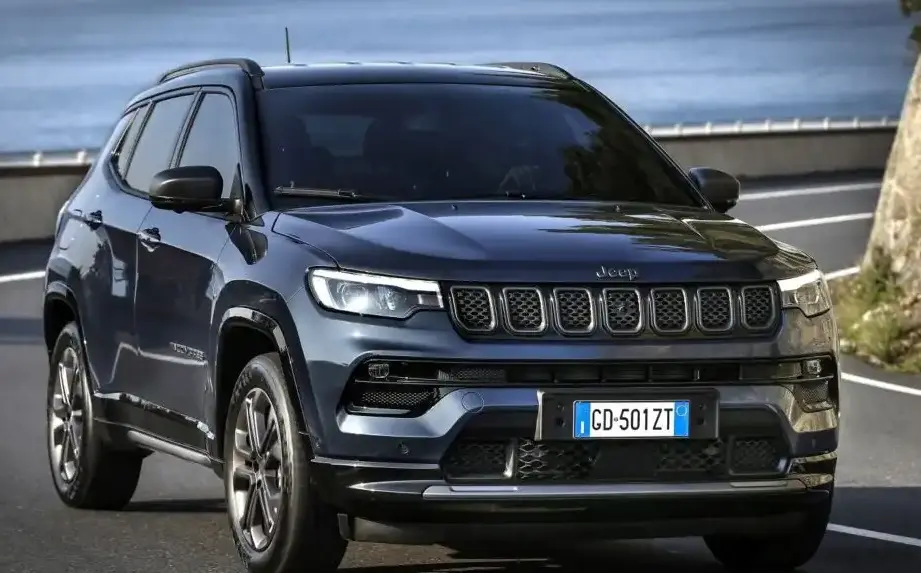
The Jeep Compass II (MP), specifically the facelift model introduced in April 2021, represents a mid-cycle refresh of the second-generation Compass. This variant, powered by the 1.3 GSE T4 engine producing 150 horsepower and paired with a dual-clutch transmission (DCT), was offered primarily in European and select international markets during a limited production run concluding in December 2021. It occupied a mid-range position within the Compass lineup, offering a balance between fuel efficiency, performance, and technology. The 1.3 GSE T4 aimed to provide a more refined driving experience compared to the base engine options while remaining more accessible than the higher-output powertrains.
Powertrain & Engine Architecture
The heart of this Compass variant is the 1.3 GSE (Global Small Engine) turbocharged four-cylinder engine. This engine, developed in collaboration with Stellantis, utilizes direct fuel injection and a single-scroll turbocharger with an intercooler to deliver a balance of power and efficiency. The engine code 55282328 specifically identifies this configuration. The 1.3-liter displacement is achieved with a relatively small bore and stroke (70mm x 86.5mm), contributing to its responsiveness. The engine is transversely mounted in the front of the vehicle. The dual-clutch transmission (DCT) is a six-speed unit, chosen for its quick and smooth gear changes compared to a traditional automatic transmission. This DCT contributes to improved acceleration and fuel economy. The engine also incorporates a Start & Stop system and a particulate filter to meet stringent Euro 6d-Final emissions standards.
Driving Characteristics
The 150 horsepower and 270 Nm (199 lb-ft) of torque provided by the 1.3 GSE T4 engine, coupled with the DCT, resulted in a respectable, though not particularly sporty, driving experience. Acceleration from 0-60 mph was achieved in approximately 8.7 seconds. The DCT’s quick shifts helped to maximize the available power, but the engine’s relatively small displacement meant that it needed to be revved to access its peak performance. Compared to the more powerful 1.8-liter gasoline engine or diesel variants, this version felt less eager during overtaking maneuvers. However, the DCT offered a more engaging driving experience than a traditional torque-converter automatic. The gear ratios were tuned for a balance between fuel efficiency and everyday drivability, prioritizing smooth transitions and comfortable cruising.
Equipment & Trim Levels
The 1.3 GSE T4 DCT trim typically included standard features such as air conditioning, a touchscreen infotainment system with Apple CarPlay and Android Auto compatibility, alloy wheels, and a suite of safety features including ABS, electronic stability control, and multiple airbags. Interior upholstery was generally cloth, with options for leather upgrades. Higher trim levels within the 1.3 GSE T4 range could add features like a larger touchscreen, navigation system, parking sensors, a rearview camera, and advanced driver-assistance systems (ADAS) such as lane departure warning and automatic emergency braking. The specific equipment levels varied depending on the market and optional packages selected.
Chassis & Braking
The Compass II utilized a front-wheel-drive platform with independent suspension in the front (typically MacPherson struts) and a multi-link or twist-beam rear suspension, depending on the specific market and trim level. The 1.3 GSE T4 variant, being a mid-range option, generally featured ventilated disc brakes on all four wheels. The suspension was tuned for comfort, prioritizing ride quality over outright handling performance. Stabilizer bars were included both front and rear to reduce body roll during cornering. The steering system was an electric power-assisted rack and pinion setup, providing light and easy steering feel.
Market Reception & Comparison
The 1.3 GSE T4 DCT Compass received mixed reviews. Critics praised its fuel efficiency and the responsiveness of the DCT, but some found the engine to be underpowered, particularly when fully loaded or tackling steep inclines. Compared to the 1.8-liter gasoline engine, the 1.3 GSE T4 offered better fuel economy but less overall power. The diesel variants (typically 1.6 or 2.0-liter) provided superior torque and fuel efficiency, but at a higher initial cost and with potential concerns regarding diesel emissions regulations. The 1.3 GSE T4 aimed to appeal to buyers seeking a balance between affordability, fuel economy, and a reasonably refined driving experience.
Legacy
The 1.3 GSE T4 engine and DCT combination proved to be generally reliable, although some owners have reported minor issues with the DCT’s software or mechatronic unit. Regular maintenance, including timely oil changes and DCT fluid replacements, is crucial for long-term reliability. In the used car market, the 1.3 GSE T4 Compass represents a relatively affordable entry point into the Compass range. Its fuel efficiency and modern features make it an attractive option for budget-conscious buyers seeking a compact SUV. However, potential buyers should be aware of the engine’s limitations in terms of outright performance and ensure that the DCT has been properly maintained.