
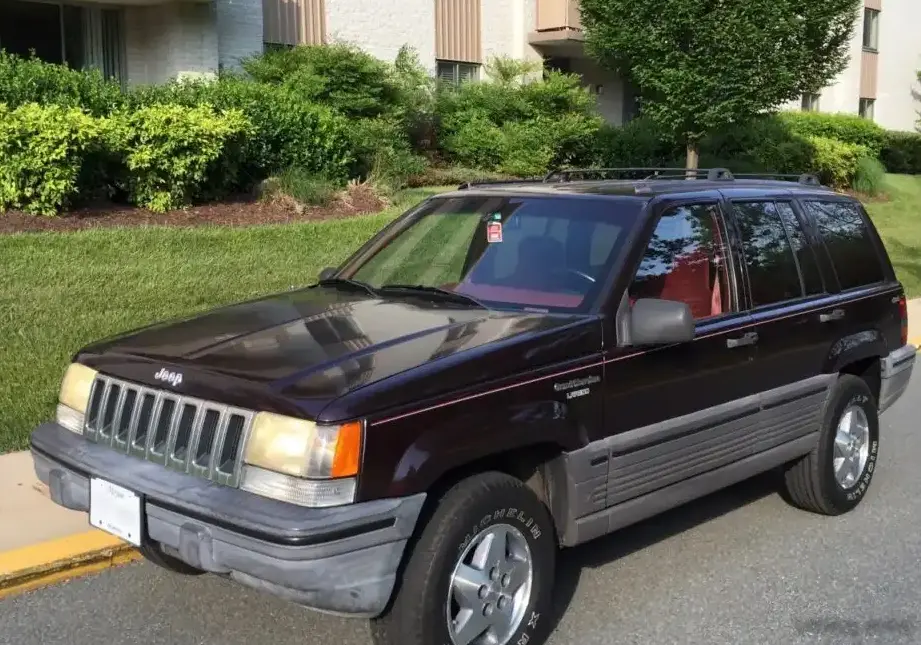
The Jeep Grand Cherokee ZJ 5.9i, produced from 1997 to 1998, represented the pinnacle of performance for the first generation of the popular SUV. Positioned as the premium trim level, it offered a substantial upgrade over the base 4.0L inline-six and the 4.7L V8 models. The ZJ series, launched in 1993, was a significant departure from the more utilitarian Cherokee (XJ), aiming for a more refined and luxurious experience while retaining Jeep’s renowned off-road capability. The 5.9i was the last hurrah for the ZJ platform before the introduction of the WJ generation in 1999.
Technical Specifications
| Brand | Jeep |
| Model | Grand Cherokee |
| Generation | Grand Cherokee I (ZJ) |
| Type (Engine) | 5.9i V8 (249 Hp) 4×4 Automatic |
| Start of production | 1997 |
| End of production | 1998 |
| Powertrain Architecture | Internal Combustion engine |
| Body type | SUV |
| Seats | 5 |
| Doors | 5 |
| Fuel consumption (urban) | 18.1 l/100 km (13 US mpg, 15.6 UK mpg, 5.5 km/l) |
| Fuel consumption (extra urban) | 13.8 l/100 km (17 US mpg, 20.5 UK mpg, 7.2 km/l) |
| Fuel consumption (combined) | 16.8 l/100 km (14 US mpg, 16.8 UK mpg, 6 km/l) |
| Fuel Type | Petrol (Gasoline) |
| Acceleration 0 – 100 km/h | 7.6 sec |
| Acceleration 0 – 62 mph | 7.6 sec |
| Acceleration 0 – 60 mph | 7.2 sec |
| Weight-to-power ratio | 7.7 kg/Hp, 130.2 Hp/tonne |
| Weight-to-torque ratio | 4.1 kg/Nm, 244.6 Nm/tonne |
| Power | 249 Hp @ 4000 rpm |
| Power per litre | 42.2 Hp/l |
| Torque | 468 Nm @ 3200 rpm (345.18 lb.-ft. @ 3200 rpm) |
| Engine layout | Front, Longitudinal |
| Engine Model/Code | EML |
| Engine displacement | 5898 cm3 (359.92 cu. in.) |
| Number of cylinders | 8 |
| Engine configuration | V-engine |
| Cylinder Bore | 101.6 mm (4 in.) |
| Piston Stroke | 90.93 mm (3.58 in.) |
| Compression ratio | 8.7:1 |
| Number of valves per cylinder | 2 |
| Fuel injection system | Multi-port manifold injection |
| Engine aspiration | Naturally aspirated engine |
| Engine oil capacity | 4.7 l (4.97 US qt | 4.14 UK qt) |
| Coolant capacity | 14.1 l (14.9 US qt | 12.41 UK qt) |
| Kerb Weight | 1913 kg (4217.44 lbs.) |
| Max. weight | 2495 kg (5500.53 lbs.) |
| Max load | 582 kg (1283.09 lbs.) |
| Fuel tank capacity | 87 l (22.98 US gal | 19.14 UK gal) |
| Length | 4501 mm (177.2 in.) |
| Width | 1796 mm (70.71 in.) |
| Height | 1648 mm (64.88 in.) |
| Wheelbase | 2690 mm (105.91 in.) |
| Front track | 1486 mm (58.5 in.) |
| Rear track | 1494 mm (58.82 in.) |
| Ride height (ground clearance) | 209 mm (8.23 in.) |
| Drag coefficient (Cd) | 0.45 |
| Minimum turning circle | 11.2 m (36.75 ft.) |
| Approach angle | 37° |
| Departure angle | 30° |
| Ramp-over angle | 22.3° |
| Drive wheel | All wheel drive (4×4) |
| Number of gears | 4 |
| Gearbox type | Automatic transmission |
| Front brakes | Ventilated discs |
| Rear brakes | Ventilated discs |
| Assisting systems | ABS (Anti-lock braking system) |
| Steering type | Steering rack and pinion |
| Power steering | Hydraulic Steering |
| Tires size | 225/70 R16 |
| Wheel rims size | 16 |
Powertrain & Engine Architecture
The heart of the Grand Cherokee 5.9i was the 5.9-liter (360 cubic inch) Magnum V8 engine, designated EML by Chrysler. This engine was a descendant of the LA-series small-block V8s that had been a mainstay of Chrysler products for decades. It featured a cast iron block, aluminum cylinder heads, and a hydraulic roller camshaft. The engine utilized a multi-port fuel injection system, delivering fuel directly to each cylinder for improved efficiency and performance. The 5.9L V8 produced 249 horsepower at 4000 rpm and 345 lb-ft of torque at 3200 rpm. This power was channeled through a four-speed automatic transmission (42RE), known for its durability and relatively smooth shifting. The transmission was electronically controlled, adapting to driving conditions for optimal performance.
Driving Characteristics
The 5.9i Grand Cherokee offered a noticeably different driving experience compared to its lower-powered siblings. The substantial torque output of the V8 engine provided strong acceleration, making it capable of towing heavy loads and tackling challenging terrain with ease. Zero to sixty mph times were consistently in the low 7-second range, a respectable figure for an SUV of its size and weight. The automatic transmission, while not as engaging as a manual, offered smooth and predictable shifts. The 4×4 system, featuring a part-time transfer case, allowed drivers to switch between two-wheel drive for on-road efficiency and four-wheel drive for enhanced traction in off-road conditions. Compared to the 4.0L inline-six, the 5.9i felt significantly more powerful, but the 4.7L V8 offered a middle ground in terms of performance and fuel economy.
Equipment & Trim Levels
The 5.9i trim was the most luxurious offering in the ZJ Grand Cherokee lineup. Standard features included leather upholstery, power-adjustable front seats, a premium sound system, air conditioning, and power windows and locks. Optional extras included a sunroof, upgraded wheels, and a heavy-duty towing package. Interior trim typically featured woodgrain accents and a more refined overall aesthetic compared to the base models. The 5.9i also often included features like automatic temperature control and a trip computer.
Chassis & Braking
The Grand Cherokee ZJ utilized a body-on-frame construction, providing a robust and durable platform. The suspension consisted of a traditional coil spring setup with a solid rear axle. The 5.9i models typically featured heavier-duty suspension components to handle the increased weight and power of the V8 engine. Braking duties were handled by ventilated disc brakes on all four wheels, providing ample stopping power. An Anti-lock Braking System (ABS) was standard, enhancing safety and control during emergency braking situations.
Market Reception & Comparison
The Grand Cherokee 5.9i was generally well-received by automotive critics, who praised its powerful engine, comfortable interior, and capable off-road performance. However, its fuel economy was a common criticism, with the V8 engine consuming a significant amount of gasoline. Compared to the 4.0L and 4.7L models, the 5.9i was considerably more expensive, both to purchase and to operate. The 4.0L offered a more economical option for everyday driving, while the 4.7L provided a balance between performance and fuel efficiency. The 5.9i appealed to buyers who prioritized power and towing capacity over fuel economy.
Legacy
The Jeep Grand Cherokee ZJ 5.9i remains a popular choice among collectors and enthusiasts today. The 5.9L Magnum V8 engine is known for its reliability and relatively simple maintenance requirements. While fuel economy is poor by modern standards, the engine’s robust construction and readily available parts make it a relatively easy engine to maintain. Well-maintained examples of the 5.9i command a premium in the used car market, reflecting their rarity and desirability. The ZJ platform, and particularly the 5.9i variant, helped solidify the Grand Cherokee’s reputation as a capable and luxurious SUV, paving the way for the continued success of the model line.
