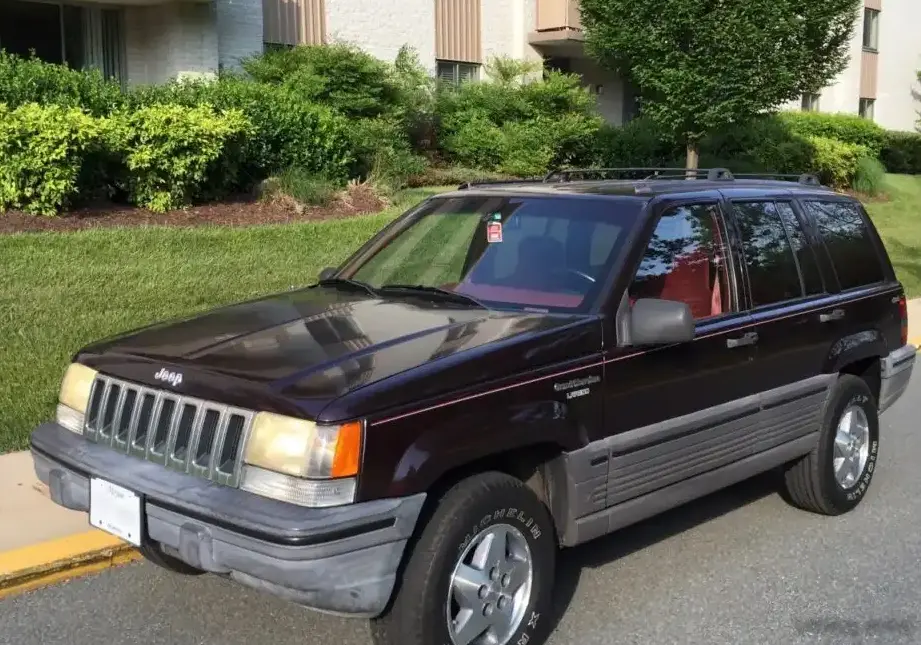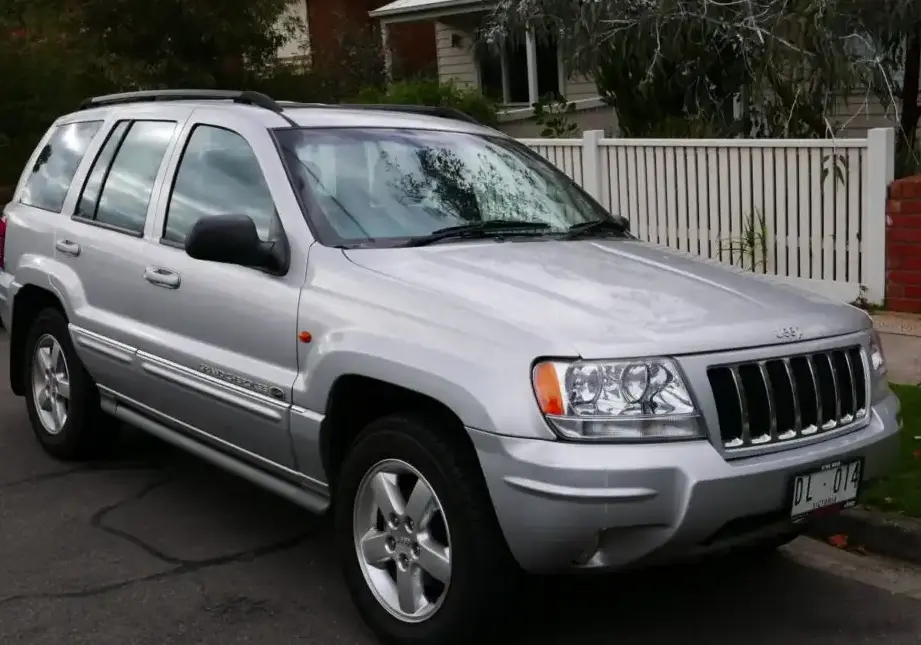
The Jeep Grand Cherokee II (WJ), specifically the facelifted version produced from 2003 to 2004, represented a significant step forward for the iconic American SUV. This generation, introduced in 1999, received a substantial refresh in 2003, including revised styling, upgraded interiors, and improvements to the powertrain options. The 4.0-liter inline-six engine paired with a four-speed automatic transmission and four-wheel drive system was a popular configuration, offering a balance of capability, comfort, and affordability within the Grand Cherokee lineup. This variant occupied a middle ground, appealing to buyers who desired the Grand Cherokee’s ruggedness but didn’t require the higher performance of the V8 models.
Technical Specifications
| Brand | Jeep |
| Model | Grand Cherokee |
| Generation | Grand Cherokee II (WJ, facelift 2003) |
| Type (Engine) | 4.0 (195 Hp) 4×4 Automatic |
| Start of production | 2003 |
| End of production | 2004 |
| Powertrain Architecture | Internal Combustion engine |
| Body type | SUV |
| Seats | 5 |
| Doors | 5 |
| Fuel consumption (economy) – urban (EPA) | 14.7 l/100 km (16 US mpg, 19.2 UK mpg, 6.8 km/l) |
| Fuel consumption (economy) – extra urban (EPA) | 11.2 l/100 km (21 US mpg, 25.2 UK mpg, 8.9 km/l) |
| Fuel consumption (economy) – combined (EPA) | 13.1 l/100 km (18 US mpg, 21.6 UK mpg, 7.6 km/l) |
| Fuel Type | Petrol (Gasoline) |
| Weight-to-power ratio | 9.3 kg/Hp, 107.8 Hp/tonne |
| Weight-to-torque ratio | 5.8 kg/Nm, 172.5 Nm/tonne |
| Power | 195 Hp @ 4600 rpm |
| Power per litre | 49.3 Hp/l |
| Torque | 312 Nm @ 3000 rpm (230.12 lb.-ft. @ 3000 rpm) |
| Engine layout | Front, Longitudinal |
| Engine Model/Code | ERH |
| Engine displacement | 3956 cm3 (241.41 cu. in.) |
| Number of cylinders | 6 |
| Engine configuration | Inline |
| Cylinder Bore | 98.4 mm (3.87 in.) |
| Piston Stroke | 86.7 mm (3.41 in.) |
| Compression ratio | 8.7:1 |
| Number of valves per cylinder | 2 |
| Fuel injection system | Multi-port manifold injection |
| Engine aspiration | Naturally aspirated engine |
| Valvetrain | OHV |
| Engine oil capacity | 5.7 l (6.02 US qt | 5.02 UK qt) |
| Coolant | 14 l (14.79 US qt | 12.32 UK qt) |
| Kerb Weight | 1809 kg (3988.16 lbs.) |
| Max. weight | 2449 kg (5399.12 lbs.) |
| Max load | 640 kg (1410.96 lbs.) |
| Trunk (boot) space – minimum | 1104 l (38.99 cu. ft.) |
| Trunk (boot) space – maximum | 2047 l (72.29 cu. ft.) |
| Fuel tank capacity | 78 l (20.61 US gal | 17.16 UK gal) |
| Max. roof load | 68 kg (149.91 lbs.) |
| Permitted trailer load with brakes (12%) | 2268 kg (5000.08 lbs.) |
| Length | 4610 mm (181.5 in.) |
| Width | 1836 mm (72.28 in.) |
| Height | 1786 mm (70.31 in.) |
| Wheelbase | 2690 mm (105.91 in.) |
| Front track | 1511 mm (59.49 in.) |
| Rear (Back) track | 1511 mm (59.49 in.) |
| Front overhang | 815 mm (32.09 in.) |
| Rear overhang | 1105 mm (43.5 in.) |
| Ride height (ground clearance) | 221 mm (8.7 in.) |
| Drag coefficient (Cd) | 0.45 |
| Minimum turning circle (turning diameter) | 11.4 m (37.4 ft.) |
| Approach angle | 36.7° |
| Departure angle | 28.6° |
| Ramp-over (brakeover) angle | 22.6° |
| Drivetrain Architecture | The Internal combustion engine (ICE) drives the rear wheels permanently, and the front wheels are driven through an electrically or mechanically operated clutch if necessary. |
| Drive wheel | All wheel drive (4×4) |
| Number of gears and type of gearbox | 5 gears, automatic transmission |
| Front suspension | Coil spring, Rigid axle suspension, Transverse stabilizer |
| Rear suspension | Rigid axle suspension, Transverse stabilizer, Trailing arm, Coil spring |
| Front brakes | Ventilated discs, 305 mm |
| Rear brakes | Disc, 305 mm |
| Assisting systems | ABS (Anti-lock braking system) |
| Steering type | Cone worm with recirculation balls |
| Power steering | Hydraulic Steering |
| Tires size | 225/75 R16; 245/70 R16 |
| Wheel rims size | 7J x 16 |
INTRODUCTION
The 2003-2004 Jeep Grand Cherokee 4.0L, equipped with a four-speed automatic transmission and four-wheel drive, was a mainstay of the Jeep lineup. Built on the WJ platform, this facelifted version offered a refined experience compared to earlier iterations. The 4.0-liter inline-six engine was a long-running Jeep staple, known for its durability and relatively simple maintenance. This particular configuration aimed to provide a comfortable and capable SUV experience for families and individuals who didn’t require the added expense and complexity of the V8 options. It was positioned as a practical choice for those needing a versatile vehicle for daily driving and occasional off-road adventures.
Powertrain & Engine Architecture
The heart of this Grand Cherokee variant is the 4.0-liter (3956 cc) inline-six cylinder engine, designated as the ERH code. This engine, a descendant of the AMC-designed 4.0L, featured a cast iron block and aluminum cylinder head. It utilized a multi-port fuel injection system, delivering fuel directly to each cylinder for improved efficiency and performance. The engine employed an overhead valve (OHV) valvetrain with two valves per cylinder. The 4.0L engine produced 195 horsepower at 4600 rpm and 230 lb-ft of torque at 3000 rpm. The four-speed automatic transmission (42RE) was chosen for its reliability and suitability for both on-road comfort and off-road crawling. This transmission featured electronic control for smoother shifting and optimized performance. The transmission’s gear ratios were tailored to provide a balance between acceleration and fuel economy, though the latter remained a weak point for the vehicle.
Driving Characteristics
The 4.0L automatic Grand Cherokee offered a comfortable, if not particularly exhilarating, driving experience. Acceleration was adequate for everyday driving, but the engine felt strained when pushed hard, especially when fully loaded or climbing steep hills. The automatic transmission shifted smoothly, but lacked the responsiveness of a manual gearbox. The 4×4 system, featuring a part-time transfer case, provided excellent traction in slippery conditions and allowed for moderate off-road capability. The vehicle’s weight (approximately 3988 lbs) contributed to a somewhat ponderous feel, especially in corners. Compared to the V8-powered Grand Cherokees, this variant prioritized fuel efficiency and affordability over outright performance.
Equipment & Trim Levels
The 2003-2004 Grand Cherokee 4.0L Automatic typically came standard with features such as air conditioning, power windows and locks, a CD player, and cloth upholstery. Higher trim levels, like the Limited, added features such as leather upholstery, heated seats, a premium sound system, and alloy wheels. Optional extras included a sunroof, navigation system, and upgraded suspension components. The interior design was functional and relatively spacious, offering comfortable seating for five passengers. The dashboard layout was straightforward and easy to use, with clearly labeled controls.
Chassis & Braking
The Grand Cherokee WJ utilized a body-on-frame construction, providing a robust and durable platform. The front suspension consisted of a coil spring and rigid axle setup with a transverse stabilizer bar, while the rear suspension featured a coil spring, rigid axle, trailing arm configuration, also with a transverse stabilizer bar. This suspension setup provided a comfortable ride, but could feel somewhat bouncy on rough roads. Braking duties were handled by ventilated discs at the front and solid discs at the rear. An anti-lock braking system (ABS) was standard, enhancing safety and control during emergency braking situations.
Market Reception & Comparison
The 4.0L automatic Grand Cherokee was generally well-received by critics as a practical and capable SUV. While it wasn’t the fastest or most fuel-efficient vehicle in its class, it offered a good balance of features, comfort, and affordability. Compared to the V8 models, the 4.0L variant was significantly more fuel-efficient, achieving around 18 mpg in combined driving. However, it lacked the V8’s towing capacity and overall performance. The 4.0L engine was also considered more reliable and less prone to expensive repairs than the V8 options.
Legacy
The 4.0L inline-six engine in the WJ Grand Cherokee has proven to be remarkably durable over the long term. Many examples are still on the road today, testament to the engine’s robust design and relatively simple mechanics. While maintenance is generally straightforward, common issues include oil leaks and wear on the cooling system components. In the used car market, these Grand Cherokees are often sought after by enthusiasts and those looking for a reliable and affordable SUV. The 4.0L automatic variant remains a popular choice for those who prioritize practicality and durability over outright performance.