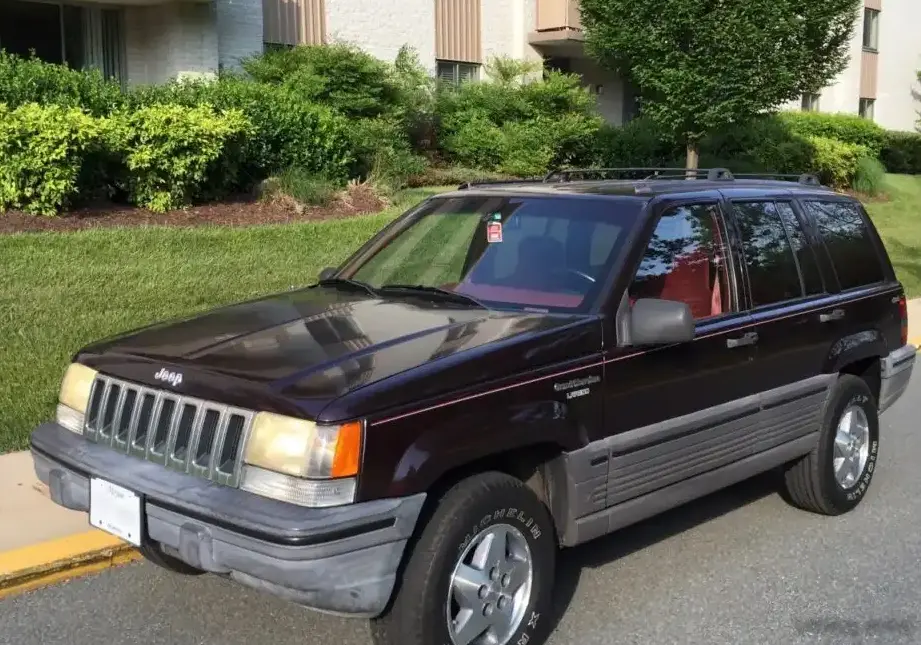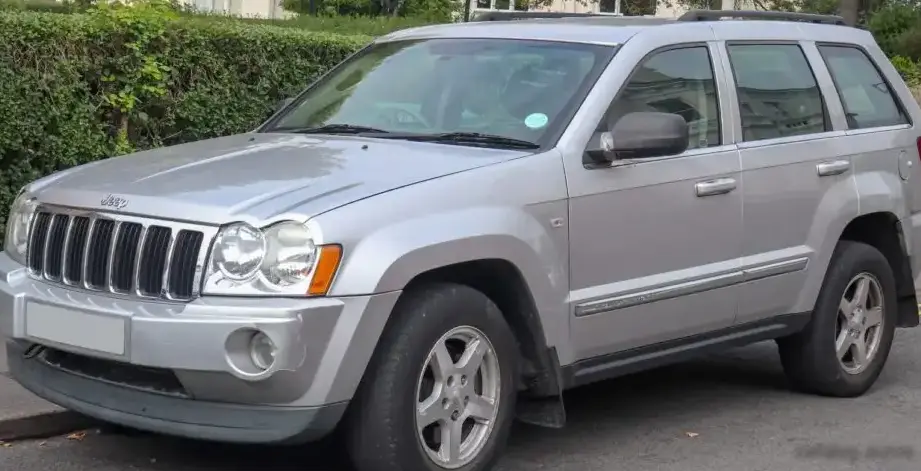
The Jeep Grand Cherokee III (WK) 3.7i V6 4×4 Automatic, produced from 2005 to 2010, represented a significant step forward for the iconic American SUV. Part of the WK generation, which ran from 2005-2010, this variant occupied a crucial position in the lineup, offering a balance between capability and affordability. It served as the entry-level engine option for buyers seeking the Grand Cherokee’s renowned four-wheel-drive system and spacious interior without the higher price tag of the V8 models. The WK series marked a departure from the previous generation, introducing a fully independent front suspension and a more refined driving experience, aiming to broaden the Grand Cherokee’s appeal beyond traditional off-road enthusiasts.
Technical Specifications
| Brand | Jeep |
| Model | Grand Cherokee |
| Generation | Grand Cherokee III (WK) |
| Type (Engine) | 3.7i V6 (214 Hp) 4×4 Automatic |
| Start of production | 2005 |
| End of production | 2010 |
| Powertrain Architecture | Internal Combustion engine |
| Body type | SUV |
| Seats | 5 |
| Doors | 5 |
| Fuel consumption (urban) | 13.8 l/100 km (17 US mpg, 20.5 UK mpg, 7.2 km/l) |
| Fuel consumption (extra urban) | 11.2 l/100 km (21 US mpg, 25.2 UK mpg, 8.9 km/l) |
| Fuel consumption (combined) | 13.1 l/100 km (18 US mpg, 21.6 UK mpg, 7.6 km/l) |
| Fuel Type | Petrol (Gasoline) |
| Maximum speed | 180 km/h (111.85 mph) |
| Weight-to-power ratio | 9.4 kg/Hp, 106.3 Hp/tonne |
| Weight-to-torque ratio | 6.3 kg/Nm, 158.4 Nm/tonne |
| Power | 214 Hp @ 5200 rpm |
| Power per litre | 57.8 Hp/l |
| Torque | 319 Nm @ 4000 rpm (235.28 lb.-ft. @ 4000 rpm) |
| Engine layout | Front, Longitudinal |
| Engine Model/Code | EKG |
| Engine displacement | 3701 cm3 (225.85 cu. in.) |
| Number of cylinders | 6 |
| Engine configuration | V-engine |
| Cylinder Bore | 93 mm (3.66 in.) |
| Piston Stroke | 90.8 mm (3.57 in.) |
| Compression ratio | 9.6:1 |
| Number of valves per cylinder | 2 |
| Fuel injection system | Multi-port manifold injection |
| Engine aspiration | Naturally aspirated engine |
| Valvetrain | SOHC |
| Engine oil capacity | 4.7 l (4.97 US qt | 4.14 UK qt) |
| Coolant capacity | 11.8 l (12.47 US qt | 10.38 UK qt) |
| Kerb Weight | 2014 kg (4440.11 lbs.) |
| Max. weight | 2676 kg (5899.57 lbs.) |
| Max load | 662 kg (1459.46 lbs.) |
| Trunk (boot) space – minimum | 977 l (34.5 cu. ft.) |
| Trunk (boot) space – maximum | 1909 l (67.42 cu. ft.) |
| Fuel tank capacity | 78 l (20.61 US gal | 17.16 UK gal) |
| Length | 4740 mm (186.61 in.) |
| Width | 1862 mm (73.31 in.) |
| Height | 1720 mm (67.72 in.) |
| Wheelbase | 2781 mm (109.49 in.) |
| Front track | 1575 mm (62.01 in.) |
| Rear (Back) track | 1575 mm (62.01 in.) |
| Ride height (ground clearance) | 204 mm (8.03 in.) |
| Drag coefficient (Cd) | 0.41 |
| Minimum turning circle | 11.3 m (37.07 ft.) |
| Approach angle | 34.1° |
| Departure angle | 27.1° |
| Ramp-over angle | 20.6° |
| Drive wheel | All wheel drive (4×4) |
| Number of gears | 5 |
| Gearbox type | Automatic transmission |
| Front brakes | Ventilated discs |
| Rear brakes | Ventilated discs |
| Assisting systems | ABS (Anti-lock braking system) |
| Steering type | Steering rack and pinion |
| Power steering | Hydraulic Steering |
| Tires size | 235/65 R17 |
| Wheel rims size | 17 |
Powertrain & Engine Architecture
The heart of this Grand Cherokee variant is the EKG 3.7-liter V6 engine. This engine, a member of Chrysler’s “Phoenix” V6 family, utilizes a cast iron block with aluminum cylinder heads. It features a single overhead camshaft (SOHC) design with two valves per cylinder. Fuel delivery is managed by a multi-port fuel injection system, providing adequate, though not exceptional, performance. The 3.7L V6 produced 214 horsepower at 5,200 rpm and 235 lb-ft of torque at 4,000 rpm. The engine’s relatively simple design contributed to its overall reliability, but also limited its potential for high performance. Paired with the 3.7L engine is a 5-speed automatic transmission, providing smooth shifts but lacking the responsiveness of a manual gearbox. This transmission was chosen to prioritize comfort and ease of use, aligning with the target demographic for this trim level.
Driving Characteristics
The 3.7i V6 Automatic Grand Cherokee offered a comfortable, if not particularly exhilarating, driving experience. Acceleration was adequate for everyday driving, but noticeably slower than the V8-powered models. The automatic transmission, while smooth, sometimes felt hesitant during quick overtaking maneuvers. The gear ratios were tuned for fuel efficiency and cruising comfort rather than outright performance. The 4×4 system provided confident traction in various conditions, making it suitable for light off-roading and inclement weather. Compared to the higher-output 4.7L V8 or the 5.7L HEMI V8, the 3.7L felt less powerful, especially when fully loaded or towing. However, the V6 offered a significant fuel economy advantage.
Equipment & Trim Levels
The 3.7i V6 4×4 Automatic typically came standard with features such as air conditioning, power windows and locks, a basic audio system, and cloth upholstery. Higher trim levels, such as the Limited, added features like leather seats, upgraded audio systems, alloy wheels, and additional convenience items. Optional extras included a sunroof, navigation system, and rear-seat entertainment system. The interior design was functional and relatively spacious, offering comfortable seating for five passengers. The dashboard layout was straightforward and easy to use, with clearly labeled controls.
Chassis & Braking
The WK Grand Cherokee featured a fully independent front suspension, a significant improvement over the solid front axle used in previous generations. The rear suspension utilized a multi-link design. This setup provided a more comfortable ride and improved handling characteristics. Braking duties were handled by ventilated discs on all four wheels, coupled with an Anti-lock Braking System (ABS). The braking performance was adequate for the vehicle’s weight and power, but not particularly sporty. The standard tire size was 235/65R17, providing a good balance between ride comfort and handling.
Market Reception & Comparison
The 3.7i V6 Grand Cherokee was generally well-received as an affordable and capable SUV. Critics praised its comfortable ride, spacious interior, and standard four-wheel-drive system. However, some reviewers noted its lack of power compared to the V8 models and its relatively high fuel consumption for a V6 engine. Compared to competitors like the Ford Explorer and Chevrolet TrailBlazer, the Grand Cherokee offered a more refined driving experience and a more upscale interior. The 3.7L engine offered better fuel economy than the V8 options, but at the cost of performance. Reliability was generally good, although some owners reported minor issues with the fuel injection system and the automatic transmission.
Legacy
The 3.7i V6 4×4 Automatic Grand Cherokee remains a popular choice in the used car market, particularly for buyers seeking a capable and affordable SUV. The EKG engine, while not known for its exceptional performance, has proven to be relatively reliable with proper maintenance. Parts availability is generally good, and repair costs are reasonable. While it may not offer the same level of performance or luxury as the V8 models, the 3.7L Grand Cherokee provides a solid combination of capability, comfort, and value, making it a practical choice for families and individuals alike. Its enduring popularity is a testament to the Grand Cherokee’s overall design and its reputation for durability.