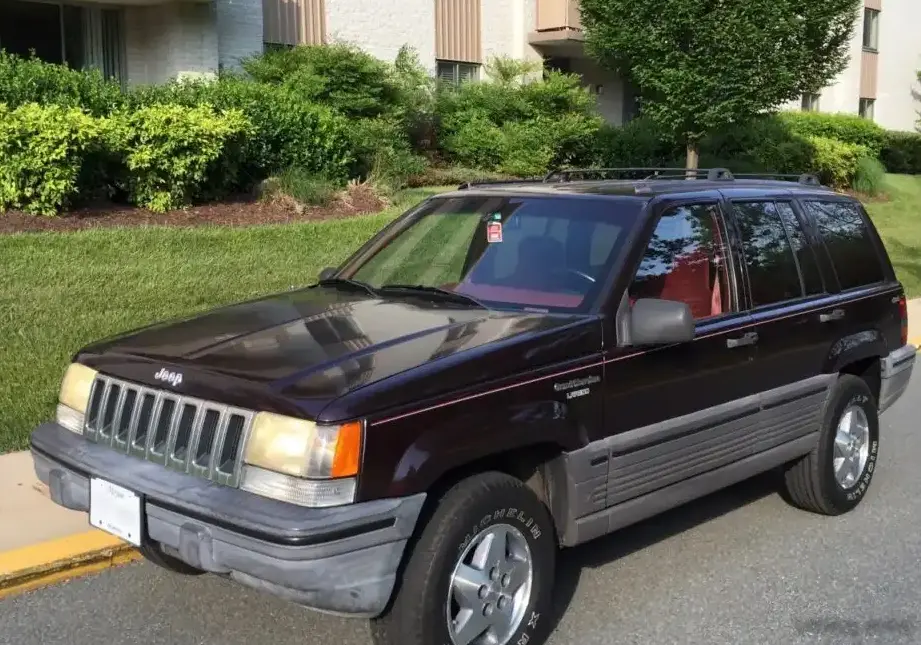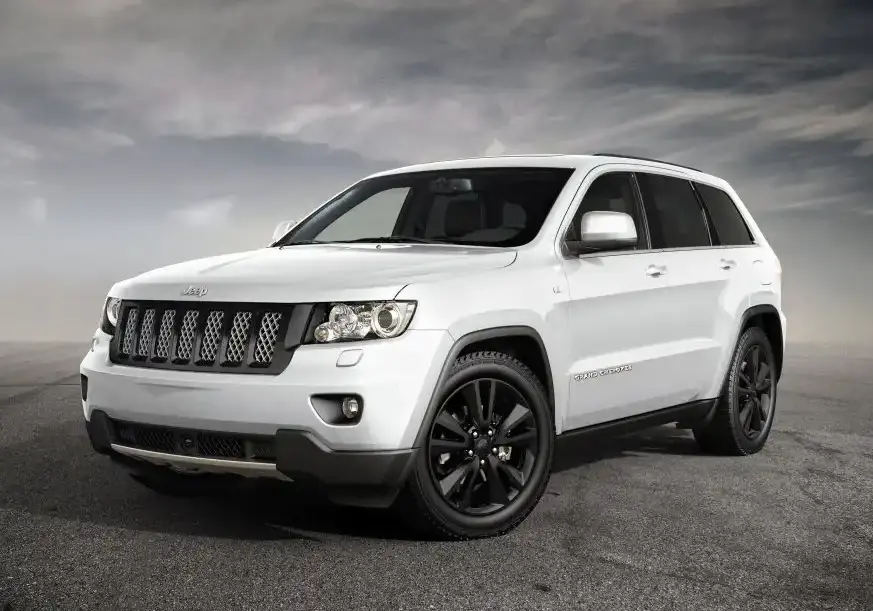
The Jeep Grand Cherokee IV (WK2) 5.7 V8 Automatic, produced from 2011 to 2013, represents a significant iteration in the Grand Cherokee lineage. Positioned as a premium offering within the WK2 generation (2011-2021), this variant combined the potent 5.7-liter HEMI V8 engine with a five-speed automatic transmission, targeting buyers seeking a blend of luxury, capability, and performance. It served as a step up from the base 3.6L V6 models, and a more accessible alternative to the high-performance SRT trim. The WK2 platform itself was a major departure from its predecessor, offering a more refined driving experience and significantly improved interior quality.
Technical Specifications
| Brand | Jeep |
| Model | Grand Cherokee |
| Generation | Grand Cherokee IV (WK2) |
| Type (Engine) | 5.7 V8 (360 Hp) Automatic |
| Start of production | 2011 year |
| End of production | 2013 year |
| Powertrain Architecture | Internal Combustion engine |
| Body type | SUV |
| Seats | 5 |
| Doors | 5 |
| Fuel consumption (economy) – urban (EPA) | 16.8 l/100 km (14 US mpg, 16.8 UK mpg, 6 km/l) |
| Fuel consumption (economy) – extra urban (EPA) | 11.8 l/100 km (19.9 US mpg, 23.9 UK mpg, 8.5 km/l) |
| Fuel consumption (economy) – combined (EPA) | 14.7 l/100 km (16 US mpg, 19.2 UK mpg, 6.8 km/l) |
| Fuel Type | Petrol (Gasoline) |
| Weight-to-power ratio | 6.1 kg/Hp, 163.6 Hp/tonne |
| Weight-to-torque ratio | 4.2 kg/Nm, 240.3 Nm/tonne |
| Power | 360 Hp @ 5150 rpm |
| Power per litre | 63.7 Hp/l |
| Torque | 529 Nm @ 4250 rpm (390.17 lb.-ft. @ 4250 rpm) |
| Maximum engine speed | 5800 rpm |
| Engine layout | Front, Longitudinal |
| Engine Model/Code | HEMI / EZH |
| Engine displacement | 5654 cm3 (345.03 cu. in.) |
| Number of cylinders | 8 |
| Engine configuration | V-engine |
| Cylinder Bore | 99.5 mm (3.92 in.) |
| Piston Stroke | 90.9 mm (3.58 in.) |
| Compression ratio | 10.5:1 |
| Number of valves per cylinder | 2 |
| Fuel injection system | Multi-port manifold injection |
| Engine aspiration | Naturally aspirated engine |
| Valvetrain | OHV, VVT |
| Engine oil capacity | 6.6 l (6.97 US qt | 5.81 UK qt) |
| Coolant | 14.6 l (15.43 US qt | 12.85 UK qt) |
| Kerb Weight | 2201-2286 kg (4852.37 – 5039.77 lbs.) |
| Max. weight | 2948 kg (6499.23 lbs.) |
| Max load | 662-747 kg (1459.46 – 1646.85 lbs.) |
| Trunk (boot) space – minimum | 994 l (35.1 cu. ft.) |
| Trunk (boot) space – maximum | 1945 l (68.69 cu. ft.) |
| Fuel tank capacity | 93.1 l (24.59 US gal | 20.48 UK gal) |
| Permitted trailer load with brakes (12%) | 3400 kg (7495.72 lbs.) |
| Length | 4822 mm (189.84 in.) |
| Width | 1943 mm (76.5 in.) |
| Width including mirrors | 2154 mm (84.8 in.) |
| Height | 1761 mm (69.33 in.) |
| Wheelbase | 2915 mm (114.76 in.) |
| Front track | 1623 mm (63.9 in.) |
| Rear (Back) track | 1627 mm (64.06 in.) |
| Ride height (ground clearance) | 218-270 mm (8.58 – 10.63 in.) |
| Drag coefficient (Cd) | 0.37 |
| Minimum turning circle (turning diameter) | 11.3 m (37.07 ft.) |
| Approach angle | 26.3-34.3° |
| Departure angle | 26.5-29.3° |
| Ramp-over (brakeover) angle | 18.8-23.1° |
| Drivetrain Architecture | The Internal combustion engine (ICE) drives the rear wheels of the vehicle. |
| Drive wheel | Rear wheel drive |
| Number of gears and type of gearbox | 5 gears, automatic transmission |
| Front suspension | Coil spring, Double wishbone, Transverse stabilizer, Air Suspension – Optional |
| Rear suspension | Independent multi-link spring suspension with stabilizer, Air Suspension – Optional |
| Front brakes | Ventilated discs, 328×30 mm |
| Rear brakes | Disc, 320×14 mm |
| Assisting systems | ABS (Anti-lock braking system) |
| Steering type | Steering rack and pinion |
| Power steering | Hydraulic Steering |
| Tires size | 265/60 R18 |
| Wheel rims size | 8J x 18 |
INTRODUCTION
The 2011-2013 Jeep Grand Cherokee 5.7 V8 Automatic represented a significant step forward for the model, offering a compelling combination of on-road refinement and off-road capability. Built on the WK2 platform, this generation of Grand Cherokee moved away from the body-on-frame construction of its predecessors to a more modern unibody design. This change resulted in improved handling, reduced noise, vibration, and harshness (NVH), and a more luxurious interior. The 5.7L HEMI V8, paired with a five-speed automatic transmission, provided ample power for towing, hauling, and confident acceleration. This variant occupied a middle ground in the Grand Cherokee lineup, appealing to buyers who desired more performance than the base V6 but didn’t require the extreme capabilities of the SRT model.
Powertrain & Engine Architecture
At the heart of the Grand Cherokee 5.7 V8 is the 5.7-liter HEMI V8 engine, internally designated as the EZH. This engine features overhead valve (OHV) valvetrain with variable valve timing (VVT) on the intake camshafts. The engine utilizes multi-port fuel injection, delivering fuel directly into the intake ports. A key feature of the HEMI engine is its cylinder deactivation system (MDS), which shuts down four cylinders during light-load cruising conditions to improve fuel economy. The 5.7L HEMI produces 360 horsepower at 5,150 rpm and 390 lb-ft of torque at 4,250 rpm. The five-speed automatic transmission (545RFE) was chosen for its durability and ability to handle the engine’s torque output. While not as technologically advanced as some newer transmissions, it provided smooth and reliable shifting. The transmission features electronically controlled shifting and overdrive for highway efficiency.
Driving Characteristics
The Grand Cherokee 5.7 V8 Automatic delivered a noticeably more spirited driving experience compared to the V6 models. The 5.7L HEMI provided strong acceleration, making merging onto highways and passing other vehicles effortless. The five-speed automatic transmission, while not offering the lightning-fast shifts of some competitors, was well-matched to the engine’s torque curve. Gear ratios were optimized for both everyday driving and towing. Compared to the manual transmission equipped V6, the automatic offered a more relaxed driving experience, particularly in city traffic. However, it did sacrifice some responsiveness and fuel efficiency. The rear-wheel-drive configuration provided a balanced feel, while the available four-wheel-drive systems enhanced traction in inclement weather and off-road conditions.
Equipment & Trim Levels
The 5.7 V8 trim typically included a generous array of standard features. These commonly included leather upholstery, heated front seats, a premium sound system, dual-zone automatic climate control, and a power liftgate. Optional extras included a navigation system, rear-seat entertainment system, sunroof, and upgraded wheels. Interior trim levels varied, with higher trims offering more luxurious materials and finishes. The dashboard layout was generally well-designed and user-friendly, with intuitive controls and a clear instrument cluster.
Chassis & Braking
The WK2 Grand Cherokee featured an independent front suspension with coil springs and a double wishbone design. A transverse stabilizer bar helped to reduce body roll during cornering. The rear suspension utilized an independent multi-link setup, also with a stabilizer bar. Air suspension was available as an option, providing adjustable ride height and improved off-road capability. Braking duties were handled by ventilated discs up front and discs in the rear. An anti-lock braking system (ABS) was standard, enhancing safety and control during hard braking. The braking system was generally considered adequate for the vehicle’s weight and performance.
Market Reception & Comparison
Critics generally praised the Grand Cherokee 5.7 V8 for its powerful engine, comfortable ride, and improved interior quality. The V8 engine was widely regarded as a significant upgrade over the V6, providing ample power for towing and hauling. However, fuel economy was a common criticism, as the 5.7L HEMI was not particularly fuel-efficient. Compared to the V6 models, the 5.7 V8 offered a more refined and capable driving experience, but at a higher price point. The SRT trim, with its even more powerful engine and sport-tuned suspension, offered a more performance-focused alternative, but at a substantial premium.
Legacy
The 2011-2013 Jeep Grand Cherokee 5.7 V8 Automatic has proven to be a relatively reliable vehicle, with the 5.7L HEMI engine generally considered durable and long-lasting. Common maintenance items include regular oil changes, spark plug replacements, and transmission fluid services. The five-speed automatic transmission has also proven to be fairly robust. On the used car market, these Grand Cherokees remain popular choices for buyers seeking a capable and comfortable SUV with a powerful V8 engine. However, potential buyers should be aware of potential issues such as oil consumption and electrical gremlins, which have been reported in some cases. Overall, the WK2 5.7 V8 represents a well-rounded and capable SUV that continues to hold its value.