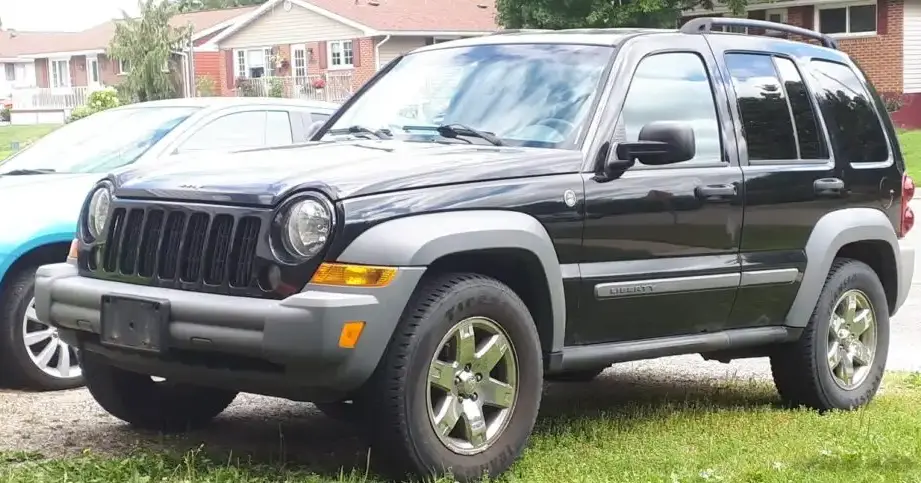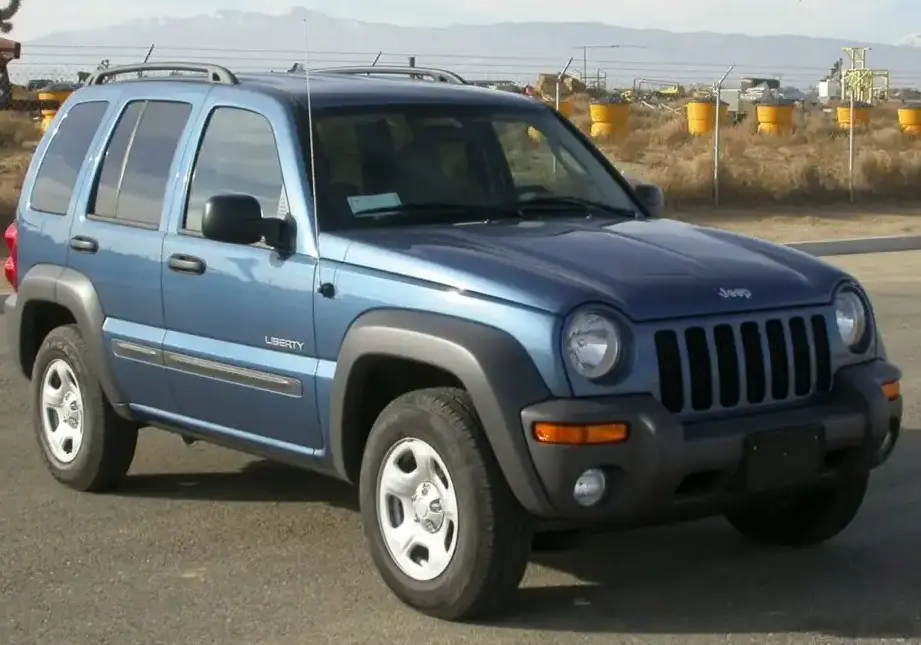
The Jeep Liberty I 3.7 i V6 12V, produced between 2001 and 2004, represented Jeep’s entry into the mid-size SUV market, positioned below the larger Cherokee and Grand Cherokee. This first generation Liberty (designated KJ) aimed to offer a more manageable size and price point while retaining Jeep’s core off-road capability. The 3.7-liter V6 engine, paired with a five-speed manual transmission, was a key component of the initial Liberty lineup, offering a balance between affordability and performance. It served as the base engine option, appealing to buyers prioritizing value and everyday usability over outright power.
Technical Specifications
| Brand | Jeep |
| Model | Liberty |
| Generation | Liberty I |
| Type (Engine) | 3.7 i V6 12V (210 Hp) |
| Start of production | 2001 |
| End of production | 2004 |
| Powertrain Architecture | Internal Combustion engine |
| Body type | SUV |
| Seats | 5 |
| Doors | 5 |
| Fuel consumption (urban) | 13.1 l/100 km (18 US mpg, 21.6 UK mpg, 7.6 km/l) |
| Fuel consumption (extra urban) | 10.7 l/100 km (22 US mpg, 26.4 UK mpg, 9.3 km/l) |
| Fuel Type | Petrol (Gasoline) |
| Acceleration 0 – 100 km/h | 8.8 sec |
| Acceleration 0 – 62 mph | 8.8 sec |
| Acceleration 0 – 60 mph | 8.4 sec |
| Maximum speed | 180 km/h (111.85 mph) |
| Weight-to-power ratio | 7.9 kg/Hp, 126.3 Hp/tonne |
| Weight-to-torque ratio | 5.2 kg/Nm, 191.2 Nm/tonne |
| Power | 210 Hp @ 5200 rpm |
| Power per litre | 56.7 Hp/l |
| Torque | 318 Nm @ 4000 rpm (234.54 lb.-ft. @ 4000 rpm) |
| Engine layout | Front, Longitudinal |
| Engine Model/Code | EKG |
| Engine displacement | 3701 cm3 (225.85 cu. in.) |
| Number of cylinders | 6 |
| Engine configuration | V-engine |
| Cylinder Bore | 93 mm (3.66 in.) |
| Piston Stroke | 90.8 mm (3.57 in.) |
| Compression ratio | 9.1:1 |
| Number of valves per cylinder | 2 |
| Fuel injection system | Multi-port manifold injection |
| Engine aspiration | Naturally aspirated engine |
| Engine oil capacity | 4.7 l (4.97 US qt | 4.14 UK qt) |
| Coolant capacity | 13.2 l (13.95 US qt | 11.61 UK qt) |
| Kerb Weight | 1663 kg (3666.29 lbs.) |
| Max. weight | 2427 kg (5350.62 lbs.) |
| Max load | 764 kg (1684.33 lbs.) |
| Trunk (boot) space – minimum | 821 l (28.99 cu. ft.) |
| Trunk (boot) space – maximum | 1950 l (68.86 cu. ft.) |
| Fuel tank capacity | 74 l (19.55 US gal | 16.28 UK gal) |
| Permitted trailer load with brakes (12%) | 1588 kg (3500.94 lbs.) |
| Length | 4437 mm (174.69 in.) |
| Width | 1819 mm (71.61 in.) |
| Height | 1785 mm (70.28 in.) |
| Wheelbase | 2649 mm (104.29 in.) |
| Front track | 1524 mm (60 in.) |
| Rear (Back) track | 1518 mm (59.76 in.) |
| Minimum turning circle | 10.9 m (35.76 ft.) |
| Drivetrain Architecture | Rear wheel drive |
| Drive wheel | Rear wheel drive |
| Number of gears and type of gearbox | 5 gears, manual transmission |
| Front suspension | Independent, type McPherson with coil spring and anti-roll bar |
| Rear suspension | Rigid axle suspension, Transverse stabilizer, Coil spring |
| Front brakes | Ventilated discs, 287.02 mm |
| Rear brakes | Disc, 284.48×12.7 mm |
| Assisting systems | ABS (Anti-lock braking system) |
| Steering type | Steering rack and pinion |
| Tires size | 225/75 R16 |
| Wheel rims size | 7J x 16 |
Powertrain & Engine Architecture
The heart of this Liberty variant was the 3.7-liter EKG V6 engine. This engine, a member of Jeep’s PowerTech family, featured a 90-degree V-configuration and a 12-valve (two valves per cylinder) design. It utilized a multi-port fuel injection system, delivering fuel directly into the intake ports. The engine’s architecture prioritized simplicity and durability over outright performance. The 3.7L V6 produced 210 horsepower at 5200 rpm and 318 Nm (234.54 lb-ft) of torque at 4000 rpm. The five-speed manual transmission provided a relatively direct connection to the engine, offering drivers more control compared to the optional four-speed automatic. The transmission’s gear ratios were tuned for a balance of acceleration and fuel efficiency, though the Liberty wasn’t known for being particularly economical.
Driving Characteristics
The 3.7L V6 with the manual transmission offered adequate, but not exhilarating, performance. Acceleration to 60 mph took around 8.4 seconds, making it competitive with other mid-size SUVs of the era. The engine felt somewhat strained when pushed hard, particularly when fully loaded or climbing hills. The manual transmission allowed drivers to keep the engine in its optimal power band, but the relatively long throws and somewhat vague shift feel weren’t particularly sporty. Compared to the optional 3.7L automatic, the manual offered better fuel economy and a more engaging driving experience. However, it lacked the convenience of an automatic, which was preferred by many buyers in this segment.
Equipment & Trim Levels
The base Liberty trim with the 3.7L manual typically included features such as air conditioning, power windows and locks, and an AM/FM radio. Cloth upholstery was standard, and the interior was generally functional but not luxurious. Optional extras included a CD player, upgraded sound system, power sunroof, and alloy wheels. The Liberty offered a relatively limited range of trim levels, with the base model representing the most affordable entry point. Higher trims added features like leather upholstery, automatic climate control, and premium audio systems.
Chassis & Braking
The Liberty I utilized a body-on-frame construction, providing a robust and durable platform. The front suspension featured an independent McPherson strut design with coil springs and an anti-roll bar, while the rear suspension employed a solid axle with coil springs and a transverse stabilizer. This setup provided a comfortable ride on paved roads, while still offering reasonable off-road capability. The braking system consisted of ventilated discs at the front and solid discs at the rear. ABS (Anti-lock Braking System) was standard, enhancing safety and control during emergency braking situations.
Market Reception & Comparison
The Jeep Liberty I was generally well-received by critics as a capable and affordable mid-size SUV. However, the 3.7L V6 engine with the manual transmission was often criticized for its lack of refinement and relatively modest power output. Compared to the optional 3.7L automatic, the manual offered better fuel economy (around 16 mpg city/20 mpg highway) and a more engaging driving experience, but it was less popular with buyers seeking convenience. The Liberty also faced competition from other SUVs in the segment, such as the Ford Escape, Honda CR-V, and Toyota RAV4, which offered more fuel-efficient engines and more refined interiors.
Legacy
The 3.7L PowerTech V6 engine, while not known for being a powerhouse, proved to be relatively reliable in the Liberty I. Common issues included oil leaks and occasional sensor failures, but overall, the engine was considered durable and capable of lasting for many years with proper maintenance. Today, the Liberty I with the 3.7L manual transmission is a relatively affordable option in the used car market. It appeals to buyers seeking a rugged and capable SUV with a classic Jeep aesthetic. While it may not offer the latest technology or the highest levels of performance, the Liberty I remains a viable option for those looking for a dependable and versatile vehicle.