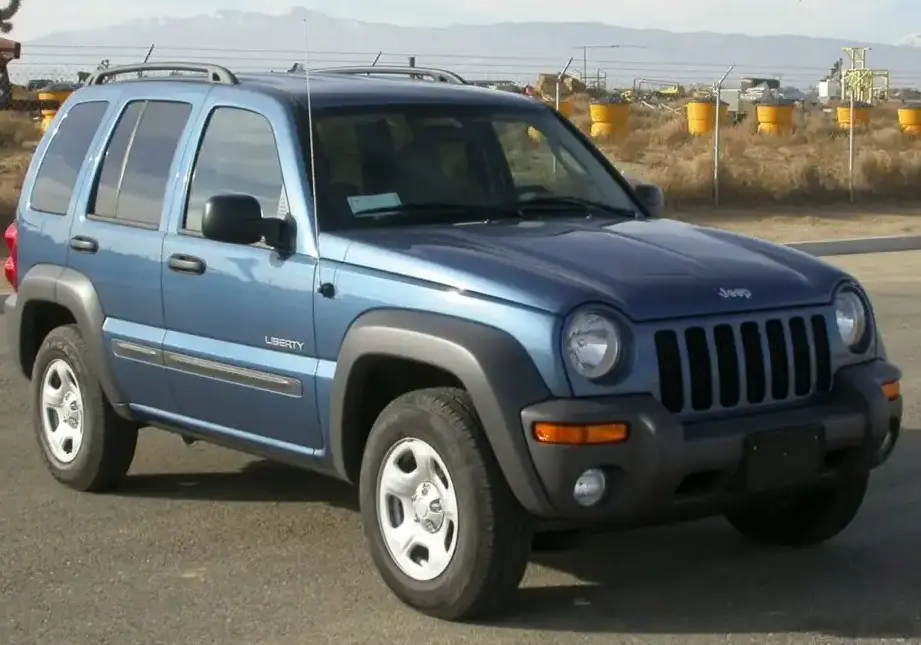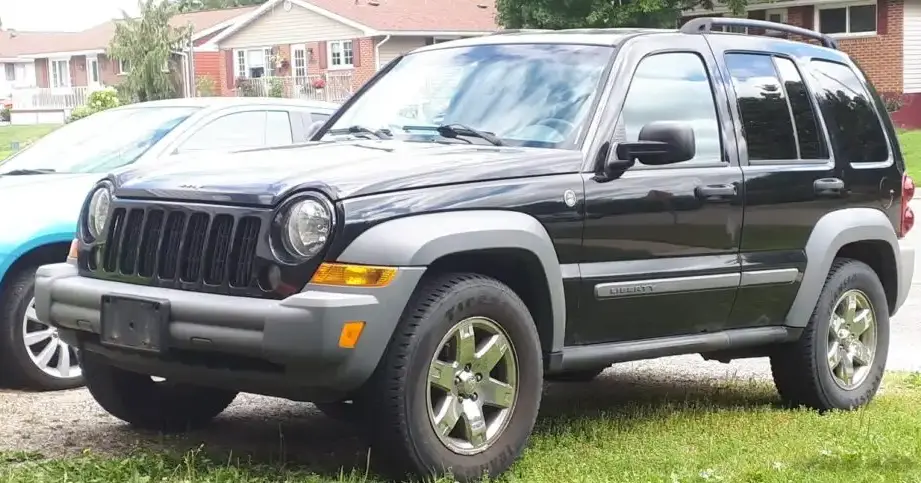
The Jeep Liberty I (facelift 2004) 2.8 CRD 4WD Automatic represents a specific configuration within the first generation (KJ) Liberty lineup, produced from 2004 to 2007. Positioned as a diesel-powered, all-wheel-drive option, it aimed to provide a balance of fuel efficiency and capability for buyers seeking a mid-size SUV. This variant was primarily sold in European and other international markets where diesel engines were more popular, and represented a departure from the gasoline-powered models more common in North America. The facelift introduced in 2004 brought revised styling and some mechanical updates to the original Liberty design.
Technical Specifications
| Brand | Jeep |
| Model | Liberty |
| Generation | Liberty I (facelift 2004) |
| Type (Engine) | 2.8 CRD (160 Hp) 4WD Automatic |
| Start of production | 2004 |
| End of production | 2007 |
| Powertrain Architecture | Internal Combustion engine |
| Body type | SUV |
| Seats | 5 |
| Doors | 5 |
| Fuel consumption (economy) – urban (EPA) | 11.2 l/100 km (21 US mpg) |
| Fuel consumption (economy) – extra urban (EPA) | 9 l/100 km (26.1 US mpg) |
| Fuel Type | Diesel |
| Weight-to-power ratio | 12.2 kg/Hp |
| Weight-to-torque ratio | 4.9 kg/Nm |
| Power | 160 Hp @ 3800 rpm |
| Power per litre | 57.8 Hp/l |
| Torque | 400 Nm @ 1800 rpm (295.02 lb.-ft. @ 1800 rpm) |
| Maximum engine speed | 4300 rpm |
| Engine layout | Front, Longitudinal |
| Engine Model/Code | ENR |
| Engine displacement | 2768 cm3 (168.91 cu. in.) |
| Number of cylinders | 4 |
| Engine configuration | Inline |
| Cylinder Bore | 94 mm (3.7 in.) |
| Piston Stroke | 100 mm (3.94 in.) |
| Compression ratio | 17.5:1 |
| Number of valves per cylinder | 4 |
| Fuel injection system | Diesel Commonrail |
| Engine aspiration | Turbocharger, Intercooler |
| Valvetrain | DOHC |
| Engine oil capacity | 6.1 l (6.45 US qt | 5.37 UK qt) |
| Coolant | 12.5 l (13.21 US qt | 11 UK qt) |
| Kerb Weight | 1953 kg (4305.63 lbs.) |
| Max. weight | 2563 kg (5650.45 lbs.) |
| Max load | 610 kg (1344.82 lbs.) |
| Trunk (boot) space – minimum | 821 l (28.99 cu. ft.) |
| Trunk (boot) space – maximum | 1950 l (68.86 cu. ft.) |
| Fuel tank capacity | 77.6 l (20.5 US gal | 17.07 UK gal) |
| Permitted trailer load with brakes (12%) | 2268 kg (5000.08 lbs.) |
| Permitted towbar download | 227 kg (500.45 lbs.) |
| Length | 4430 mm (174.41 in.) |
| Width | 1819 mm (71.61 in.) |
| Height | 1784 mm (70.24 in.) |
| Wheelbase | 2649 mm (104.29 in.) |
| Front track | 1524 mm (60 in.) |
| Rear (Back) track | 1516 mm (59.69 in.) |
| Ride height (ground clearance) | 200 mm (7.87 in.) |
| Drag coefficient (Cd) | 0.421 |
| Minimum turning circle (turning diameter) | 12 m (39.37 ft.) |
| Approach angle | 36° |
| Departure angle | 31.5° |
| Drivetrain Architecture | The Internal combustion engine (ICE) drives the rear wheels permanently, and the front wheels are driven through an electrically or mechanically operated clutch if necessary. |
| Drive wheel | All wheel drive (4×4) |
| Number of gears and type of gearbox | 5 gears, automatic transmission |
| Front suspension | Coil spring, Double wishbone, Transverse stabilizer |
| Rear suspension | Rigid axle suspension, Transverse stabilizer, Trailing arm, Coil spring |
| Front brakes | Ventilated discs, 288×28 mm |
| Rear brakes | Disc, 284×12 mm |
| Assisting systems | ABS (Anti-lock braking system) |
| Steering type | Steering rack and pinion |
| Power steering | Hydraulic Steering |
| Tires size | 225/75 R16; 235/65 R17 |
| Wheel rims size | 7J x 16; 7J x 17; 7.5J x 17 |
Powertrain & Engine Architecture
The heart of this Liberty variant is the 2.8-liter (2768 cc) inline-four cylinder diesel engine, designated the ENR. This engine utilizes a common rail direct injection system, a technology that allows for precise fuel delivery and improved combustion efficiency. The ENR features a turbocharger with an intercooler, boosting power output to 160 horsepower at 3800 rpm and 400 Nm (295 lb-ft) of torque at 1800 rpm. The engine employs a double overhead camshaft (DOHC) valvetrain with four valves per cylinder, contributing to its relatively high specific output of 57.8 hp per liter. The automatic transmission is a five-speed unit, chosen for its ease of use and suitability for drivers prioritizing comfort over outright performance. This transmission was designed to handle the torque characteristics of the diesel engine, offering smooth shifts in typical driving conditions.
Driving Characteristics
The 2.8 CRD Automatic Liberty offered a different driving experience compared to its gasoline-powered counterparts. While not particularly quick, the diesel engine’s substantial torque provided ample pulling power, especially at lower engine speeds. This made it well-suited for towing and navigating challenging terrain. The automatic transmission, while convenient, did result in some power loss compared to the available manual transmission. Gear ratios were optimized for fuel economy and everyday drivability, rather than sporty acceleration. The all-wheel-drive system provided enhanced traction in slippery conditions, making it a capable vehicle for inclement weather or off-road excursions. However, the Liberty’s relatively heavy weight (1953 kg / 4305.63 lbs) did impact its overall agility.
Equipment & Trim Levels
The 2.8 CRD Automatic trim typically included features such as air conditioning, power windows and locks, and an AM/FM radio with a CD player. Higher trim levels offered options like leather upholstery, a sunroof, and upgraded audio systems. Safety features included anti-lock brakes (ABS) as standard equipment. The interior design was functional and straightforward, prioritizing practicality over luxury. The Liberty’s spacious cabin provided comfortable seating for five passengers, and the split-folding rear seats allowed for flexible cargo configurations. The boot space ranged from 821 liters (28.99 cu. ft.) with the rear seats up to 1950 liters (68.86 cu. ft.) with the seats folded down.
Chassis & Braking
The Liberty utilized a body-on-frame construction, providing a robust and durable chassis. The front suspension consisted of a coil spring, double wishbone setup with a transverse stabilizer bar, while the rear suspension employed a rigid axle configuration with coil springs and a transverse stabilizer. The braking system featured ventilated discs at the front and solid discs at the rear. The hydraulic power steering provided relatively light and responsive steering feel. Tire sizes varied depending on the trim level, with options including 225/75 R16 and 235/65 R17 tires.
Market Reception & Comparison
The 2.8 CRD Automatic Liberty was generally well-received in markets where diesel SUVs were popular. Critics praised its fuel efficiency and torque output, but some noted its relatively slow acceleration and somewhat agricultural engine noise. Compared to the gasoline-powered Liberty models, the diesel version offered significantly better fuel economy, but at a higher initial cost. It also differed from higher-performance Liberty trims, such as those equipped with the 3.7-liter V6 engine, which prioritized power and acceleration over fuel efficiency. The diesel variant appealed to buyers who prioritized practicality, fuel economy, and all-weather capability.
Legacy
The 2.8 CRD engine, while generally reliable, is known to require regular maintenance, particularly regarding the fuel injection system and turbocharger. Common issues include injector failures and turbocharger wear. The automatic transmission, if properly maintained, is also considered relatively durable. Today, the 2004-2007 Jeep Liberty 2.8 CRD Automatic can be found on the used car market, often at relatively affordable prices. Its appeal lies in its combination of all-wheel-drive capability, diesel fuel efficiency, and spacious interior. However, potential buyers should be aware of the potential maintenance costs associated with a diesel engine and ensure a thorough inspection before purchase.