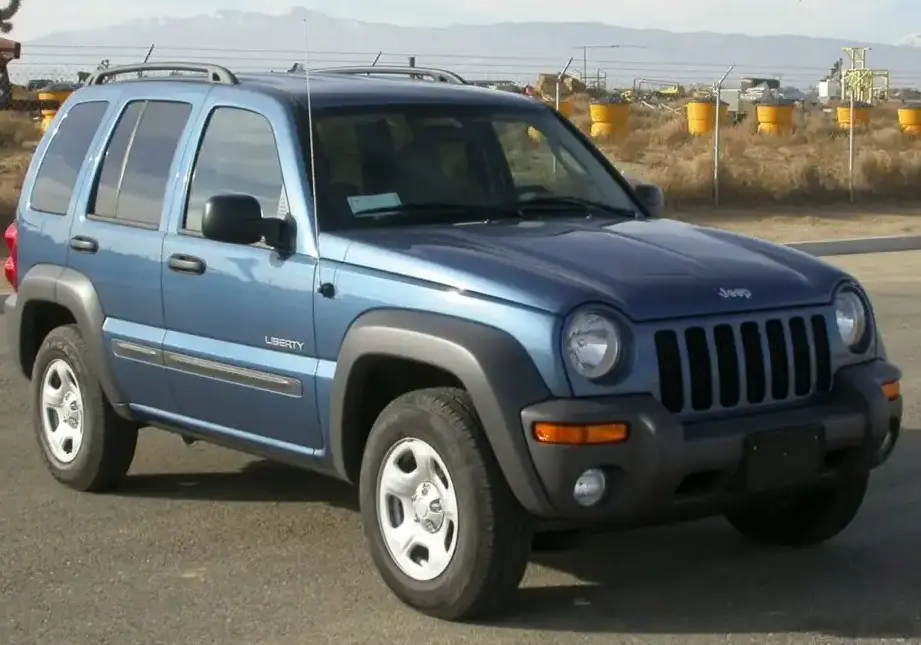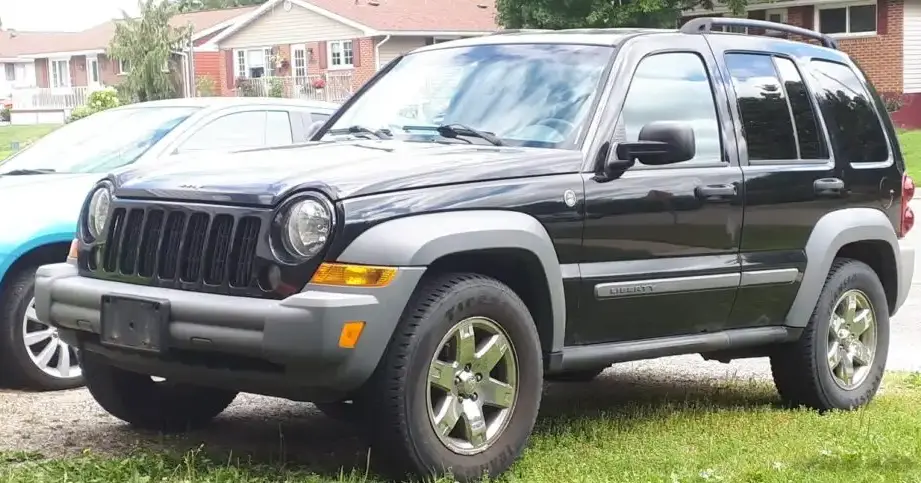
The Jeep Liberty I (facelift, 2004) 3.7L V6, produced from 2005 to 2007, represented a mid-cycle refresh of the first-generation Liberty (KJ) SUV. Positioned as a mid-range offering within the Liberty lineup, this variant aimed to balance affordability with a respectable level of performance and capability. It served as a key model for Jeep in the increasingly competitive compact SUV segment, particularly in the North American market where it was marketed as a rugged, yet comfortable, family vehicle. This specific configuration, featuring the 3.7-liter V6 engine and a six-speed manual transmission, offered a different driving experience compared to the automatic transmission options and the earlier 2.5-liter four-cylinder base model.
Technical Specifications
| Brand | Jeep |
| Model | Liberty |
| Generation | Liberty I (facelift 2004) |
| Type (Engine) | 3.7 i V6 12V (210 Hp) |
| Start of production | 2005 |
| End of production | 2007 |
| Powertrain Architecture | Internal Combustion engine |
| Body type | SUV |
| Seats | 5 |
| Doors | 5 |
| Fuel Type | Petrol (Gasoline) |
| Weight-to-power ratio | 8.3 kg/Hp, 121.2 Hp/tonne |
| Weight-to-torque ratio | 5.4 kg/Nm, 183.5 Nm/tonne |
| Power | 210 Hp @ 5200 rpm |
| Power per litre | 56.7 Hp/l |
| Torque | 318 Nm @ 4000 rpm, 234.54 lb.-ft. @ 4000 rpm |
| Engine layout | Front, Longitudinal |
| Engine Model/Code | EKG |
| Engine displacement | 3701 cm3, 225.85 cu. in. |
| Number of cylinders | 6 |
| Engine configuration | V-engine |
| Cylinder Bore | 93 mm, 3.66 in. |
| Piston Stroke | 90.8 mm, 3.57 in. |
| Compression ratio | 9.1:1 |
| Number of valves per cylinder | 2 |
| Fuel injection system | Multi-port manifold injection |
| Engine aspiration | Naturally aspirated engine |
| Engine oil capacity | 4.7 l, 4.97 US qt | 4.14 UK qt |
| Coolant | 13.2 l, 13.95 US qt | 11.61 UK qt |
| Kerb Weight | 1733 kg, 3820.61 lbs |
| Max. weight | 2427 kg, 5350.62 lbs |
| Max load | 694 kg, 1530.01 lbs |
| Trunk (boot) space – minimum | 878 l, 31.01 cu. ft. |
| Trunk (boot) space – maximum | 1950 l, 68.86 cu. ft. |
| Fuel tank capacity | 78 l, 20.61 US gal | 17.16 UK gal |
| Permitted trailer load with brakes (12%) | 1588 kg, 3500.94 lbs |
| Length | 4437 mm, 174.69 in. |
| Width | 1824 mm, 71.81 in. |
| Height | 1824 mm, 71.81 in. |
| Wheelbase | 2647 mm, 104.21 in. |
| Front track | 1524 mm, 60 in. |
| Rear (Back) track | 1518 mm, 59.76 in. |
| Front overhang | 734 mm, 28.9 in. |
| Rear overhang | 1052 mm, 41.42 in. |
| Ride height (ground clearance) | 241 mm, 9.49 in. |
| Minimum turning circle (turning diameter) | 10.9 m, 35.76 ft. |
| Approach angle | 37.2° |
| Departure angle | 31.5° |
| Ramp-over (brakeover) angle | 21.8° |
| Drivetrain Architecture | The Internal combustion engine (ICE) drives the rear wheels of the vehicle. |
| Drive wheel | Rear wheel drive |
| Number of gears and type of gearbox | 6 gears, manual transmission |
| Front suspension | Independent, type McPherson with coil spring and anti-roll bar |
| Rear suspension | Rigid axle suspension, Transverse stabilizer, Coil spring |
| Front brakes | Ventilated discs, 287.02 mm |
| Rear brakes | Disc, 284.48×12.7 mm |
| Assisting systems | ABS (Anti-lock braking system) |
| Steering type | Steering rack and pinion |
| Tires size | 225/75 R16 |
| Wheel rims size | 7J x 16 |
Powertrain & Engine Architecture
The heart of this Liberty variant is the 3.7-liter EKG V6 engine. This engine, a member of Chrysler’s then-new “World Engine” family, featured a 60-degree V-angle and a dual overhead camshaft (DOHC) design with two valves per cylinder. The multi-port fuel injection system delivered fuel directly to the intake ports, optimizing combustion. The 3.7L V6 produced 210 horsepower at 5,200 rpm and 235 lb-ft of torque at 4,000 rpm. The six-speed manual transmission, a relatively uncommon option for the Liberty, provided drivers with greater control over gear selection and a more engaging driving experience. The transmission’s gear ratios were tuned to balance acceleration with fuel efficiency, though the Liberty’s weight inevitably impacted both.
Driving Characteristics
The 3.7L V6 with the six-speed manual transmission offered a noticeable improvement in driving dynamics compared to the base 2.5L four-cylinder model. While not a sports car, the Liberty 3.7L provided adequate acceleration for everyday driving and highway merging. The manual transmission allowed drivers to exploit the engine’s torque band, resulting in a more responsive feel. However, the Liberty’s substantial weight (approximately 3,821 pounds) meant that it wasn’t particularly nimble. The six-speed gearbox, while offering more control, required more driver involvement than the available automatic transmissions. The gear ratios were spaced to provide reasonable acceleration in lower gears and comfortable cruising at highway speeds.
Equipment & Trim Levels
The 2005-2007 Jeep Liberty 3.7L typically came standard with features such as air conditioning, power windows and locks, and an AM/FM stereo. Higher trim levels, such as the Limited, added features like leather upholstery, alloy wheels, a premium sound system, and automatic temperature control. Optional extras included a sunroof, side airbags, and a navigation system. The interior design was functional and relatively spacious, though the materials used were generally of average quality. The rear seats offered decent legroom for passengers, and the cargo area was reasonably sized, expanding significantly with the rear seats folded down.
Chassis & Braking
The Liberty utilized a traditional body-on-frame construction, contributing to its ruggedness and off-road capability. The front suspension featured an independent McPherson strut design, while the rear suspension employed a solid axle with coil springs. This setup provided a comfortable ride on paved roads, but could feel somewhat bouncy on rough terrain. The braking system consisted of ventilated discs at the front and solid discs at the rear, equipped with an Anti-lock Braking System (ABS) as standard. The ABS helped to maintain steering control during hard braking maneuvers. The Liberty’s tires were typically 225/75R16, providing a good balance of on-road comfort and off-road traction.
Market Reception & Comparison
The Jeep Liberty 3.7L with the manual transmission received mixed reviews from automotive critics. While the engine was praised for its power and refinement, the Liberty’s overall handling and fuel economy were often criticized. Compared to other compact SUVs of the time, such as the Honda CR-V and Toyota RAV4, the Liberty offered more off-road capability but less fuel efficiency and refinement. The manual transmission was appreciated by driving enthusiasts, but it was not a popular choice among mainstream buyers who preferred the convenience of an automatic transmission. Fuel economy was rated at around 16 mpg city and 22 mpg highway, which was below average for the segment.
Legacy
The 3.7L V6 engine proved to be generally reliable, though some owners have reported issues with oil consumption and sensor failures. The six-speed manual transmission is considered durable, but requires regular maintenance. Today, the 2005-2007 Jeep Liberty 3.7L can be found on the used car market at relatively affordable prices. It remains a popular choice for buyers seeking a rugged and capable SUV with a manual transmission. However, potential buyers should be aware of the Liberty’s potential maintenance issues and its relatively low fuel economy. The Liberty, while not a class leader, carved out a niche for itself as a uniquely American SUV offering a blend of practicality, capability, and a touch of old-school charm.