Technical Specifications
| Brand | Jeep |
| Model | Liberty |
| Generation | Liberty I (facelift 2004) |
| Type (Engine) | 3.7 i V6 12V (210 Hp) 4WD |
| Start of production | 2005 |
| End of production | 2007 |
| Powertrain Architecture | Internal Combustion engine |
| Body type | SUV |
| Seats | 5 |
| Doors | 5 |
| Fuel Type | Petrol (Gasoline) |
| Weight-to-power ratio | 8.7 kg/Hp, 115.4 Hp/tonne |
| Weight-to-torque ratio | 5.7 kg/Nm, 174.8 Nm/tonne |
| Power | 210 Hp @ 5200 rpm |
| Power per litre | 56.7 Hp/l |
| Torque | 318 Nm @ 4000 rpm, 234.54 lb.-ft. @ 4000 rpm |
| Engine layout | Front, Longitudinal |
| Engine Model/Code | EKG |
| Engine displacement | 3701 cm3, 225.85 cu. in. |
| Number of cylinders | 6 |
| Engine configuration | V-engine |
| Cylinder Bore | 93 mm, 3.66 in. |
| Piston Stroke | 90.8 mm, 3.57 in. |
| Compression ratio | 9.1:1 |
| Number of valves per cylinder | 2 |
| Fuel injection system | Multi-port manifold injection |
| Engine aspiration | Naturally aspirated engine |
| Engine oil capacity | 4.7 l, 4.97 US qt | 4.14 UK qt |
| Coolant | 13.2 l, 13.95 US qt | 11.61 UK qt |
| Kerb Weight | 1819 kg, 4010.21 lbs |
| Max. weight | 2540 kg, 5599.74 lbs |
| Max load | 721 kg, 1589.53 lbs |
| Trunk (boot) space – minimum | 878 l, 31.01 cu. ft. |
| Trunk (boot) space – maximum | 1950 l, 68.86 cu. ft. |
| Fuel tank capacity | 78 l, 20.61 US gal | 17.16 UK gal |
| Permitted trailer load with brakes (12%) | 1588 kg, 3500.94 lbs |
| Length | 4437 mm, 174.69 in. |
| Width | 1824 mm, 71.81 in. |
| Height | 1824 mm, 71.81 in. |
| Wheelbase | 2647 mm, 104.21 in. |
| Front track | 1524 mm, 60 in. |
| Rear (Back) track | 1518 mm, 59.76 in. |
| Front overhang | 734 mm, 28.9 in. |
| Rear overhang | 1052 mm, 41.42 in. |
| Ride height (ground clearance) | 239 mm, 9.41 in. |
| Minimum turning circle (turning diameter) | 10.9 m, 35.76 ft. |
| Approach angle | 37.2° |
| Departure angle | 31.5° |
| Ramp-over (brakeover) angle | 21.8° |
| Drivetrain Architecture | The Internal combustion engine (ICE) drives the rear wheels permanently, and the front wheels are driven through an electrically or mechanically operated clutch if necessary. |
| Drive wheel | All wheel drive (4×4) |
| Number of gears and type of gearbox | 6 gears, manual transmission |
| Front suspension | Independent, type McPherson with coil spring and anti-roll bar |
| Rear suspension | Rigid axle suspension, Transverse stabilizer, Coil spring |
| Front brakes | Ventilated discs, 287.02 mm |
| Rear brakes | Disc, 284.48×12.7 mm |
| Assisting systems | ABS (Anti-lock braking system) |
| Steering type | Steering rack and pinion |
| Tires size | 225/75 R16 |
| Wheel rims size | 7J x 16 |
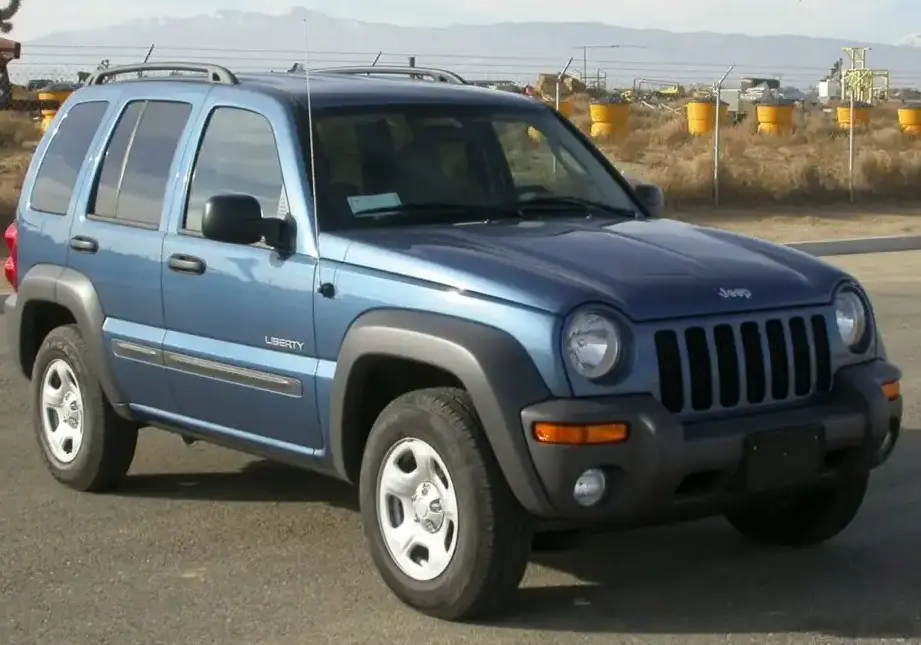
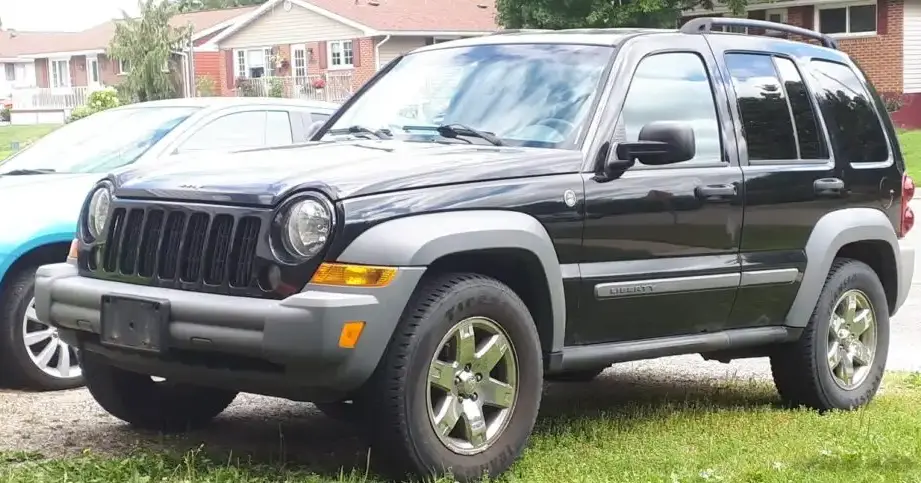
The Jeep Liberty, a mid-size SUV, received a notable refresh in 2004 for the 2005 model year. This update aimed to modernize the vehicle’s aesthetics and address some of the criticisms directed at the original KJ generation. The 3.7L V6 4WD variant, produced from 2005 to 2007, was a core offering in the Liberty lineup, striking a balance between capability and affordability. It proved popular with buyers seeking a four-wheel-drive SUV powered by a proven V6 engine. This specific configuration was offered alongside a 2.4L inline-four and, later, a 4.7L V8, catering to a diverse range of customer preferences.
Powertrain & Engine Architecture
The 3.7-liter EKG V6 engine powers this Liberty variant. This engine is part of Chrysler’s “World Engine” family, featuring a 60-degree V-angle and a single overhead camshaft (SOHC) design with two valves per cylinder. The multi-port fuel injection system delivers fuel directly to the intake ports, optimizing combustion efficiency. A 9.1:1 compression ratio was chosen as a compromise, allowing the engine to operate reliably on regular unleaded gasoline. The 6-speed manual transmission was a key component, providing drivers with greater control over the engine’s power delivery compared to the optional automatic. The engine’s longitudinal mounting and rear-wheel-drive bias, combined with the part-time four-wheel-drive system, delivered a traditional SUV driving experience.
Driving Characteristics
The 3.7L V6 paired with the 6-speed manual transmission offered a significant performance improvement over the base 2.4L four-cylinder model. While not a performance SUV, the Liberty 3.7 provided adequate acceleration for daily driving and highway merging. The manual gearbox allowed drivers to maintain the engine within its optimal power band, enhancing responsiveness. The 6-speed configuration offered relatively close gear ratios, contributing to a more engaging driving experience. However, the Liberty’s substantial weight (around 4,010 lbs) meant it wasn’t particularly agile, and fuel economy was moderate, averaging approximately 16 mpg in the city and 22 mpg on the highway.
Equipment & Trim Levels
The 2005-2007 Jeep Liberty 3.7L 4WD typically came standard with features such as air conditioning, power windows and locks, a CD player, and cloth upholstery. The interior design was functional, prioritizing practicality over luxury. Optional extras included alloy wheels, a premium sound system, leather upholstery, and a sunroof. The Liberty offered a relatively basic trim level compared to some competitors, focusing on value and utility. The four-wheel-drive system was a major selling point, providing enhanced traction in adverse weather conditions or off-road environments.
Chassis & Braking
The Liberty utilized an independent McPherson strut front suspension and a solid rear axle with coil springs. This setup provided a reasonable balance between ride comfort and off-road capability. A stabilizer bar was incorporated into the front suspension to minimize body roll during cornering. Braking was handled by ventilated discs at the front and discs at the rear. Anti-lock brakes (ABS) were standard, enhancing safety. The relatively large tires (225/75 R16) contributed to both ride comfort and off-road traction.
Market Reception & Comparison
The 2005-2007 Jeep Liberty 3.7L 4WD received mixed reviews from automotive critics. The capable four-wheel-drive system and the improved styling of the facelifted model were praised. However, some reviewers criticized the relatively basic interior and moderate fuel economy. Compared to the base 2.4L model, the 3.7L offered a substantial performance increase, making it a more attractive option for drivers who frequently tow or drive in challenging conditions. In comparison to the later 4.7L V8, the 3.7L provided a better balance of power and fuel efficiency, although it lacked the V8’s greater towing capacity.
Legacy
The Jeep Liberty, particularly the 3.7L V6 variants, has become a relatively affordable option in the used vehicle market. The 3.7L engine is generally considered reliable, provided regular maintenance is performed. Common issues include oil leaks and occasional sensor failures. The Liberty’s robust four-wheel-drive system and relatively straightforward mechanical design make it a popular choice for those seeking a capable and affordable SUV. While not a highly sought-after collector’s item, well-maintained examples continue to provide dependable transportation for many owners.