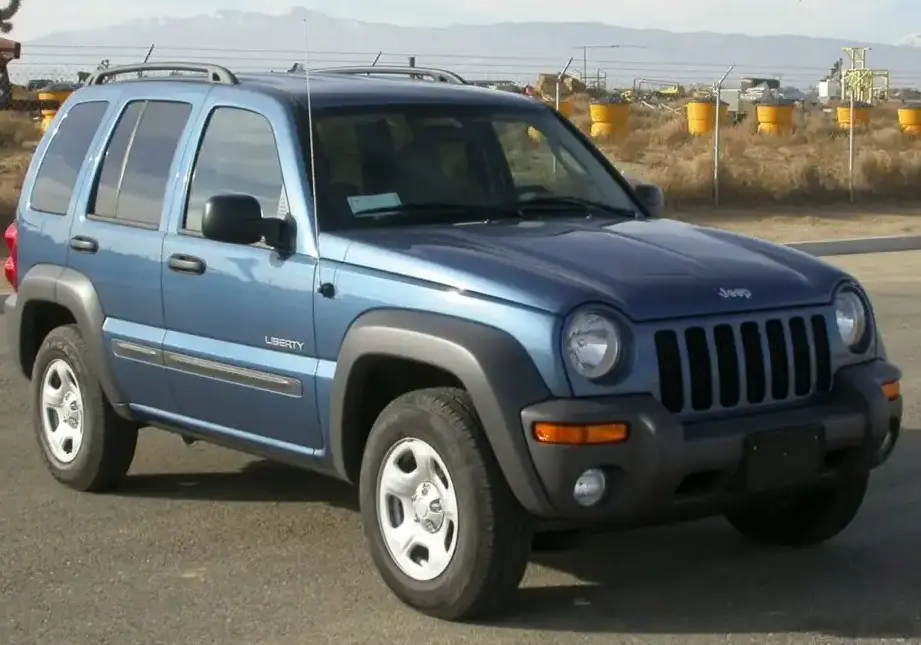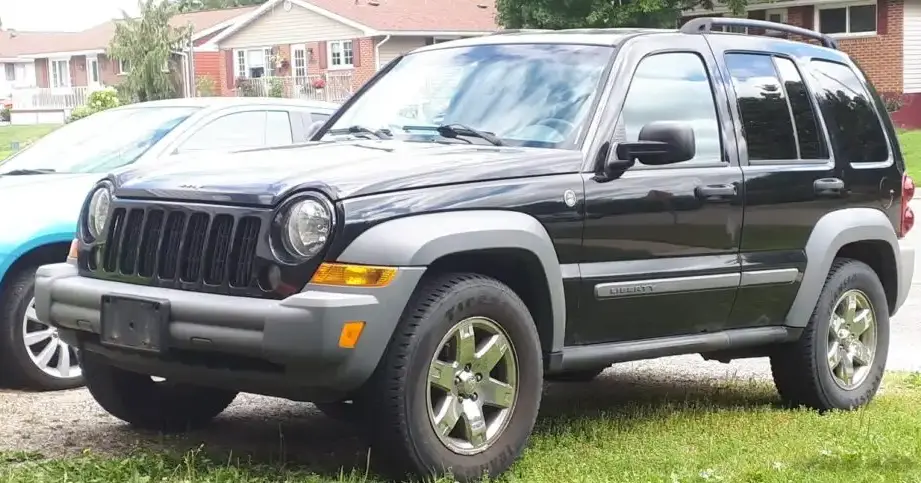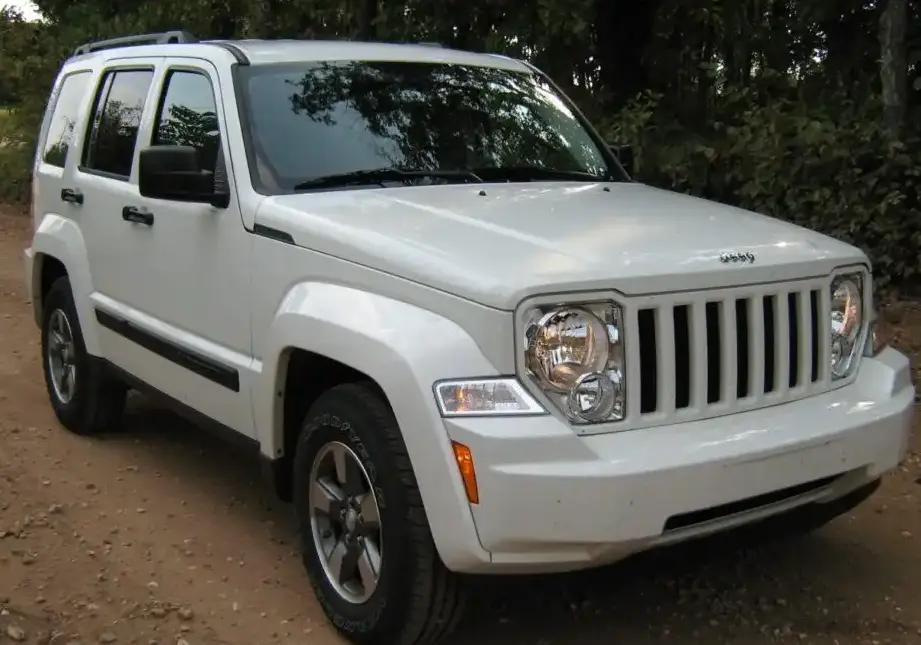
The Jeep Liberty II, specifically the 3.7 i V6 12V (210 Hp) 4WD Automatic variant, was produced from 2007 to 2013. This model represented the second generation of the Liberty (known as the Cherokee outside of North America), and aimed to offer a more refined and capable mid-size SUV experience. Positioned as a mid-range offering within the Liberty lineup, it slotted between the base 3.7L 2WD models and the more premium trims with optional features. The Liberty II was designed to appeal to families and individuals seeking a blend of on-road comfort and off-road capability, a hallmark of the Jeep brand.
Technical Specifications
| Brand | Jeep |
| Model | Liberty |
| Generation | Liberty II |
| Type (Engine) | 3.7 i V6 12V (210 Hp) 4WD Automatic |
| Start of production | 2007 |
| End of production | 2013 |
| Powertrain Architecture | Internal Combustion engine |
| Body type | SUV |
| Seats | 5 |
| Doors | 5 |
| Fuel consumption (urban) | 15.7 l/100 km (15 US mpg, 18 UK mpg, 6.4 km/l) |
| Fuel consumption (extra urban) | 11.2 l/100 km (21 US mpg, 25.2 UK mpg, 8.9 km/l) |
| Fuel consumption (combined) | 13.8 l/100 km (17 US mpg, 20.5 UK mpg, 7.2 km/l) |
| Fuel Type | Petrol (Gasoline) |
| Weight-to-power ratio | 9.2 kg/Hp, 108.5 Hp/tonne |
| Weight-to-torque ratio | 6.1 kg/Nm, 164.3 Nm/tonne |
| Power | 210 Hp @ 5200 rpm |
| Power per litre | 56.7 Hp/l |
| Torque | 318 Nm @ 4000 rpm (234.54 lb.-ft. @ 4000 rpm) |
| Engine layout | Front, Longitudinal |
| Engine Model/Code | EKG |
| Engine displacement | 3701 cm3 (225.85 cu. in.) |
| Number of cylinders | 6 |
| Engine configuration | V-engine |
| Cylinder Bore | 93 mm (3.66 in.) |
| Piston Stroke | 90.8 mm (3.57 in.) |
| Compression ratio | 9.1:1 |
| Number of valves per cylinder | 2 |
| Fuel injection system | Multi-port manifold injection |
| Engine aspiration | Naturally aspirated engine |
| Engine oil capacity | 4.7 l (4.97 US qt | 4.14 UK qt) |
| Coolant capacity | 13.3 l (14.05 US qt | 11.7 UK qt) |
| Kerb Weight | 1936 kg (4268.15 lbs.) |
| Max. weight | 2574 kg (5674.7 lbs.) |
| Max load | 638 kg (1406.55 lbs.) |
| Trunk (boot) space – minimum | 892 l (31.5 cu. ft.) |
| Trunk (boot) space – maximum | 1818 l (64.2 cu. ft.) |
| Fuel tank capacity | 74 l (19.55 US gal | 16.28 UK gal) |
| Permitted trailer load with brakes (12%) | 2268 kg (5000.08 lbs.) |
| Length | 4493 mm (176.89 in.) |
| Width | 1838 mm (72.36 in.) |
| Height | 1781 mm (70.12 in.) |
| Wheelbase | 2695 mm (106.1 in.) |
| Front track | 1549 mm (60.98 in.) |
| Rear (Back) track | 1549 mm (60.98 in.) |
| Ride height (ground clearance) | 196 mm (7.72 in.) |
| Minimum turning circle (turning diameter) | 10.8 m (35.43 ft.) |
| Approach angle | 39.1° |
| Departure angle | 32.1° |
| Ramp-over (brakeover) angle | 20.4° |
| Drivetrain Architecture | The Internal combustion engine (ICE) drives the rear wheels permanently, and the front wheels are driven through an electrically or mechanically operated clutch if necessary. |
| Drive wheel | All wheel drive (4×4) |
| Number of gears and type of gearbox | 4 gears, automatic transmission |
| Front suspension | Independent, type McPherson with coil spring and anti-roll bar |
| Rear suspension | Rigid axle suspension, Transverse stabilizer, Coil spring |
| Front brakes | Ventilated discs, 302.26 mm |
| Rear brakes | Disc, 314.96 mm |
| Assisting systems | ABS (Anti-lock braking system) |
| Steering type | Steering rack and pinion |
| Tires size | 225/75 R16 |
| Wheel rims size | 7J x 16 |
Powertrain & Engine Architecture
The heart of this Liberty variant is the 3.7-liter EKG V6 engine. This engine, part of Chrysler’s then-new Global Engine Manufacturing Alliance (GEMA) family, featured a 60-degree V-angle and a cast iron block with aluminum cylinder heads. It utilized a multi-port fuel injection system, delivering fuel directly into the intake ports. The 12-valve configuration (two valves per cylinder) was a cost-effective design choice, prioritizing reliability and affordability over ultimate performance. The engine’s 9.1:1 compression ratio was a compromise between efficiency and power output. The four-speed automatic transmission (typically the 42RLE) was chosen for its smooth operation and ease of use, catering to a broader audience than a manual transmission. This transmission featured electronic control for optimized shift points and responsiveness.
Driving Characteristics
The 210 horsepower and 234 lb-ft of torque provided by the 3.7L V6 and four-speed automatic resulted in adequate, but not exhilarating, performance. Acceleration from 0 to 60 mph typically took around 9-10 seconds. The automatic transmission, while smooth, lacked the responsiveness of more modern transmissions or a manual gearbox. Gear ratios were tuned for everyday drivability and fuel economy rather than sporty performance. Compared to the higher-output 3.7L variants or the available diesel options in other markets, this configuration felt noticeably less powerful, particularly when fully loaded or tackling steep inclines. However, the 4WD system provided confident traction in various conditions, making it a capable all-weather vehicle.
Equipment & Trim Levels
The 3.7L 4WD Automatic Liberty II typically came standard with features like air conditioning, power windows and locks, a CD player with auxiliary input, and basic cloth upholstery. Higher trim levels, such as the Limited, added features like leather seats, heated front seats, a premium sound system, and alloy wheels. Optional extras included a sunroof, navigation system, and upgraded suspension packages. The interior design was functional and straightforward, prioritizing practicality over luxury.
Chassis & Braking
The Liberty II utilized a traditional body-on-frame construction, providing robust durability and off-road capability. The front suspension featured an independent McPherson strut design, while the rear employed a solid axle with coil springs and a transverse stabilizer bar. This setup offered a comfortable ride on paved roads, but could feel somewhat truck-like over rough terrain. The braking system consisted of ventilated discs at the front and solid discs at the rear, equipped with ABS. The brake performance was adequate for everyday driving, but not particularly sporty.
Market Reception & Comparison
The 3.7L 4WD Automatic Liberty II received mixed reviews. Critics generally praised its comfortable ride, spacious interior, and capable 4WD system. However, the engine was often criticized for its lack of power and relatively poor fuel economy (around 17 mpg combined). Compared to competitors like the Toyota RAV4 or Honda CR-V, the Liberty offered more off-road capability but less refinement and fuel efficiency. Within the Liberty lineup, this variant represented a good value proposition for buyers prioritizing affordability and all-weather traction over outright performance.
Legacy
The 3.7L V6 engine, while not known for its longevity or exceptional reliability, proved to be reasonably durable with proper maintenance. Common issues included oil leaks and occasional sensor failures. Today, the Liberty II 3.7L 4WD Automatic can be found on the used car market at relatively affordable prices. It remains a viable option for buyers seeking a capable and spacious SUV, but potential owners should be aware of the engine’s limitations and potential maintenance needs. Its lasting appeal lies in its blend of Jeep’s traditional off-road heritage with a more comfortable and practical everyday driving experience.