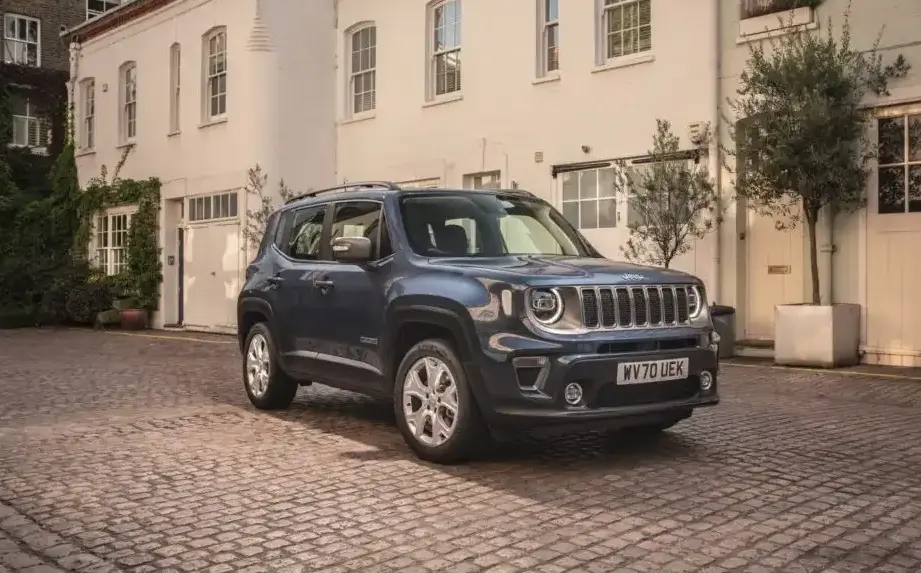
The Jeep Renegade 1.3 Turbo 4xe, introduced in July 2020, represents Jeep’s initial foray into plug-in hybrid technology within the compact SUV segment. This variant, part of the Renegade facelift (KL) generation, combines a 1.3-liter turbocharged gasoline engine with an electric motor, offering both all-electric driving capability and the flexibility of a conventional internal combustion engine. Positioned as a mid-range to premium offering within the Renegade lineup, the 4xe aimed to appeal to environmentally conscious buyers seeking a versatile and capable vehicle. It was primarily marketed in Europe and other regions prioritizing lower emissions and fuel efficiency, though limited availability existed in the US market.
Technical Specifications
| Brand | Jeep |
| Model | Renegade |
| Generation | Renegade (facelift 2018) |
| Type (Engine) | 1.3 Turbo (190 Hp) Plug-in Hybrid 4xe Automatic |
| Start of production | July, 2020 |
| Powertrain Architecture | PHEV (Plug-in Hybrid Electric Vehicle) |
| Body type | SUV, Crossover |
| Seats | 5 |
| Doors | 5 |
| Combined fuel consumption (WLTP) | 2.1-2.3 l/100 km (112 – 102.3 US mpg, 134.5 – 122.8 UK mpg, 47.6 – 43.5 km/l) |
| CO2 emissions (WLTP) | 49-52 g/km |
| Fuel consumption (NEDC) – combined | 1.9 l/100 km (123.8 US mpg, 148.7 UK mpg, 52.6 km/l) |
| CO2 emissions (NEDC) | 44 g/km |
| Fuel Type | Petrol / electricity |
| Acceleration 0 – 100 km/h | 7.5 sec |
| Acceleration 0 – 62 mph | 7.5 sec |
| Acceleration 0 – 60 mph | 7.1 sec |
| Maximum speed | 182 km/h (113.09 mph) |
| Emission standard | Euro 6d Final |
| Weight-to-power ratio | 9.3 kg/Hp, 107.3 Hp/tonne |
| Weight-to-torque ratio | 6.6 kg/Nm, 152.5 Nm/tonne |
| Gross battery capacity | 11.4 kWh |
| Battery technology | Lithium-ion (Li-Ion) |
| Battery location | Below the floor, under the rear seats |
| All-electric range (WLTP) | 43 km (26.72 mi) |
| All-electric range (NEDC) | 50 km (31.07 mi) |
| Average Energy consumption (NEDC) | 16.7 kWh/100 km (26.88 kWh/100 mi, 125 MPGe, 6 km/kWh, 3.7 mi/kWh) |
| Max speed (electric) | 130 km/h (80.78 mph) |
| Electric motor power | 60 Hp @ 4000 rpm |
| Electric motor Torque | 250 Nm (184.39 lb.-ft.) |
| Electric motor location | Rear axle, Transverse |
| System power | 190 Hp |
| Power | 130 Hp @ 5500 rpm |
| Power per litre | 97.6 Hp/l |
| Torque | 270 Nm @ 1850 rpm (199.14 lb.-ft. @ 1850 rpm) |
| Engine layout | Front, Transverse |
| Engine Model/Code | 46337540 |
| Engine displacement | 1332 cm3 (81.28 cu. in.) |
| Number of cylinders | 4 |
| Engine configuration | Inline |
| Cylinder Bore | 70 mm (2.76 in.) |
| Piston Stroke | 86.5 mm (3.41 in.) |
| Compression ratio | 10.5:1 |
| Number of valves per cylinder | 4 |
| Fuel injection system | Direct injection |
| Engine aspiration | Turbocharger, Intercooler |
| Valvetrain | DOHC |
| Engine oil capacity | 4.5 l (4.76 US qt | 3.96 UK qt) |
| Coolant | 5.3 l (5.6 US qt | 4.66 UK qt) |
| Kerb Weight | 1770 kg (3902.18 lbs.) |
| Max. weight | 2315 kg (5103.7 lbs.) |
| Max load | 545 kg (1201.52 lbs.) |
| Trunk (boot) space – minimum | 330 l (11.65 cu. ft.) |
| Trunk (boot) space – maximum | 1277 l (45.1 cu. ft.) |
| Fuel tank capacity | 36 l (9.51 US gal | 7.92 UK gal) |
| Permitted trailer load with brakes (12%) | 1150 kg (2535.32 lbs.) |
| Permitted trailer load without brakes | 600 kg (1322.77 lbs.) |
| Length | 4236 mm (166.77 in.) |
| Width | 1805 mm (71.06 in.) |
| Height | 1692 mm (66.61 in.) |
| Wheelbase | 2570 mm (101.18 in.) |
| Ride height (ground clearance) | 186 mm (7.32 in.) |
| Minimum turning circle | 11.07 m (36.32 ft.) |
| Approach angle | 19° |
| Departure angle | 27° |
| Ramp-over angle | 16° |
| Wading depth | 400 mm (15.75 in.) |
| Drivetrain Architecture | ICE drives front wheels, electric motor drives rear wheels. |
| Drive wheel | All wheel drive (4×4) |
| Number of gears | 6 |
| Type of gearbox | automatic transmission |
| Front brakes | Ventilated discs |
| Rear brakes | Ventilated discs |
| Assisting systems | ABS (Anti-lock braking system) |
| Steering type | Steering rack and pinion |
| Power steering | Electric Steering |
| Tires size | 235/55 R17; 235/50 R18 |
| Wheel rims size | 17; 18 |
INTRODUCTION
The Jeep Renegade 1.3 Turbo 4xe, launched in 2020, marked a significant step for the brand towards electrification. Built on the Small Wide architecture (shared with the Fiat 500X), the Renegade 4xe combined a 1.3-liter Firefly turbocharged engine with a rear-mounted electric motor, creating an all-wheel-drive plug-in hybrid system. This configuration allowed for a limited all-electric range, reducing emissions and improving fuel economy, particularly in urban driving conditions. The 4xe variant was positioned above the standard gasoline-powered Renegade models, offering a more sophisticated and environmentally friendly option for buyers.
Powertrain & Engine Architecture
At the heart of the Renegade 4xe lies the 1.3-liter Firefly turbocharged inline-four cylinder engine (engine code 46337540). This engine, producing 130 horsepower and 270 Nm (199 lb-ft) of torque, utilizes direct fuel injection and a turbocharger with an intercooler to enhance efficiency and power output. The engine is paired with a 6-speed automatic transmission, which sends power to the front wheels. Supplementing this is a rear-mounted electric motor, generating 60 horsepower and 250 Nm (184 lb-ft) of torque. This electric motor is powered by an 11.4 kWh lithium-ion battery pack located under the rear seats and floor. The combined system output is 190 horsepower. The powertrain offers multiple driving modes, including Electric, Hybrid, and Sport, allowing drivers to prioritize electric-only operation, optimize fuel efficiency, or maximize performance. The electric motor’s placement provides an all-wheel-drive capability, enhancing traction and stability.
Driving Characteristics
The Renegade 4xe delivers a unique driving experience compared to its gasoline-only counterparts. In electric mode, the vehicle offers near-silent operation and instant torque, providing brisk acceleration in urban environments. The all-electric range of approximately 43 km (27 miles) is sufficient for many daily commutes. When the battery is depleted or when more power is demanded, the gasoline engine seamlessly kicks in, providing a combined output of 190 horsepower. The 6-speed automatic transmission is generally smooth, although it can occasionally exhibit some hesitation during shifts. The added weight of the battery pack (approximately 200 kg) does slightly impact handling, making the 4xe feel less agile than lighter Renegade models. However, the all-wheel-drive system provides enhanced grip and stability, particularly on slippery surfaces. Acceleration from 0 to 100 km/h (0-62 mph) takes around 7.5 seconds.
Equipment & Trim Levels
The Renegade 4xe typically came well-equipped, reflecting its position as a premium trim level. Standard features often included automatic climate control, a touchscreen infotainment system with Apple CarPlay and Android Auto compatibility, a rearview camera, and various safety features such as lane departure warning and automatic emergency braking. Higher trim levels added features like leather upholstery, a panoramic sunroof, and advanced driver-assistance systems. Interior upholstery was typically a combination of cloth and leatherette, with options for full leather available. The dashboard layout was similar to other Renegade models, but with unique 4xe badging and displays showing energy flow and battery status.
Chassis & Braking
The Renegade 4xe utilizes a MacPherson strut front suspension and a Chapman strut rear suspension. The suspension is tuned to provide a comfortable ride, although it can feel slightly firm due to the added weight of the battery pack. All four wheels are equipped with ventilated disc brakes, providing adequate stopping power. The electronic stability control system is integrated with the all-wheel-drive system to enhance stability and control. Tire sizes typically ranged from 235/55 R17 to 235/50 R18, depending on the trim level.
Market Reception & Comparison
The Renegade 4xe was generally well-received by automotive critics, who praised its fuel efficiency, all-electric range, and all-wheel-drive capability. However, some reviewers noted the added weight and slightly compromised handling compared to the standard Renegade models. Compared to the gasoline-powered Renegade variants, the 4xe offered significantly better fuel economy and lower emissions, but at a higher purchase price. Compared to other plug-in hybrid SUVs in its class, the Renegade 4xe offered a competitive all-electric range and a relatively affordable price point. The 1.8L gasoline version, while cheaper, lacked the environmental benefits and all-wheel-drive capability of the 4xe.
Legacy
The Jeep Renegade 4xe played a crucial role in establishing Jeep as a player in the plug-in hybrid market. While early models experienced some minor software glitches, the powertrain has proven to be relatively reliable. On the used car market, the Renegade 4xe holds its value reasonably well, particularly among buyers seeking a fuel-efficient and environmentally friendly SUV. The 4xe’s success paved the way for Jeep to introduce plug-in hybrid versions of other models, solidifying its commitment to electrification.