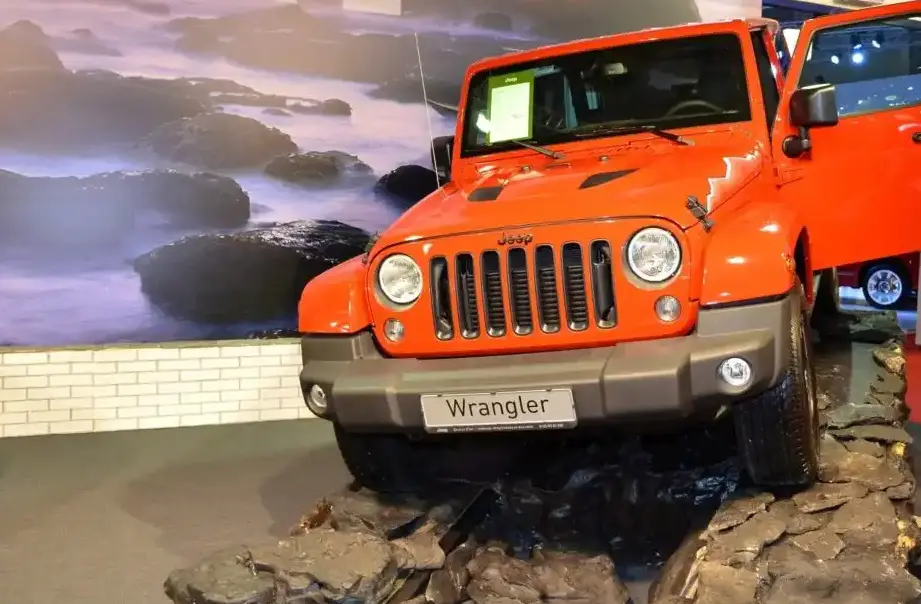
The Jeep Wrangler JK Sahara 2.8 CRDi 4×4 Automatic, produced from 2011 to 2018, represents a significant iteration of the iconic Wrangler, blending off-road capability with a degree of on-road refinement. This variant, popular in European and international markets, offered a diesel engine option paired with a five-speed automatic transmission, positioning it as a comfortable and capable choice for both daily driving and adventurous excursions. It falls within the third generation of the Wrangler (JK), known for its substantial improvements in interior space, ride quality, and safety compared to its predecessors.
Technical Specifications
| Brand | Jeep |
| Model | Wrangler |
| Generation | Wrangler III (JK) |
| Type | Sahara 2.8 CRDi (197 Hp) 4×4 Automatic |
| Start of production | 2011 |
| End of production | 2018 |
| Powertrain Architecture | Internal Combustion engine |
| Body type | Off-road vehicle |
| Seats | 4 |
| Doors | 2 |
| Fuel consumption (urban) | 9.7 l/100 km (24.2 US mpg) |
| Fuel consumption (extra urban) | 7.1 l/100 km (33.1 US mpg) |
| Fuel consumption (combined) | 8.1 l/100 km (29 US mpg) |
| CO2 emissions | 209 g/km |
| Fuel Type | Diesel |
| Acceleration 0 – 100 km/h | 10.6 sec |
| Acceleration 0 – 62 mph | 10.6 sec |
| Acceleration 0 – 60 mph | 10.1 sec |
| Maximum speed | 172 km/h (106.88 mph) |
| Emission standard | Euro 5 |
| Weight-to-power ratio | 9.4 kg/Hp |
| Weight-to-torque ratio | 4 kg/Nm |
| Power | 197 Hp @ 3600 rpm |
| Torque | 460 Nm @ 1600-2600 rpm (339.28 lb.-ft.) |
| Maximum engine speed | 4600 rpm |
| Engine layout | Front, Longitudinal |
| Engine Model/Code | ENS |
| Engine displacement | 2776 cm3 (169.4 cu. in.) |
| Number of cylinders | 4 |
| Engine configuration | Inline |
| Cylinder Bore | 94 mm (3.7 in.) |
| Piston Stroke | 100 mm (3.94 in.) |
| Compression ratio | 16.5:1 |
| Number of valves per cylinder | 4 |
| Fuel injection system | Diesel Commonrail |
| Engine aspiration | Turbocharger, Intercooler |
| Valvetrain | DOHC |
| Engine oil capacity | 6.6 l (6.97 US qt | 5.81 UK qt) |
| Coolant | 12 l (12.68 US qt | 10.56 UK qt) |
| Kerb Weight | 1858 kg (4096.19 lbs.) |
| Max. weight | 2506 kg (5524.78 lbs.) |
| Max load | 648 kg (1428.6 lbs.) |
| Trunk (boot) space – minimum | 142 l (5.01 cu. ft.) |
| Trunk (boot) space – maximum | 430 l (15.19 cu. ft.) |
| Fuel tank capacity | 66 l (17.44 US gal | 14.52 UK gal) |
| Permitted trailer load with brakes (12%) | 1000 kg (2204.62 lbs.) |
| Permitted trailer load without brakes | 750 kg (1653.47 lbs.) |
| Length | 4223 mm (166.26 in.) |
| Width | 1873 mm (73.74 in.) |
| Height | 1840 mm (72.44 in.) |
| Wheelbase | 2424 mm (95.43 in.) |
| Front track | 1572 mm (61.89 in.) |
| Rear (Back) track | 1572 mm (61.89 in.) |
| Ride height (ground clearance) | 259 mm (10.2 in.) |
| Drag coefficient (Cd) | 0.495 |
| Minimum turning circle (turning diameter) | 10.36 m (33.99 ft.) |
| Approach angle | 38.1° |
| Departure angle | 31.3° |
| Ramp-over (brakeover) angle | 25.9° |
| Drive wheel | All wheel drive (4×4) |
| Number of gears and type of gearbox | 5 gears, automatic transmission |
| Front suspension | Rigid axle suspension |
| Rear suspension | Rigid axle suspension |
| Front brakes | Ventilated discs |
| Rear brakes | Disc |
| Assisting systems | ABS (Anti-lock braking system) |
| Tires size | 245/75 R17 |
| Wheel rims size | 17 |
INTRODUCTION
The Jeep Wrangler JK Sahara 2.8 CRDi 4×4 Automatic, produced between 2011 and 2018, was a key variant within the JK generation of the Wrangler. Designed primarily for markets outside of North America, it offered a diesel engine option – a rarity for the Wrangler in the US – coupled with the convenience of an automatic transmission. This combination aimed to broaden the Wrangler’s appeal, attracting buyers who desired the vehicle’s legendary off-road prowess alongside improved fuel economy and ease of driving. The Sahara trim level, positioned as a mid-range offering, added a layer of comfort and convenience features compared to the base Sport model.
Powertrain & Engine Architecture
At the heart of the Sahara 2.8 CRDi is the 2.8-liter inline-four cylinder diesel engine, designated the ENS. This engine utilizes a common rail direct injection system, delivering fuel directly into the combustion chamber at extremely high pressure for improved efficiency and reduced emissions. The engine is turbocharged and intercooled, boosting power output to 197 horsepower at 3600 rpm and 460 Nm (339.28 lb-ft) of torque between 1600 and 2600 rpm. The engine features a double overhead camshaft (DOHC) valvetrain with four valves per cylinder. Paired with this engine is a five-speed automatic transmission, providing smooth and effortless gear changes. This transmission was chosen for its durability and suitability for both on- and off-road conditions. While not known for lightning-fast shifts, it offered a comfortable driving experience, particularly in urban environments.
Driving Characteristics
The 2.8 CRDi Automatic Wrangler JK delivers a unique driving experience. The diesel engine’s substantial torque output provides ample pulling power, making it well-suited for tackling challenging terrain and towing. However, the 197 hp output, combined with the automatic transmission, results in a 0-60 mph time of around 10.1 seconds, which is slower than the gasoline-powered Wranglers or those equipped with a manual transmission. The automatic transmission’s gear ratios are optimized for both fuel efficiency and off-road crawling, but it can sometimes feel sluggish during quick acceleration. The engine’s peak torque is available at relatively low RPMs, providing strong low-end grunt, which is particularly useful when rock crawling or navigating steep inclines. The overall driving experience is characterized by a comfortable ride, thanks to the Wrangler’s suspension, and a capable off-road performance.
Equipment & Trim Levels
The Sahara trim level included several standard features designed to enhance comfort and convenience. These typically included air conditioning, power windows and locks, a premium audio system, and upgraded interior upholstery. The Sahara also featured body-colored fender flares and a chrome front grille, distinguishing it visually from the more basic Sport model. Optional extras available for the Sahara 2.8 CRDi Automatic included a navigation system, leather seats, a sunroof, and various off-road packages with features like a winch, upgraded suspension components, and rock rails. The interior layout was functional and durable, with a focus on practicality rather than luxury.
Chassis & Braking
The Wrangler JK Sahara 2.8 CRDi utilizes a robust body-on-frame construction, providing excellent durability and off-road capability. The suspension system consists of a solid front and rear axle with coil springs and shock absorbers. The braking system features ventilated discs on the front wheels and discs on the rear, providing adequate stopping power for the vehicle’s weight. An Anti-lock Braking System (ABS) is standard, enhancing safety during emergency braking situations. The Sahara trim typically included a stabilizer bar to reduce body roll during cornering, improving on-road handling.
Market Reception & Comparison
The Jeep Wrangler JK Sahara 2.8 CRDi Automatic was generally well-received in markets where diesel engines were popular. Critics praised its fuel efficiency, strong torque output, and off-road capability. However, some reviewers noted the relatively slow acceleration compared to gasoline-powered Wranglers. Compared to the 3.6-liter V6 gasoline engine offered in North America, the 2.8 CRDi provided better fuel economy but less overall power. The diesel engine also required more frequent maintenance, including diesel particulate filter (DPF) regeneration. Compared to other trims in the Wrangler JK lineup, the Sahara 2.8 CRDi Automatic offered a balance of comfort, convenience, and capability, appealing to buyers who wanted a versatile vehicle for both daily driving and off-road adventures.
Legacy
The 2.8 CRDi engine, while not widely available in the US market, has proven to be a relatively reliable powertrain when properly maintained. The five-speed automatic transmission is also known for its durability. However, like all diesel engines, the 2.8 CRDi is susceptible to issues related to the fuel injection system and the diesel particulate filter. In the used car market, the Sahara 2.8 CRDi Automatic commands a reasonable price, reflecting its desirable combination of features and capabilities. It remains a popular choice for those seeking a capable and fuel-efficient off-road vehicle.