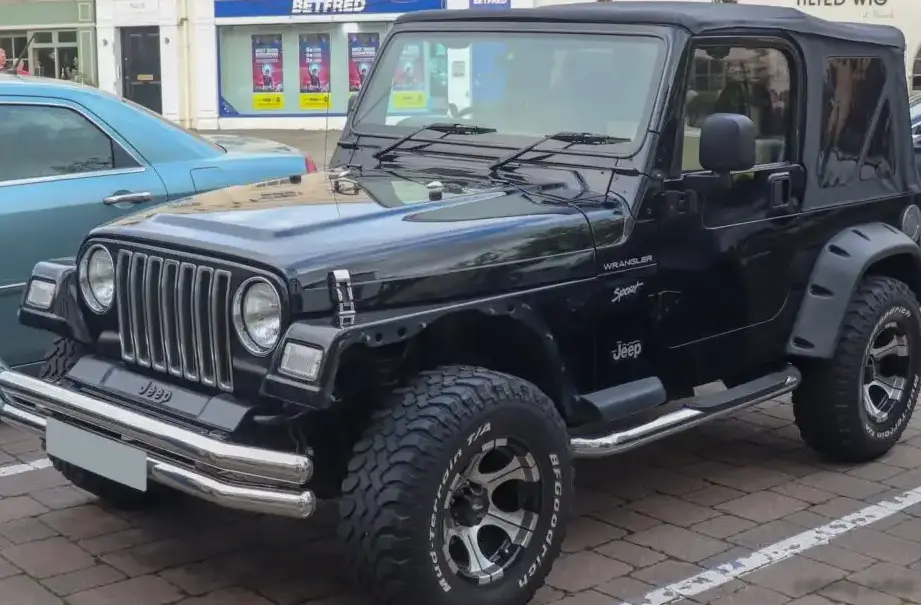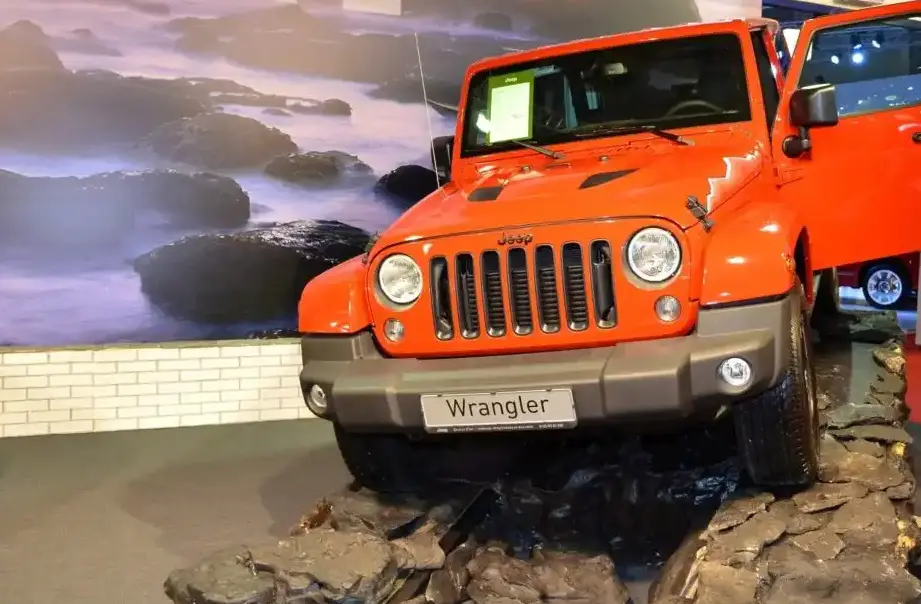
The Jeep Wrangler JK Sahara 3.8i V6, produced from 2006 to 2007, represents the initial offering of the highly successful JK generation Wrangler. This variant, equipped with a 3.8-liter V6 engine paired with a four-speed automatic transmission and four-wheel drive, served as the entry point into the JK lineup, offering a blend of off-road capability and everyday usability. The JK generation marked a significant departure from its predecessor, the TJ, with a focus on improved on-road refinement and modern features while retaining the Wrangler’s core off-road DNA. The Sahara trim level, even in this early iteration, added a degree of comfort and convenience not found in the base Sport model.
Technical Specifications
| Brand | Jeep |
| Model | Wrangler |
| Generation | Wrangler III (JK) |
| Type | Sahara 3.8i V6 (202 Hp) 4×4 Automatic |
| Start of production | 2006 |
| End of production | 2007 |
| Powertrain Architecture | Internal Combustion engine |
| Body type | Off-road vehicle |
| Seats | 4 |
| Doors | 2 |
| Fuel consumption (urban) | 13.8 l/100 km (17 US mpg, 20.5 UK mpg, 7.2 km/l) |
| Fuel consumption (extra urban) | 12.4 l/100 km (19 US mpg, 22.8 UK mpg, 8.1 km/l) |
| Fuel consumption (combined) | 13.8 l/100 km (17 US mpg, 20.5 UK mpg, 7.2 km/l) |
| Fuel Type | Petrol (Gasoline) |
| Weight-to-power ratio | 8.9 kg/Hp, 112 Hp/tonne |
| Weight-to-torque ratio | 5.6 kg/Nm, 177.9 Nm/tonne |
| Power | 202 Hp @ 5000 rpm |
| Power per litre | 53.5 Hp/l |
| Torque | 321 Nm @ 4000 rpm (236.76 lb.-ft. @ 4000 rpm) |
| Engine layout | Front, Longitudinal |
| Engine Model/Code | EGT |
| Engine displacement | 3778 cm3 (230.55 cu. in.) |
| Number of cylinders | 6 |
| Engine configuration | V-engine |
| Cylinder Bore | 96 mm (3.78 in.) |
| Piston Stroke | 87 mm (3.43 in.) |
| Compression ratio | 9.6:1 |
| Number of valves per cylinder | 2 |
| Fuel injection system | Multi-port manifold injection |
| Engine aspiration | Naturally aspirated engine |
| Valvetrain | OHV |
| Engine oil capacity | 5.7 l (6.02 US qt | 5.02 UK qt) |
| Coolant capacity | 12 l (12.68 US qt | 10.56 UK qt) |
| Kerb Weight | 1804 kg (3977.14 lbs.) |
| Max. weight | 2258 kg (4978.04 lbs.) |
| Max load | 454 kg (1000.9 lbs.) |
| Trunk (boot) space – minimum | 142 l (5.01 cu. ft.) |
| Trunk (boot) space – maximum | 430 l (15.19 cu. ft.) |
| Fuel tank capacity | 70 l (18.49 US gal | 15.4 UK gal) |
| Length | 3881 mm (152.8 in.) |
| Width | 1873 mm (73.74 in.) |
| Height | 1833 mm (72.17 in.) |
| Wheelbase | 2424 mm (95.43 in.) |
| Front track | 1572 mm (61.89 in.) |
| Rear track | 1572 mm (61.89 in.) |
| Ride height (ground clearance) | 256 mm (10.08 in.) |
| Drag coefficient (Cd) | 0.495 |
| Minimum turning circle | 10.62 m (34.84 ft.) |
| Approach angle | 43.8° |
| Departure angle | 40.3° |
| Ramp-over angle | 24.9° |
| Drive wheel | All wheel drive (4×4) |
| Number of gears | 4 |
| Gearbox type | Automatic transmission |
| Front suspension | Rigid axle suspension |
| Rear suspension | Rigid axle suspension |
| Front brakes | Ventilated discs |
| Rear brakes | Disc |
| Assisting systems | ABS (Anti-lock braking system) |
| Tires size | 255/75 R17 |
| Wheel rims size | 17 |
Powertrain & Engine Architecture
The heart of the JK Sahara 3.8i is the 3.8-liter (230.55 cubic inch) EGT V6 engine. This engine, a descendant of the AMC 199 inline-six, was adapted to a V6 configuration in the late 1990s. It features a cast iron block and aluminum cylinder heads, utilizing a single overhead valve (OHV) valvetrain. Fuel delivery is managed by a multi-port fuel injection system, providing adequate, though not exceptional, performance. The engine produces 202 horsepower at 5000 rpm and 236.76 lb-ft of torque at 4000 rpm. The four-speed automatic transmission (42RLE) was chosen for its durability and simplicity, prioritizing reliability over outright performance. This transmission featured electronic control and overdrive for improved highway fuel economy.
Driving Characteristics
The 3.8L V6 with the four-speed automatic delivers a driving experience geared towards usability rather than speed. Acceleration is adequate for everyday driving, but the engine feels strained when pushed hard, especially when fully loaded or tackling steep inclines. The automatic transmission’s gear ratios are spaced to prioritize fuel economy and low-end torque, resulting in a somewhat sluggish feel during quick acceleration. Compared to the manual transmission versions of the JK, the automatic sacrifices some responsiveness. Higher trims with the 3.8L engine, or those opting for the more powerful 3.8L, offered a noticeably more engaging driving experience. However, the automatic’s ease of use made it a popular choice for drivers prioritizing convenience.
Equipment & Trim Levels
The Sahara trim level, even in the initial JK years, offered a step up in features compared to the base Sport model. Standard equipment included air conditioning, a CD player with AM/FM radio, power windows and locks, and a tilt steering wheel. The Sahara also featured upgraded interior trim, including cloth upholstery and a more refined dashboard design. Optional extras included a premium sound system, leather upholstery, and a power-sliding sunroof. The Sahara’s focus was on providing a comfortable and well-equipped off-road vehicle without sacrificing its rugged capabilities.
Chassis & Braking
The JK Wrangler utilized a body-on-frame construction, providing a robust and durable platform for off-road adventures. The suspension consisted of a solid front and rear axle setup, offering excellent articulation and off-road prowess. The front axle featured ventilated disc brakes, while the rear axle utilized disc brakes. ABS (Anti-lock Braking System) was standard, enhancing safety on paved roads. The Sahara trim did not receive any significant suspension or braking upgrades compared to other JK models. The relatively heavy weight of the vehicle, combined with the modest engine output, meant that braking performance was adequate but not exceptional.
Market Reception & Comparison
The JK Wrangler, including the 3.8i Sahara Automatic, was generally well-received by critics and consumers alike. The improved on-road refinement and modern features were praised, while the Wrangler’s legendary off-road capability remained intact. However, the 3.8L V6 engine and four-speed automatic transmission were often criticized for their lack of power and responsiveness, particularly when compared to the optional 3.8L V6. Fuel economy was also a concern, averaging around 17 mpg in combined driving. The 3.8L automatic was positioned as the entry-level JK, appealing to buyers who prioritized affordability and ease of use over outright performance.
Legacy
The JK Wrangler, and specifically the 3.8i Sahara Automatic, has proven to be a remarkably durable and reliable vehicle. The 3.8L V6 engine, while not known for its power, is generally considered to be a robust and long-lasting powerplant. The four-speed automatic transmission, while somewhat dated, has also proven to be relatively reliable with proper maintenance. Today, these early JK Wranglers are readily available on the used car market at affordable prices, making them a popular choice for budget-minded off-road enthusiasts. While not the fastest or most fuel-efficient Wrangler variant, the 3.8i Sahara Automatic offers a compelling combination of capability, affordability, and durability.