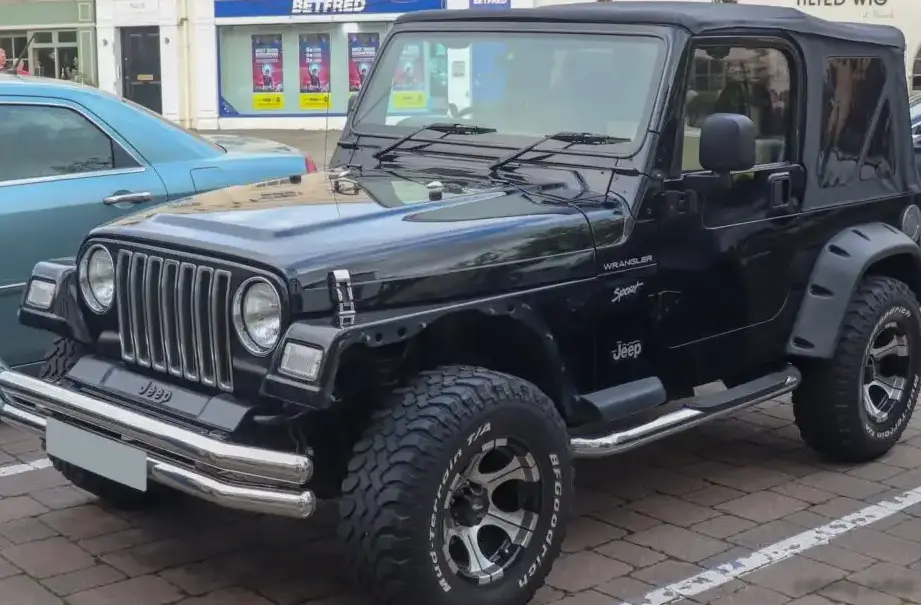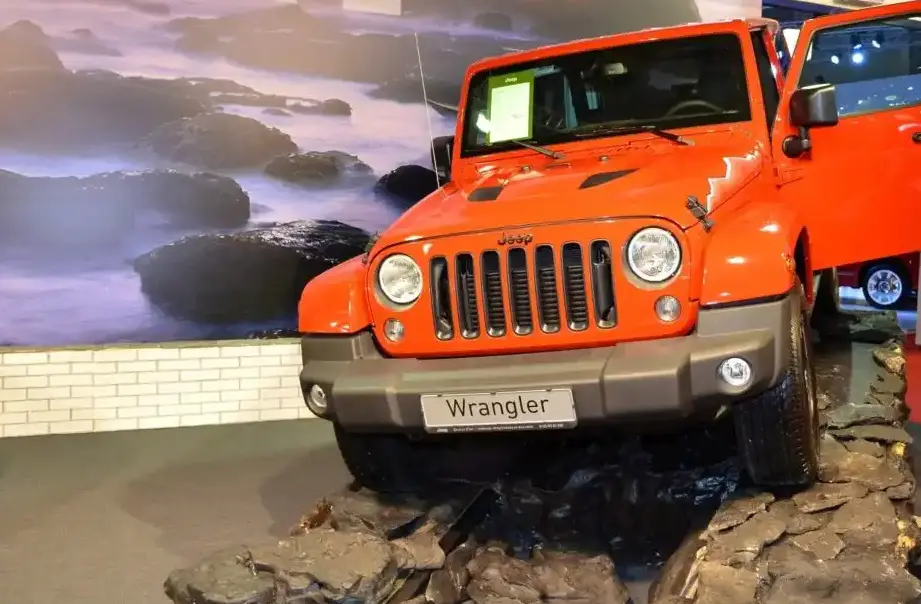
The Jeep Wrangler JK Sport 3.8i V6 4×4, produced from 2007 to 2011, represents the third generation of the iconic Wrangler. This model marked a significant departure from its predecessors with a fully boxed frame, coil-spring suspension, and a more refined interior, while retaining the Wrangler’s legendary off-road capability. The JK Sport, equipped with the 3.8-liter V6 engine and a six-speed manual transmission, served as the entry point into the JK lineup, offering a balance of affordability and functionality for both on- and off-road enthusiasts. It was a key model in solidifying the Wrangler’s position as a uniquely American vehicle, blending ruggedness with a degree of everyday usability.
Technical Specifications
| Brand | Jeep |
| Model | Wrangler |
| Generation | Wrangler III (JK) |
| Type | Sport 3.8i V6 (196 Hp) 4×4 |
| Start of production | 2007 |
| End of production | 2011 |
| Powertrain Architecture | Internal Combustion engine |
| Body type | Off-road vehicle |
| Seats | 4 |
| Doors | 2 |
| Fuel consumption (urban) | 15.1 l/100 km (15.6 US mpg, 18.7 UK mpg, 6.6 km/l) |
| Fuel consumption (extra urban) | 8.1 l/100 km (29 US mpg, 34.9 UK mpg, 12.3 km/l) |
| Fuel consumption (combined) | 10.7 l/100 km (22 US mpg, 26.4 UK mpg, 9.3 km/l) |
| CO2 emissions | 248 g/km |
| Fuel Type | Petrol (Gasoline) |
| Acceleration 0 – 100 km/h | 9.6 sec |
| Acceleration 0 – 62 mph | 9.6 sec |
| Acceleration 0 – 60 mph | 9.1 sec |
| Maximum speed | 176 km/h (109.36 mph) |
| Emission standard | Euro 4 |
| Weight-to-power ratio | 9 kg/Hp, 111.7 Hp/tonne |
| Weight-to-torque ratio | 5.6 kg/Nm, 179.5 Nm/tonne |
| Power | 196 Hp @ 5000 rpm |
| Power per litre | 51.9 Hp/l |
| Torque | 315 Nm @ 4000 rpm (232.33 lb.-ft. @ 4000 rpm) |
| Maximum engine speed | 5600 rpm |
| Engine layout | Front, Longitudinal |
| Engine Model/Code | EGT |
| Engine displacement | 3778 cm3 (230.55 cu. in.) |
| Number of cylinders | 6 |
| Engine configuration | V-engine |
| Cylinder Bore | 96 mm (3.78 in.) |
| Piston Stroke | 87 mm (3.43 in.) |
| Compression ratio | 9.6:1 |
| Number of valves per cylinder | 2 |
| Fuel injection system | Multi-port manifold injection |
| Engine aspiration | Naturally aspirated engine |
| Valvetrain | OHV |
| Engine oil capacity | 5.7 l (6.02 US qt | 5.02 UK qt) |
| Coolant | 12 l (12.68 US qt | 10.56 UK qt) |
| Kerb Weight | 1755 kg (3869.11 lbs.) |
| Max. weight | 2268 kg (5000.08 lbs.) |
| Max load | 513 kg (1130.97 lbs.) |
| Trunk (boot) space – minimum | 142 l (5.01 cu. ft.) |
| Trunk (boot) space – maximum | 430 l (15.19 cu. ft.) |
| Fuel tank capacity | 70 l (18.49 US gal | 15.4 UK gal) |
| Permitted trailer load with brakes (12%) | 2000 kg (4409.25 lbs.) |
| Permitted trailer load without brakes | 750 kg (1653.47 lbs.) |
| Permitted towbar download | 100 kg (220.46 lbs.) |
| Length | 4223 mm (166.26 in.) |
| Width | 1873 mm (73.74 in.) |
| Height | 1800 mm (70.87 in.) |
| Wheelbase | 2424 mm (95.43 in.) |
| Front track | 1572 mm (61.89 in.) |
| Rear (Back) track | 1572 mm (61.89 in.) |
| Ride height (ground clearance) | 259 mm (10.2 in.) |
| Drag coefficient (Cd) | 0.495 |
| Minimum turning circle (turning diameter) | 10.36 m (33.99 ft.) |
| Approach angle | 38.4° |
| Departure angle | 31.3° |
| Ramp-over (brakeover) angle | 25.1° |
| Wading depth | 762 mm (30 in.) |
| Drive wheel | All wheel drive (4×4) |
| Number of gears and type of gearbox | 6 gears, manual transmission |
| Front suspension | Rigid axle suspension |
| Rear suspension | Rigid axle suspension |
| Front brakes | Ventilated discs |
| Rear brakes | Disc |
| Assisting systems | ABS (Anti-lock braking system) |
| Tires size | 255/75 R17 |
| Wheel rims size | 17 |
Powertrain & Engine Architecture
The JK Sport 3.8i V6 utilized the Chrysler EGT engine, a 3.8-liter (230.55 cubic inches) pushrod V6. This engine, while not known for its cutting-edge technology, was a reliable and relatively simple design. It featured a 9.6:1 compression ratio, multi-port fuel injection, and an overhead valve (OHV) valvetrain. The engine produced 196 horsepower at 5000 rpm and 232 lb-ft of torque at 4000 rpm. The six-speed manual transmission, a new addition for the JK generation, provided a wider gear ratio spread compared to previous Wrangler transmissions, improving both on-road cruising and off-road crawling capability. The transmission was chosen for its durability and ability to handle the engine’s torque output in demanding conditions.
Driving Characteristics
The 3.8L V6 with the six-speed manual transmission in the JK Sport offered a reasonably engaging driving experience. Acceleration to 60 mph took approximately 9.1 seconds, which was adequate but not particularly quick. The engine’s torque curve provided sufficient power for everyday driving and moderate off-road trails. The manual transmission allowed for greater driver control, especially when navigating challenging terrain. Compared to the automatic transmission option, the manual offered better fuel economy and a more direct connection to the powertrain. However, it lacked the refinement of more modern transmissions and could feel notchy at times. The JK’s solid axles and coil-spring suspension provided a comfortable ride on paved roads, while still delivering exceptional articulation and off-road prowess.
Equipment & Trim Levels
The JK Sport was the base model Wrangler, and as such, came with a relatively basic set of standard features. These included air conditioning, a basic audio system, and manually adjustable mirrors and windows. The interior featured durable, washable materials designed to withstand the rigors of off-road use. Optional extras included power windows and locks, upgraded audio systems, and a variety of off-road accessories such as rock rails and winch mounts. The standard upholstery was cloth, and the dashboard featured a simple, functional design. The JK Sport was designed to be a blank canvas for customization, allowing owners to tailor their Wrangler to their specific needs and preferences.
Chassis & Braking
The JK’s chassis was a major improvement over previous Wrangler generations. The fully boxed frame provided increased rigidity and improved crashworthiness. The coil-spring suspension, a first for the Wrangler, offered a more comfortable ride and better handling. The front and rear axles were both solid, providing exceptional strength and articulation. The JK Sport came equipped with ventilated disc brakes in the front and disc brakes in the rear, providing adequate stopping power for most driving situations. An Anti-lock Braking System (ABS) was standard, enhancing safety and control. The JK’s relatively high ground clearance (10.2 inches) and impressive approach, departure, and breakover angles made it a highly capable off-road vehicle.
Market Reception & Comparison
The JK Wrangler was generally well-received by critics and consumers alike. The 3.8L V6 and six-speed manual combination was praised for its reliability and affordability. However, some reviewers noted that the engine lacked the power and refinement of some competitors. Compared to the higher-trim Wranglers equipped with the 3.6-liter Pentastar V6, the 3.8L offered less horsepower and torque, resulting in slower acceleration and reduced towing capacity. Fuel economy was also slightly lower with the 3.8L engine. Despite these drawbacks, the JK Sport remained a popular choice for buyers seeking a capable and affordable off-road vehicle.
Legacy
The Jeep Wrangler JK, including the 3.8i V6 Sport variant, has proven to be a remarkably durable and reliable vehicle. The 3.8L engine, while not particularly sophisticated, is known for its longevity and relatively low maintenance costs. Today, used JK Wranglers are highly sought after by off-road enthusiasts and those seeking a uniquely American vehicle. The JK’s robust chassis, capable suspension, and readily available aftermarket parts make it an ideal platform for customization and modification. The JK generation significantly modernized the Wrangler while preserving its core values of ruggedness, capability, and open-air freedom, solidifying its place as an icon in the automotive world.