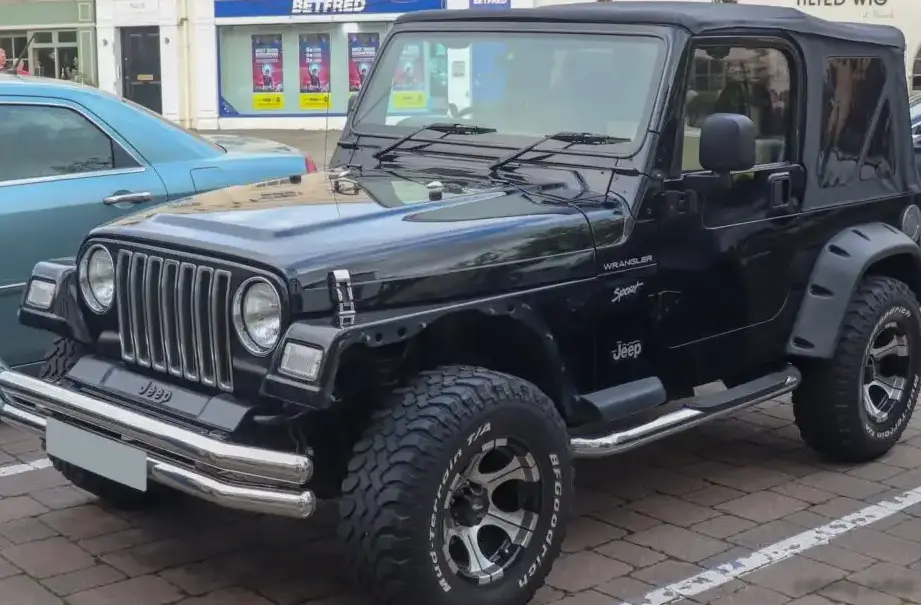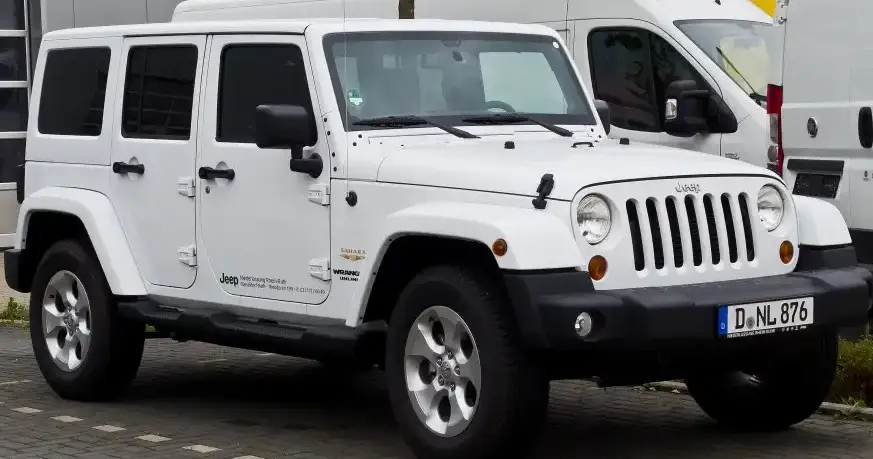
The Jeep Wrangler III Unlimited (JK) 2.8 CRDi 4×4 Automatic, produced from 2011 to 2018, represents a significant iteration of Jeep’s iconic off-road vehicle. Positioned within the JK generation (2007-2018), this variant offered a diesel engine option primarily aimed at European and international markets where diesel fuel was more prevalent and cost-effective. The Unlimited designation signifies the four-door configuration, providing increased passenger and cargo space compared to the two-door Wrangler. This model blended Jeep’s legendary off-road capability with a more fuel-efficient powertrain and a degree of on-road refinement, making it a versatile choice for a wider range of drivers.
Technical Specifications
| Brand | Jeep |
| Model | Wrangler |
| Generation | Wrangler III Unlimited (JK) |
| Type (Engine) | 2.8 CRDi (197 Hp) 4×4 Automatic |
| Start of production | 2011 year |
| End of production | 2018 year |
| Powertrain Architecture | Internal Combustion engine |
| Body type | Off-road vehicle |
| Seats | 5 |
| Doors | 4 |
| Fuel consumption (economy) – urban | 10 l/100 km (23.5 US mpg, 28.2 UK mpg, 10 km/l) |
| Fuel consumption (economy) – extra urban | 7.3 l/100 km (32.2 US mpg, 38.7 UK mpg, 13.7 km/l) |
| Fuel consumption (economy) – combined | 8.3 l/100 km (28.3 US mpg, 34 UK mpg, 12 km/l) |
| CO2 emissions | 217 g/km |
| Fuel Type | Diesel |
| Acceleration 0 – 100 km/h | 10.7 sec |
| Acceleration 0 – 62 mph | 10.7 sec |
| Acceleration 0 – 60 mph | 10.2 sec |
| Maximum speed | 172 km/h (106.88 mph) |
| Emission standard | Euro 5 |
| Weight-to-power ratio | 10.1 kg/Hp, 98.6 Hp/tonne |
| Weight-to-torque ratio | 4.3 kg/Nm, 230.2 Nm/tonne |
| Power | 197 Hp @ 3600 rpm |
| Power per litre | 71 Hp/l |
| Torque | 460 Nm @ 1600-2600 rpm (339.28 lb.-ft. @ 1600-2600 rpm) |
| Maximum engine speed | 4600 rpm |
| Engine layout | Front, Longitudinal |
| Engine Model/Code | ENS |
| Engine displacement | 2776 cm3 (169.4 cu. in.) |
| Number of cylinders | 4 |
| Engine configuration | Inline |
| Cylinder Bore | 94 mm (3.7 in.) |
| Piston Stroke | 100 mm (3.94 in.) |
| Compression ratio | 16.5:1 |
| Number of valves per cylinder | 4 |
| Fuel injection system | Diesel Commonrail |
| Engine aspiration | Turbocharger, Intercooler |
| Valvetrain | DOHC |
| Engine oil capacity | 6.6 l (6.97 US qt | 5.81 UK qt) |
| Coolant | 12 l (12.68 US qt | 10.56 UK qt) |
| Kerb Weight | 1998 kg (4404.84 lbs.) |
| Max. weight | 2585 kg (5698.95 lbs.) |
| Max load | 587 kg (1294.11 lbs.) |
| Trunk (boot) space – maximum | 2322 l (82 cu. ft.) |
| Fuel tank capacity | 85 l (22.45 US gal | 18.7 UK gal) |
| Permitted trailer load with brakes (12%) | 1000 kg (2204.62 lbs.) |
| Permitted trailer load without brakes | 750 kg (1653.47 lbs.) |
| Length | 4751 mm (187.05 in.) |
| Width | 1877 mm (73.9 in.) |
| Height | 1840 mm (72.44 in.) |
| Wheelbase | 2946 mm (115.98 in.) |
| Front track | 1572 mm (61.89 in.) |
| Rear (Back) track | 1572 mm (61.89 in.) |
| Ride height (ground clearance) | 256 mm (10.08 in.) |
| Drag coefficient (Cd) | 0.495 |
| Minimum turning circle (turning diameter) | 12.25 m (40.19 ft.) |
| Approach angle | 37.8° |
| Departure angle | 31.4° |
| Ramp-over (brakeover) angle | 20° |
| Drive wheel | All wheel drive (4×4) |
| Number of gears and type of gearbox | 5 gears, automatic transmission |
| Front suspension | Rigid axle suspension |
| Rear suspension | Rigid axle suspension |
| Front brakes | Ventilated discs |
| Rear brakes | Disc |
| Assisting systems | ABS (Anti-lock braking system) |
| Tires size | 245/75 R17 |
| Wheel rims size | 17 |
Powertrain & Engine Architecture
The heart of this Wrangler variant is the 2.8-liter inline-four cylinder diesel engine, designated the ENS. This engine utilizes a common rail direct injection system, delivering fuel at extremely high pressure for optimized combustion. A turbocharger with an intercooler further enhances performance by forcing more air into the cylinders. The engine produces 197 horsepower at 3600 rpm and a substantial 460 Nm (339 lb-ft) of torque between 1600 and 2600 rpm. The engine features a double overhead camshaft (DOHC) valvetrain with four valves per cylinder, contributing to its efficiency and power output. Paired with this engine is a five-speed automatic transmission, designed to provide smooth shifting and ease of use, particularly in off-road conditions. The transmission was chosen to balance usability with the engine’s torque characteristics.
Driving Characteristics
The 2.8 CRDi Automatic Wrangler JK offers a different driving experience compared to its gasoline-powered counterparts or those equipped with a manual transmission. The automatic transmission prioritizes convenience, making it well-suited for daily driving and navigating challenging terrain without constant gear changes. While not as overtly quick as the V6 gasoline models, the diesel engine’s abundant low-end torque provides ample pulling power for off-roading and towing. The automatic transmission’s gear ratios are optimized for torque delivery, but can sometimes feel less responsive during quick acceleration. The 0-60 mph time of around 10.2 seconds reflects this focus on usability rather than outright speed. The diesel engine’s weight also contributes to a slightly higher curb weight, impacting handling dynamics.
Equipment & Trim Levels
The 2.8 CRDi Automatic typically came with a reasonable level of standard equipment, though specific features varied depending on the market. Common features included air conditioning, power windows and locks, a basic audio system, and cloth upholstery. Optional extras often included upgraded audio systems, leather upholstery, a navigation system, and various off-road packages featuring features like a winch, rock rails, and upgraded suspension components. The trim level often dictated the availability of these options, with higher trims offering more standard features and a more luxurious interior.
Chassis & Braking
The JK Wrangler utilizes a robust body-on-frame construction, providing excellent durability and off-road capability. Both the front and rear suspension systems employ a solid axle design with coil springs, offering substantial wheel articulation for navigating uneven terrain. The braking system consists of ventilated discs at the front and solid discs at the rear, equipped with an Anti-lock Braking System (ABS) for enhanced safety. The relatively heavy weight of the diesel engine and automatic transmission necessitated a robust chassis and braking system to ensure adequate stopping power and stability.
Market Reception & Comparison
The 2.8 CRDi Automatic Wrangler JK was generally well-received in markets where diesel engines were popular. Critics praised its fuel efficiency, particularly compared to the gasoline models, and its ample torque for off-road adventures. However, some reviewers noted the engine’s relative lack of refinement and the automatic transmission’s occasional sluggishness. Compared to the 3.6L V6 gasoline engine, the diesel offered better fuel economy but less overall power and acceleration. The diesel also tended to be more expensive to maintain due to the complexity of the fuel injection system and the potential for diesel particulate filter (DPF) issues.
Legacy
The 2.8 CRDi engine, while not as ubiquitous as the gasoline options, has proven to be a relatively reliable powertrain when properly maintained. The automatic transmission, while not known for being the most sporty, has generally held up well over time. In the used car market, these Wranglers are often sought after by drivers who prioritize fuel efficiency and off-road capability. However, potential buyers should be aware of the potential maintenance costs associated with the diesel engine, including the DPF and fuel injection system. Overall, the 2.8 CRDi Automatic Wrangler JK remains a capable and versatile off-road vehicle with a loyal following.