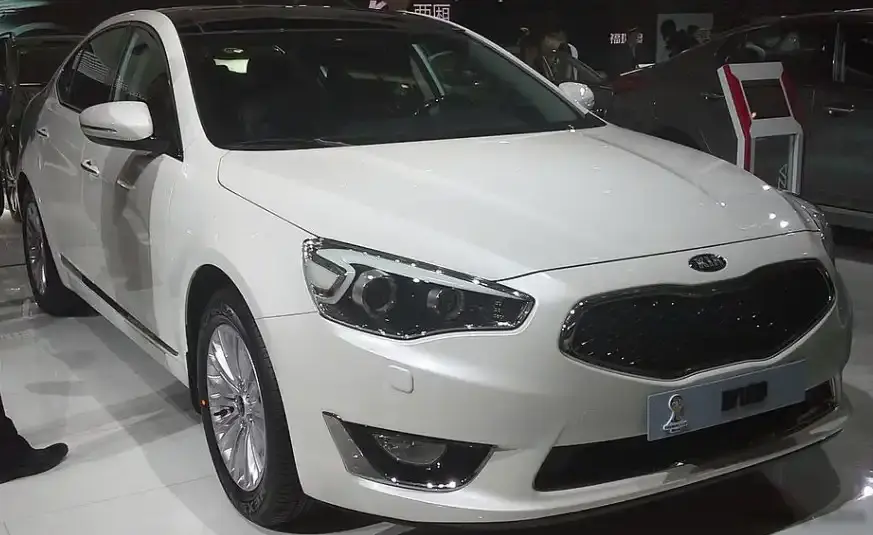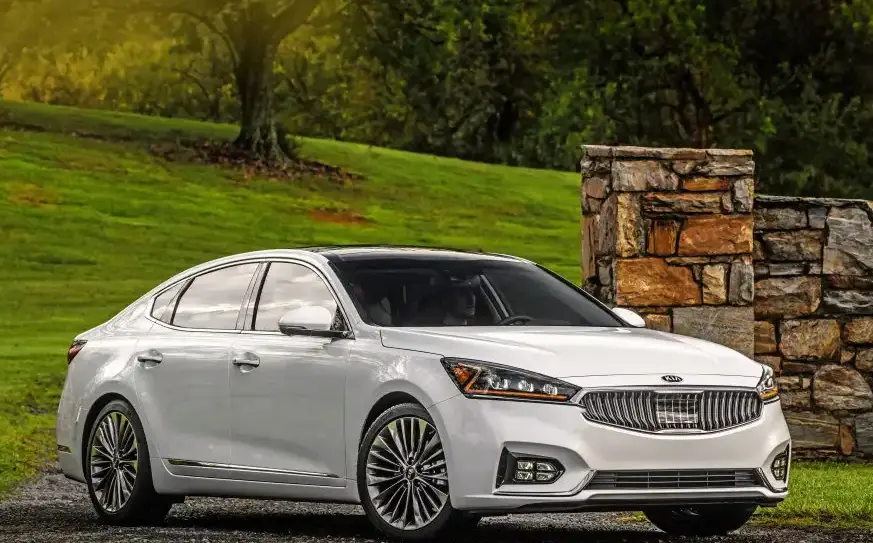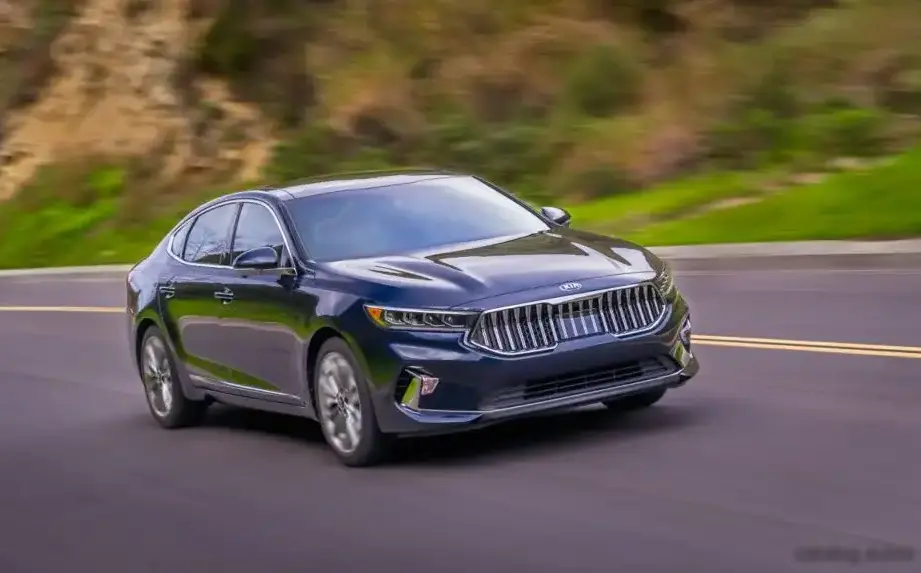
The Kia Cadenza, launched in 2009, represented Kia’s initial foray into the full-size sedan segment, primarily aimed at the Korean domestic market and select export regions. Positioned as a more premium offering than the Kia Optima, the first generation Cadenza (VG) sought to establish Kia as a contender against established Japanese and American brands. The 2.4-liter, 181 horsepower variant with an automatic transmission was introduced as the entry-level model, offering a balance of affordability and comfort. Production of the first generation Cadenza spanned from 2009 to 2013, with this particular engine and transmission combination available throughout the entire production run. It was built on Kia’s front-wheel drive platform, sharing some components with the Hyundai Sonata of the same era.
Technical Specifications
| Brand | Kia |
| Model | Cadenza |
| Generation | Cadenza I |
| Type (Engine) | 2.4 (181 Hp) Automatic |
| Start of production | 2009 |
| End of production | 2013 |
| Powertrain Architecture | Internal Combustion engine |
| Body type | Sedan |
| Seats | 5 |
| Doors | 4 |
| CO2 emissions | 198 g/km |
| Fuel Type | Petrol (Gasoline) |
| Weight-to-power ratio | 8.3 kg/Hp, 120.2 Hp/tonne |
| Weight-to-torque ratio | 6.5 kg/Nm, 153.4 Nm/tonne |
| Power | 181 Hp @ 6000 rpm |
| Power per litre | 76.7 Hp/l |
| Torque | 231 Nm @ 4000 rpm (170.38 lb.-ft. @ 4000 rpm) |
| Engine layout | Front, Longitudinal |
| Engine displacement | 2359 cm3 (143.96 cu. in.) |
| Number of cylinders | 4 |
| Engine configuration | Inline |
| Cylinder Bore | 88 mm (3.46 in.) |
| Piston Stroke | 97 mm (3.82 in.) |
| Number of valves per cylinder | 4 |
| Fuel injection system | Multi-port manifold injection |
| Engine aspiration | Naturally aspirated engine |
| Valvetrain | DOHC |
| Engine oil capacity | 5 l (5.28 US qt | 4.4 UK qt) |
| Coolant | 6.6 l (6.97 US qt | 5.81 UK qt) |
| Kerb Weight | 1506 kg (3320.16 lbs.) |
| Trunk (boot) space – minimum | 451 l (15.93 cu. ft.) |
| Fuel tank capacity | 70 l (18.49 US gal | 15.4 UK gal) |
| Length | 4965 mm (195.47 in.) |
| Width | 1850 mm (72.83 in.) |
| Height | 1475 mm (58.07 in.) |
| Wheelbase | 2845 mm (112.01 in.) |
| Front track | 1613 mm (63.5 in.) |
| Rear (Back) track | 1611 mm (63.43 in.) |
| Ride height (ground clearance) | 145 mm (5.71 in.) |
| Drag coefficient (Cd) | 0.29 |
| Minimum turning circle (turning diameter) | 11.08 m (36.35 ft.) |
| Drivetrain Architecture | The Internal combustion engine (ICE) drives the front wheels of the vehicle. |
| Drive wheel | Front wheel drive |
| Number of gears and type of gearbox | 6 gears, automatic transmission |
| Front brakes | Ventilated discs |
| Rear brakes | Disc |
| Assisting systems | ABS (Anti-lock braking system) |
| Steering type | Steering rack and pinion |
| Tires size | 215/65 R16 |
| Wheel rims size | 6.5J x 16 |
Powertrain & Engine Architecture
The Cadenza 2.4 utilizes Kia’s Theta II inline-four cylinder engine. This engine, designated as the GDI (Gasoline Direct Injection) variant in later iterations, employed multi-port fuel injection in the 2009-2013 models. The 2359cc engine features a double overhead camshaft (DOHC) valvetrain with four valves per cylinder, contributing to its respectable power output for its displacement. The engine’s architecture prioritized smooth operation and fuel efficiency over outright performance. The six-speed automatic transmission, sourced from Hyundai, was specifically tuned for comfortable cruising and predictable shifts. It wasn’t designed for aggressive downshifting or sporty driving, but rather for a relaxed driving experience. The transmission featured a conventional torque converter and lacked manual shift capabilities.
Driving Characteristics
The 181 horsepower and 170 lb-ft of torque delivered by the 2.4-liter engine provided adequate, but not exhilarating, performance. Acceleration from 0 to 60 mph was estimated to be around 9-10 seconds. The automatic transmission’s gear ratios were optimized for fuel economy, resulting in a somewhat leisurely pace. Compared to the available 3.5-liter V6 engine option, the 2.4-liter felt noticeably less powerful, particularly when fully loaded or attempting to overtake on the highway. However, the 2.4 offered a smoother and more refined driving experience in city traffic, with less engine noise and vibration. The front-wheel drive configuration provided predictable handling, but lacked the dynamic capabilities of rear-wheel drive or all-wheel drive systems.
Equipment & Trim Levels
The 2.4-liter Cadenza typically came standard with a respectable array of features, positioning it as a well-equipped entry-level luxury sedan. Standard equipment generally included air conditioning, power windows and locks, a six-speaker audio system, and alloy wheels. Higher trim levels added features such as leather upholstery, a sunroof, navigation system, and upgraded audio. The interior design focused on comfort and spaciousness, with ample legroom for both front and rear passengers. The dashboard layout was relatively straightforward and user-friendly, with logically placed controls.
Chassis & Braking
The Cadenza’s chassis was designed for comfort and stability. The front suspension utilized MacPherson struts, while the rear suspension employed a multi-link setup. This configuration provided a comfortable ride quality, absorbing bumps and imperfections in the road surface effectively. Braking duties were handled by ventilated discs up front and solid discs in the rear. Anti-lock braking system (ABS) was standard, enhancing safety and control during emergency braking situations. The steering system employed a rack-and-pinion setup, providing responsive and accurate steering feel.
Market Reception & Comparison
The 2.4-liter Cadenza was generally well-received as a comfortable and affordable full-size sedan. Critics praised its spacious interior, smooth ride, and generous standard features. However, some reviewers noted that the engine lacked the power and refinement of its competitors, particularly the Toyota Avalon and Honda Accord. Fuel economy was considered average for its class, with the 2.4-liter engine achieving around 22 mpg city and 31 mpg highway. Compared to the 3.5-liter V6 version of the Cadenza, the 2.4 offered better fuel economy but significantly less performance. The 2.4 was targeted towards buyers who prioritized comfort and value over outright performance.
Legacy
The Kia Cadenza I 2.4 Automatic, while not a performance benchmark, proved to be a reliable and durable powertrain combination. The Theta II engine, despite some early reports of oil consumption issues (addressed in later revisions), generally held up well over time. The six-speed automatic transmission also proved to be relatively trouble-free. In the used car market, these Cadenzas represent an affordable entry point into the full-size sedan segment. They are often sought after by buyers looking for a comfortable and spacious vehicle with a proven track record of reliability. While not a collector’s item, the 2.4-liter Cadenza played a significant role in establishing Kia as a credible competitor in the mainstream automotive market.