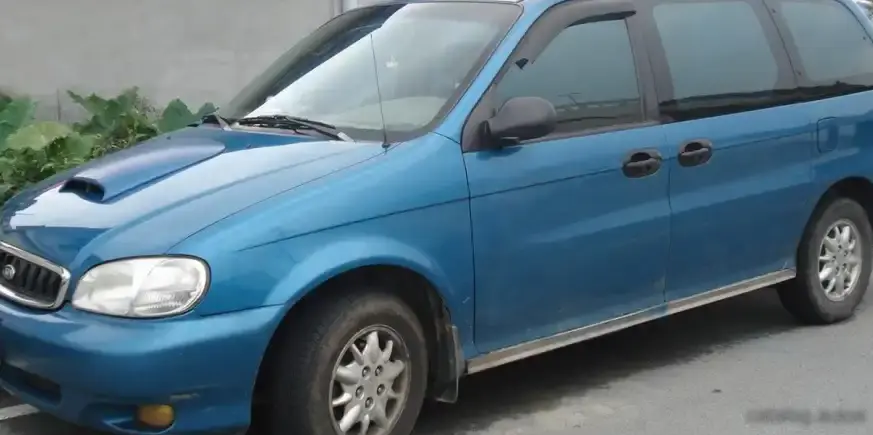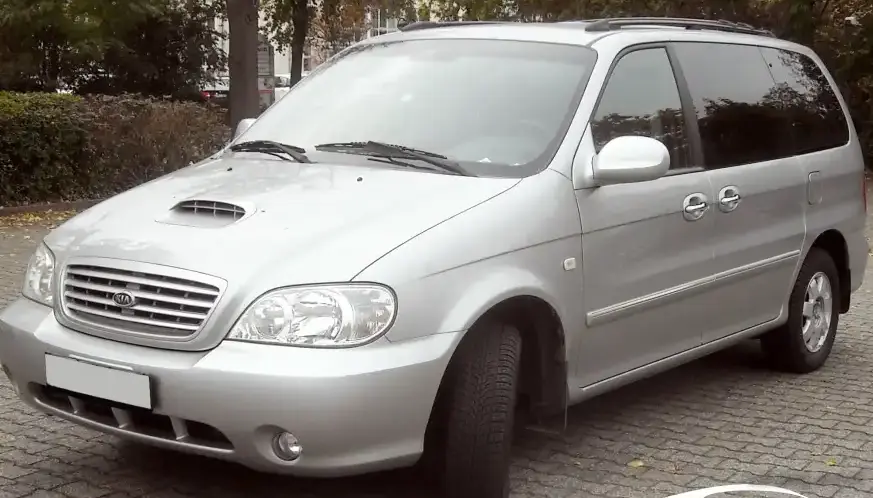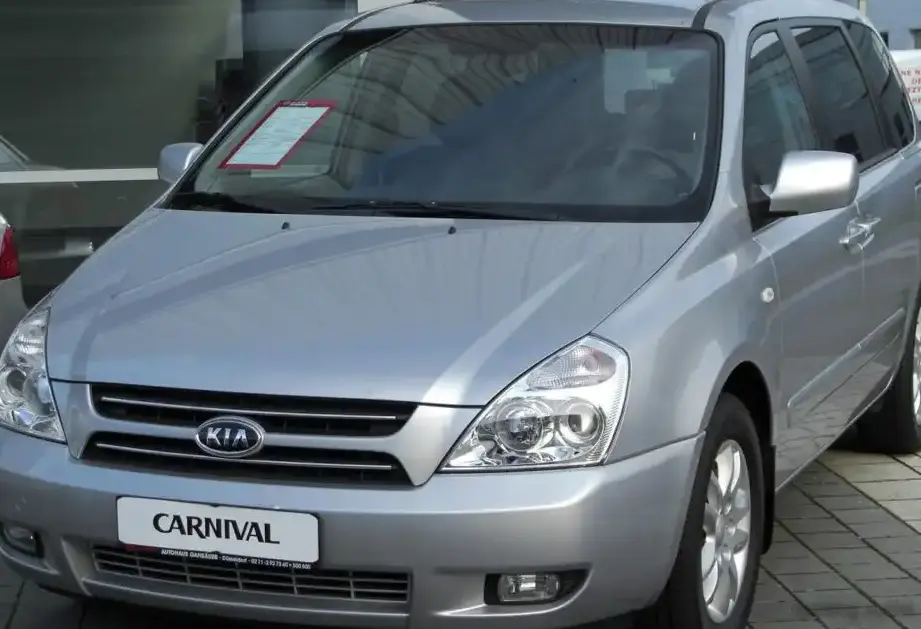
The Kia Carnival II (VQ), produced between 2006 and 2010, represented Kia’s second generation of its popular minivan, marketed globally under various names like the Sedona. This generation saw a significant refinement in design and features compared to its predecessor, aiming to compete more directly with established players like the Honda Odyssey and Toyota Sienna, particularly in markets outside of North America. The 2.7i V6 variant, equipped with a 2.7-liter gasoline engine producing 189 horsepower, was a key offering in many regions, positioned as a mid-range option balancing performance and fuel efficiency. It served as a step up from the base engine options while remaining more accessible than the higher-specification trims.
Technical Specifications
| Brand | Kia |
| Model | Carnival |
| Generation | Carnival II (VQ) |
| Type (Engine) | 2.7i V6 (189 Hp) |
| Start of production | 2006 |
| End of production | 2010 |
| Powertrain Architecture | Internal Combustion engine |
| Body type | Minivan |
| Seats | 7 |
| Doors | 5 |
| Fuel consumption (urban) | 15 l/100 km (15.7 US mpg, 18.8 UK mpg, 6.7 km/l) |
| Fuel consumption (extra urban) | 8.6 l/100 km (27.4 US mpg, 32.8 UK mpg, 11.6 km/l) |
| Fuel consumption (combined) | 10.9 l/100 km (21.6 US mpg, 25.9 UK mpg, 9.2 km/l) |
| Fuel Type | Petrol (Gasoline) |
| Maximum speed | 182 km/h (113.09 mph) |
| Weight-to-power ratio | 10.3 kg/Hp (97 Hp/tonne) |
| Weight-to-torque ratio | 7.9 kg/Nm (126.2 Nm/tonne) |
| Power | 189 Hp @ 6000 rpm |
| Power per litre | 71.2 Hp/l |
| Torque | 246 Nm @ 4000 rpm (181.44 lb.-ft. @ 4000 rpm) |
| Engine layout | Front, Transverse |
| Engine Model/Code | Mu / G6EA |
| Engine displacement | 2656 cm3 (162.08 cu. in.) |
| Number of cylinders | 6 |
| Engine configuration | V-engine |
| Cylinder Bore | 86.7 mm (3.41 in.) |
| Piston Stroke | 75 mm (2.95 in.) |
| Compression ratio | 10.4:1 |
| Number of valves per cylinder | 4 |
| Fuel injection system | Multi-port manifold injection |
| Engine aspiration | Naturally aspirated engine |
| Engine oil capacity | 4.5 l (4.76 US qt | 3.96 UK qt) |
| Coolant capacity | 10.7 l (11.31 US qt | 9.41 UK qt) |
| Kerb Weight | 1949 kg (4296.81 lbs.) |
| Max. weight | 2765 kg (6095.78 lbs.) |
| Max load | 816 kg (1798.97 lbs.) |
| Trunk (boot) space – minimum | 241 l (8.51 cu. ft.) |
| Trunk (boot) space – maximum | 1666 l (58.83 cu. ft.) |
| Fuel tank capacity | 80 l (21.13 US gal | 17.6 UK gal) |
| Length | 4810 mm (189.37 in.) |
| Width | 1985 mm (78.15 in.) |
| Height | 1815 mm (71.46 in.) |
| Wheelbase | 2890 mm (113.78 in.) |
| Front track | 1685 mm (66.34 in.) |
| Rear (Back) track | 1685 mm (66.34 in.) |
| Minimum turning circle | 11.64 m (38.19 ft.) |
| Drivetrain Architecture | Front wheel drive |
| Drive wheel | Front wheel drive |
| Number of gears | 5 |
| Gearbox type | Manual transmission |
| Front suspension | Independent type McPherson |
| Rear suspension | Dependent spring suspension with transverse stabilizer |
| Front brakes | Ventilated discs |
| Rear brakes | Drum |
| Assisting systems | ABS (Anti-lock braking system) |
| Steering type | Steering rack and pinion |
| Tires size | 235/60 R17H |
| Wheel rims size | 17 |
Powertrain & Engine Architecture
The heart of the 2.7i V6 Carnival is the Kia-developed Mu engine, specifically the G6EA variant. This 2.7-liter, naturally aspirated V6 engine utilizes a cast iron block and aluminum cylinder heads. It features a double overhead camshaft (DOHC) design with four valves per cylinder, contributing to its respectable power output for its displacement. Fuel delivery is managed by a multi-point fuel injection system, providing adequate atomization for efficient combustion. The engine’s 60-degree V-angle helps to balance engine vibrations and maintain a relatively compact engine bay footprint. The 5-speed manual transmission paired with this engine was a common configuration, offering a balance between fuel economy and driver control. While an automatic transmission was also available, the manual was favored by drivers seeking a more engaging driving experience and slightly improved fuel efficiency.
Driving Characteristics
The 2.7i V6 Carnival, when equipped with the 5-speed manual transmission, offered a reasonably responsive driving experience for a minivan. Acceleration was adequate for everyday driving and highway merging, though it wasn’t particularly sporty. The engine produced a usable amount of torque at lower RPMs, making it easy to navigate city streets. The manual gearbox allowed drivers to maintain control over the engine’s power band, optimizing performance for different driving conditions. Compared to the higher-output V6 options, the 2.7i felt less strained during acceleration, but also lacked the same level of outright power. The gear ratios were tuned for a balance of fuel economy and drivability, with a relatively tall fifth gear for comfortable highway cruising.
Equipment & Trim Levels
The 2.7i V6 Carnival typically came standard with features such as air conditioning, power windows and locks, and a basic audio system. Higher trim levels added features like alloy wheels, upgraded audio systems, and optional extras such as a sunroof, leather upholstery, and rear entertainment systems. Interior upholstery was generally cloth in the base models, with leather available as an upgrade. Dashboard configurations were relatively straightforward, prioritizing functionality and ease of use. Safety features included dual front airbags and ABS brakes.
Chassis & Braking
The Carnival II (VQ) utilized a McPherson strut front suspension and a dependent spring rear suspension with a transverse stabilizer bar. This setup provided a comfortable ride quality, suitable for carrying passengers and cargo. The front brakes were ventilated discs, offering good stopping power, while the rear brakes were drum brakes, a cost-saving measure common in this class of vehicle. The suspension was tuned for comfort rather than sporty handling, prioritizing a smooth ride over sharp cornering. The relatively long wheelbase contributed to stability at highway speeds.
Market Reception & Comparison
The 2.7i V6 Carnival was generally well-received as a practical and affordable minivan option. Critics praised its spacious interior, comfortable ride, and value for money. However, some reviewers noted that the engine lacked the refinement and power of some of its competitors. Compared to the higher-specification V6 models, the 2.7i offered better fuel economy but less performance. It also represented a more accessible price point, making it attractive to budget-conscious buyers. Against rivals like the Honda Odyssey and Toyota Sienna, the Carnival offered a competitive package, particularly in markets where brand recognition for those Japanese manufacturers wasn’t as strong.
Legacy
The Kia Carnival II (VQ) 2.7i V6, while not the most powerful or technologically advanced minivan of its time, proved to be a reliable and durable vehicle. The Mu engine, while not without its quirks, generally held up well over time with proper maintenance. Today, these vehicles can be found in the used car market at affordable prices, offering a practical and spacious transportation solution. Common maintenance issues include wear and tear on suspension components and potential oil leaks from the engine. However, parts availability is generally good, and the relatively simple mechanical design makes it accessible for DIY repairs. The 2.7i V6 Carnival remains a viable option for those seeking a budget-friendly minivan with a proven track record.