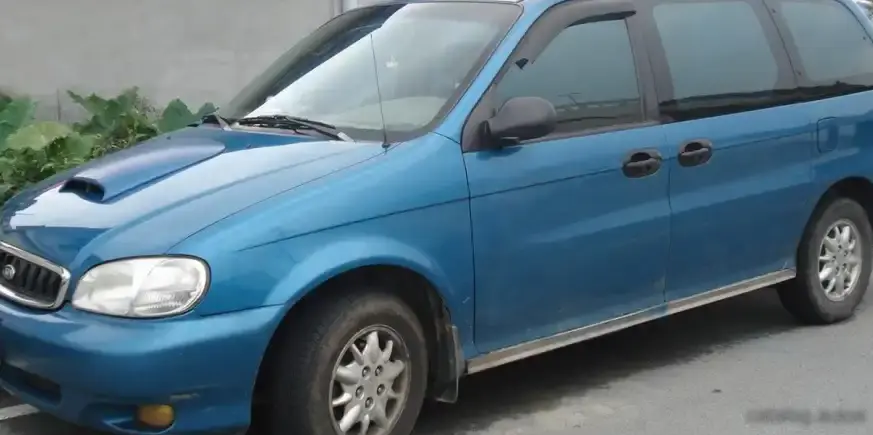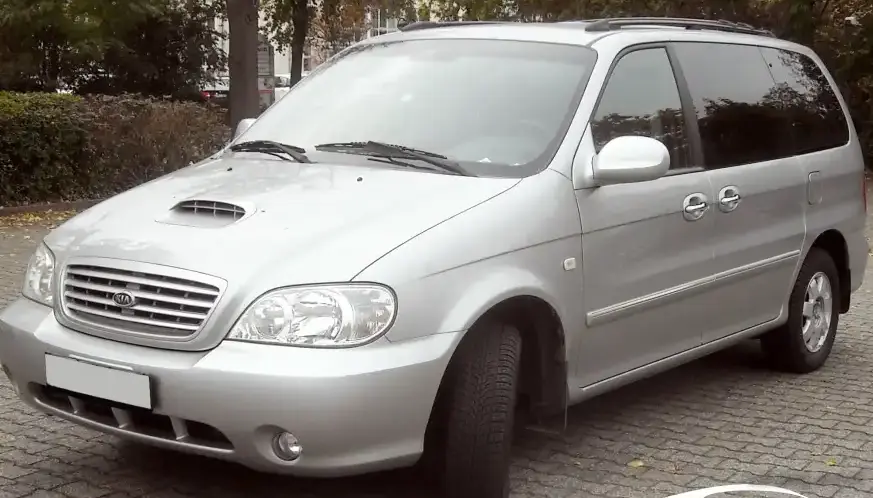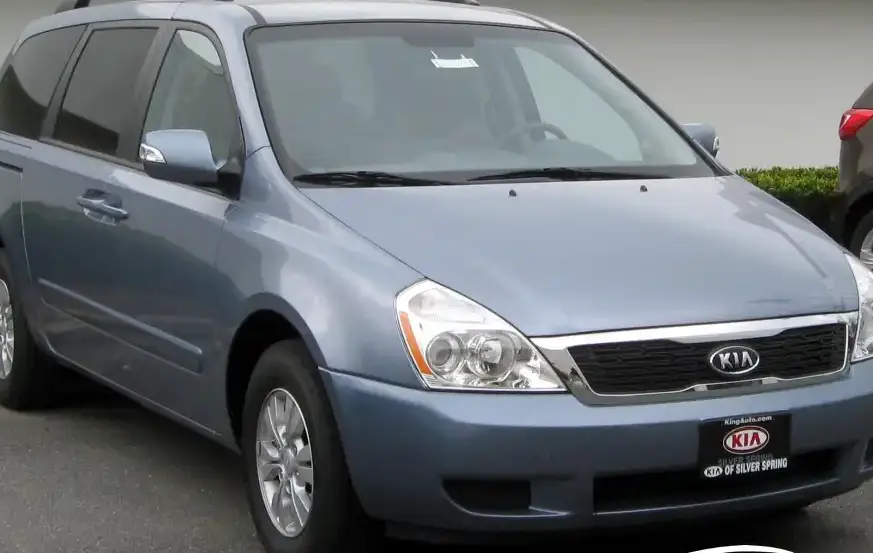
The Kia Carnival II, specifically the facelifted version introduced in 2010 (designated VQ), represented a significant step forward for Kia in the competitive minivan segment. This iteration, produced through 2014, aimed to offer a more refined and feature-rich experience compared to its predecessor. Among the various engine and transmission options available, the 3.8-liter V6 paired with a five-speed automatic transmission stands out as a popular choice, particularly in markets where a balance of power and convenience was desired. This configuration positioned itself as a mid-to-upper range offering within the Carnival II lineup, appealing to families seeking a spacious and well-equipped vehicle.
Technical Specifications
| Brand | Kia |
| Model | Carnival |
| Generation | Carnival II (VQ, facelift 2010) |
| Type (Engine) | 3.8i V6 (254 Hp) Automatic |
| Start of production | 2010 |
| End of production | 2014 |
| Powertrain Architecture | Internal Combustion engine |
| Body type | Minivan |
| Seats | 7 |
| Doors | 5 |
| Fuel consumption (urban) | 13.1 l/100 km (18 US mpg) |
| Fuel consumption (extra urban) | 9.4 l/100 km (25 US mpg) |
| Fuel Type | Petrol (Gasoline) |
| Acceleration 0 – 100 km/h | 10 sec |
| Acceleration 0 – 62 mph | 10 sec |
| Acceleration 0 – 60 mph | 9.5 sec |
| Maximum speed | 180 km/h (111.85 mph) |
| Weight-to-power ratio | 7.8 kg/Hp |
| Weight-to-torque ratio | 5.8 kg/Nm |
| Power | 254 Hp @ 6000 rpm |
| Torque | 343 Nm @ 3500 rpm (252.98 lb.-ft. @ 3500 rpm) |
| Engine layout | Front, Transverse |
| Engine Model/Code | Lambda / G6DA |
| Engine displacement | 3778 cm3 (230.55 cu. in.) |
| Number of cylinders | 6 |
| Engine configuration | V-engine |
| Cylinder Bore | 96 mm (3.78 in.) |
| Piston Stroke | 87 mm (3.43 in.) |
| Compression ratio | 10.4:1 |
| Number of valves per cylinder | 4 |
| Fuel injection system | Multi-port manifold injection |
| Engine aspiration | Naturally aspirated engine |
| Engine oil capacity | 5.2 l (5.49 US qt | 4.58 UK qt) |
| Coolant capacity | 8.6 l (9.09 US qt | 7.57 UK qt) |
| Kerb Weight | 1990 kg (4387.2 lbs.) |
| Trunk (boot) space – minimum | 364 l (12.85 cu. ft.) |
| Trunk (boot) space – maximum | 3440 l (121.48 cu. ft.) |
| Fuel tank capacity | 80 l (21.13 US gal | 17.6 UK gal) |
| Length | 4810 mm (189.37 in.) |
| Width | 1985 mm (78.15 in.) |
| Height | 1750 mm (68.9 in.) |
| Wheelbase | 2890 mm (113.78 in.) |
| Front track | 1685 mm (66.34 in.) |
| Rear track | 1685 mm (66.34 in.) |
| Drivetrain Architecture | Front wheel drive |
| Number of gears | 5 |
| Gearbox type | Automatic transmission |
| Front suspension | Independent type McPherson |
| Rear suspension | Dependent spring suspension with transverse stabilizer |
| Front brakes | Ventilated discs |
| Rear brakes | Drum |
| Assisting systems | ABS (Anti-lock braking system) |
| Steering type | Steering rack and pinion |
| Tires size | 225/70 R16 |
| Wheel rims size | 16 |
Powertrain & Engine Architecture
At the heart of this Carnival variant lies the Kia Lambda engine, specifically the G6DA code. This 3.8-liter, naturally aspirated V6 engine is a 24-valve DOHC design, utilizing multi-port fuel injection. The engine’s architecture prioritizes smooth power delivery and refinement over outright performance. The 60-degree V-angle contributes to a relatively compact engine package, aiding in packaging within the minivan’s front-wheel-drive layout. The five-speed automatic transmission, while not the most modern unit by today’s standards, was chosen for its reliability and suitability for everyday driving. It provides smooth shifts and adequate responsiveness for typical minivan duties. The transmission is electronically controlled, adapting shift points based on throttle input and driving conditions.
Driving Characteristics
The 3.8L V6 automatic Carnival offers a comfortable and predictable driving experience. With 254 horsepower and 253 lb-ft of torque, acceleration is adequate for merging onto highways and overtaking slower traffic, achieving 0-60 mph in around 9.5 seconds. However, it doesn’t offer the brisk acceleration of some competitors with turbocharged engines. The automatic transmission is tuned for fuel efficiency and smooth operation, sometimes at the expense of immediate responsiveness. Compared to the manual transmission versions, the automatic sacrifices some driver engagement but gains in ease of use, particularly in urban environments. The gear ratios are optimized for cruising, making it a pleasant vehicle for long road trips. The front-wheel-drive configuration provides decent handling, although it’s not particularly sporty.
Equipment & Trim Levels
The 3.8L V6 automatic Carnival typically came well-equipped, often positioned as a mid-to-upper trim level. Standard features generally included air conditioning, power windows and locks, a CD/MP3 stereo system, and basic safety equipment like ABS and airbags. Higher trim levels added features such as leather upholstery, a sunroof, alloy wheels, and a more advanced audio system. Optional extras often included a navigation system, rear-seat entertainment, and power-adjustable front seats. Interior upholstery was typically cloth on lower trims, upgrading to leather on higher-spec models. The dashboard layout was functional and user-friendly, with logically placed controls.
Chassis & Braking
The Carnival II utilizes a McPherson strut front suspension and a multi-link rear suspension, providing a comfortable ride quality. A transverse stabilizer bar is included on both axles to reduce body roll during cornering. The braking system consists of ventilated discs on the front wheels and drum brakes on the rear. While adequate for everyday driving, the rear drum brakes are a cost-saving measure and don’t offer the same stopping power as disc brakes. The steering is rack-and-pinion, providing reasonable precision and feedback. The standard tire size is 225/70 R16, offering a good balance of ride comfort and handling.
Market Reception & Comparison
The Kia Carnival II, particularly the 3.8L V6 automatic, was generally well-received by critics and consumers. It was praised for its spacious interior, comfortable ride, and value for money. However, some reviewers noted that the engine lacked the refinement and power of some competitors, and the automatic transmission could feel sluggish at times. Fuel economy was also a point of criticism, with the 3.8L V6 consuming more fuel than smaller-engined rivals. Compared to other Carnival II trims, the 3.8L V6 offered a significant power upgrade over the base 2.7L four-cylinder engine, but at the cost of increased fuel consumption. It positioned itself as a sweet spot for buyers prioritizing power and comfort over ultimate fuel efficiency.
Legacy
The 3.8L V6 engine in the Kia Carnival II has proven to be relatively reliable, with many examples still on the road today. While routine maintenance is essential, major engine failures are not common. The automatic transmission is also generally durable, although it’s important to ensure regular fluid changes. In the used car market, the 3.8L V6 Carnival II represents a good value proposition for families seeking a spacious and comfortable minivan. However, potential buyers should be aware of the higher fuel consumption compared to smaller-engined models and inspect the vehicle thoroughly for any signs of wear and tear. The Carnival II, in this configuration, helped establish Kia as a serious contender in the minivan segment, paving the way for future generations of Kia vehicles.