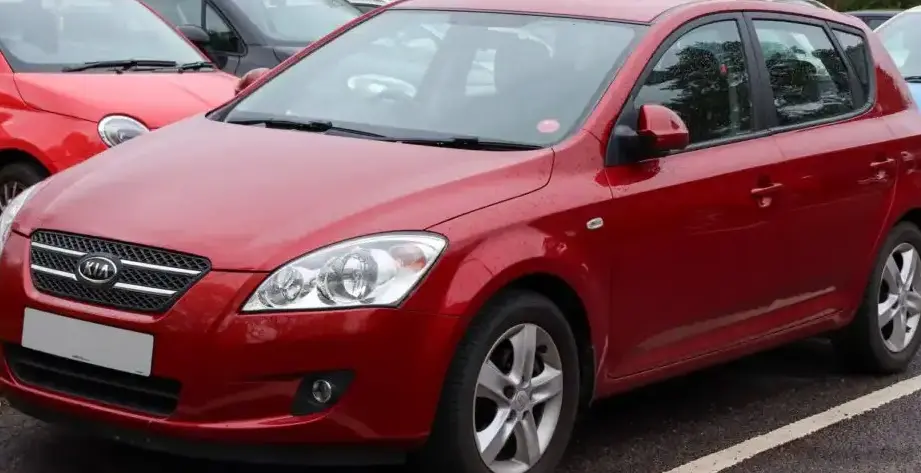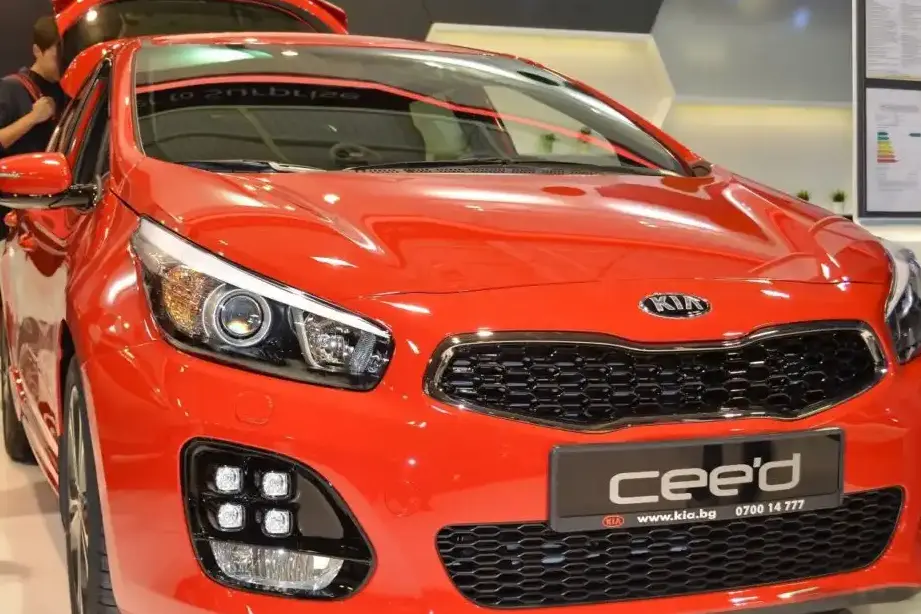
The Kia Cee’d II (facelift, introduced in June 2015) 1.6 CRDI with 136 horsepower and ISG (Idle Stop & Go) represents a significant iteration of Kia’s foray into the European compact hatchback market. Positioned as a mid-range offering within the Cee’d lineup, this variant aimed to balance fuel efficiency, reasonable performance, and affordability. The facelift brought styling updates and refinements to the already well-received second-generation Cee’d, which was based on the Hyundai-Kia ‘04’ platform, also known as the JD platform. Production continued through 2018, solidifying its place as a popular choice for buyers seeking a practical and well-equipped family car.
Technical Specifications
| Brand | Kia |
| Model | Cee’d |
| Generation | Cee’d II (facelift 2015) |
| Type (Engine) | 1.6 CRDI (136 Hp) ISG |
| Start of production | June, 2015 |
| End of production | 2018 |
| Powertrain Architecture | Internal Combustion engine |
| Body type | Hatchback |
| Seats | 5 |
| Doors | 5 |
| Fuel consumption (urban) | 4.2-4.4 l/100 km (56 – 53.5 US mpg) |
| Fuel consumption (extra urban) | 3.4-3.6 l/100 km (69.2 – 65.3 US mpg) |
| Fuel consumption (combined) | 3.6-3.9 l/100 km (65.3 – 60.3 US mpg) |
| CO2 emissions | 94-102 g/km |
| Fuel Type | Diesel |
| Acceleration 0 – 100 km/h | 9.8 sec |
| Acceleration 0 – 62 mph | 9.8 sec |
| Acceleration 0 – 60 mph | 9.3 sec |
| Maximum speed | 196 km/h (121.79 mph) |
| Emission standard | Euro 6 |
| Weight-to-power ratio | 9.5 kg/Hp, 105.5 Hp/tonne |
| Weight-to-torque ratio | 4.6 kg/Nm, 217.2 Nm/tonne |
| Power | 136 Hp @ 4000 rpm |
| Power per litre | 86 Hp/l |
| Torque | 280 Nm @ 1500-3000 rpm (206.52 lb.-ft. @ 1500-3000 rpm) |
| Engine layout | Front, Transverse |
| Engine Model/Code | D4FB |
| Engine displacement | 1582 cm3 (96.54 cu. in.) |
| Number of cylinders | 4 |
| Engine configuration | Inline |
| Cylinder Bore | 77.2 mm (3.04 in.) |
| Piston Stroke | 84.5 mm (3.33 in.) |
| Compression ratio | 16:1 |
| Number of valves per cylinder | 4 |
| Fuel injection system | Diesel Commonrail |
| Engine aspiration | Turbocharger, Intercooler |
| Engine oil capacity | 5.3 l (5.6 US qt | 4.66 UK qt) |
| Coolant | 6.9 l (7.29 US qt | 6.07 UK qt) |
| Kerb Weight | 1289-1418 kg (2841.76 – 3126.15 lbs.) |
| Max. weight | 1920 kg (4232.88 lbs.) |
| Max load | 502-631 kg (1106.72 – 1391.12 lbs.) |
| Trunk (boot) space – minimum | 380 l (13.42 cu. ft.) |
| Trunk (boot) space – maximum | 1318 l (46.54 cu. ft.) |
| Fuel tank capacity | 53 l (14 US gal | 11.66 UK gal) |
| Max. roof load | 80 kg (176.37 lbs.) |
| Permitted trailer load with brakes (12%) | 1500 kg (3306.93 lbs.) |
| Permitted trailer load without brakes | 650 kg (1433 lbs.) |
| Permitted towbar download | 75 kg (165.35 lbs.) |
| Length | 4310 mm (169.69 in.) |
| Width | 1780 mm (70.08 in.) |
| Width including mirrors | 2035 mm (80.12 in.) |
| Height | 1470 mm (57.87 in.) |
| Wheelbase | 2650 mm (104.33 in.) |
| Front track | 1549-1563 mm (60.98 – 61.54 in.) |
| Rear (Back) track | 1557-1571 mm (61.3 – 61.85 in.) |
| Front overhang | 900 mm (35.43 in.) |
| Rear overhang | 760 mm (29.92 in.) |
| Minimum turning circle (turning diameter) | 10.6 m (34.78 ft.) |
| Drivetrain Architecture | The Internal combustion engine (ICE) drives the front wheels of the vehicle. |
| Drive wheel | Front wheel drive |
| Number of gears and type of gearbox | 6 gears, manual transmission |
| Front suspension | Independent type McPherson |
| Rear suspension | Independent multi-link suspension |
| Front brakes | Ventilated discs, 280-300 mm |
| Rear brakes | Disc, 262-284 mm |
| Assisting systems | ABS (Anti-lock braking system) |
| Steering type | Steering rack and pinion |
| Tires size | 195/65 R15 91H; 205/55 R16 91H; 225/45 R17 91V |
| Wheel rims size | 6; 0J x 15 ET46; 6; 5J x 16 ET50; 7; 0J x 17 ET53 |
Powertrain & Engine Architecture
The heart of this Cee’d variant is the 1.6-liter (1582cc) D4FB inline-four cylinder diesel engine. This engine is a member of Kia/Hyundai’s U-series of diesel engines, known for its relatively robust design and fuel efficiency. The D4FB utilizes a second-generation common-rail direct injection system, delivering fuel at extremely high pressures for optimized combustion. A turbocharger with an intercooler is employed to boost power and torque, providing a noticeable improvement over naturally aspirated diesel engines. The engine produces 136 horsepower at 4000 rpm and a substantial 280 Nm (206.52 lb-ft) of torque between 1500 and 3000 rpm. The ISG (Idle Stop & Go) system automatically shuts off the engine when the vehicle comes to a halt, such as at traffic lights, to further improve fuel economy. The engine is transversely mounted at the front of the vehicle. The transmission is a six-speed manual gearbox, chosen for its efficiency and driver engagement.
Driving Characteristics
The 1.6 CRDI 136 hp version of the Cee’d offers a balanced driving experience. While not a performance-oriented model, the engine provides adequate power for everyday driving and highway cruising. The readily available torque makes overtaking maneuvers relatively effortless. The six-speed manual transmission is well-matched to the engine’s characteristics, allowing drivers to keep the engine in its optimal power band. Compared to the more powerful 1.7 CRDI variants, this engine feels less strained at higher speeds, but acceleration is noticeably slower. The gear ratios are tuned for fuel efficiency, meaning the engine doesn’t rev as freely as some competitors. The suspension setup provides a comfortable ride, absorbing most road imperfections without excessive body roll.
Equipment & Trim Levels
The 1.6 CRDI 136 hp ISG typically came equipped as a mid-range trim level. Standard features generally included air conditioning, electric front and rear windows, a USB and auxiliary input for the audio system, Bluetooth connectivity, and a multi-function steering wheel. Safety features such as ABS, ESC (Electronic Stability Control), and multiple airbags were also standard. Optional extras included alloy wheels, a touchscreen infotainment system with navigation, rear parking sensors, and a panoramic sunroof. Interior upholstery was typically cloth, with options for upgraded materials available on higher trim levels.
Chassis & Braking
The Cee’d II utilizes a McPherson strut front suspension and a multi-link rear suspension, providing a good balance between ride comfort and handling. The front brakes are ventilated discs, ranging from 280-300mm in diameter depending on the specific wheel size, while the rear brakes are solid discs, measuring 262-284mm. ABS (Anti-lock Braking System) is standard, enhancing braking performance and stability. Stabilizer bars are fitted to both the front and rear axles to reduce body roll during cornering. The chassis is designed to provide a stable and predictable driving experience, prioritizing comfort and practicality over outright sportiness.
Market Reception & Comparison
The Kia Cee’d II 1.6 CRDI 136 hp ISG was generally well-received by automotive critics. It was praised for its fuel efficiency, comfortable ride, and generous standard equipment. However, some reviewers noted that the engine could feel a bit underpowered when fully loaded or tackling steep hills. Compared to rivals like the Volkswagen Golf, Ford Focus, and Peugeot 308, the Cee’d offered a compelling value proposition, often undercutting its competitors on price while providing a similar level of features. The 1.7 CRDI offered more performance, but at the cost of slightly higher fuel consumption and emissions. The petrol variants were generally less fuel-efficient and offered less torque.
Legacy
The 1.6 CRDI engine, particularly the D4FB variant, has proven to be a relatively reliable powertrain. While diesel engines are inherently more complex than their gasoline counterparts, the D4FB has a good track record for durability, provided it receives regular maintenance, including oil changes and filter replacements. On the used car market, the Cee’d II 1.6 CRDI 136 hp ISG remains a popular choice for buyers seeking an affordable and economical family hatchback. Its fuel efficiency, practicality, and relatively low running costs make it an attractive option, even years after its production ended. Common issues are typically related to the diesel particulate filter (DPF) if the vehicle is primarily used for short journeys, and occasional problems with the turbocharger.