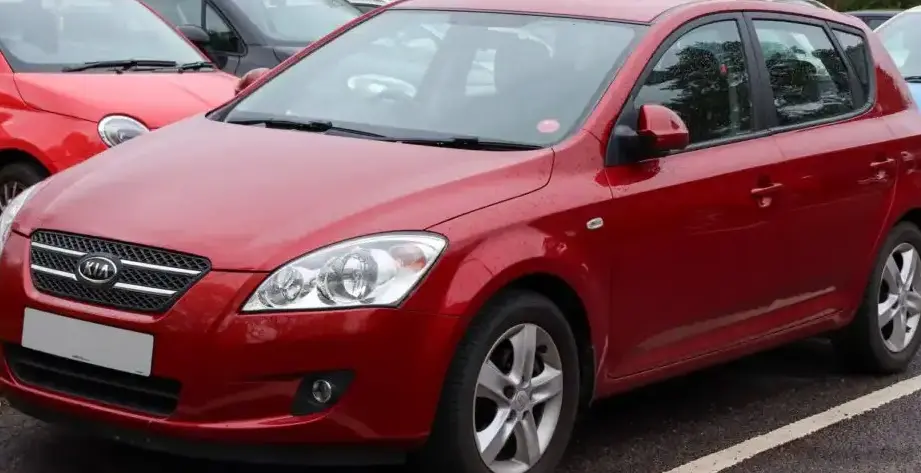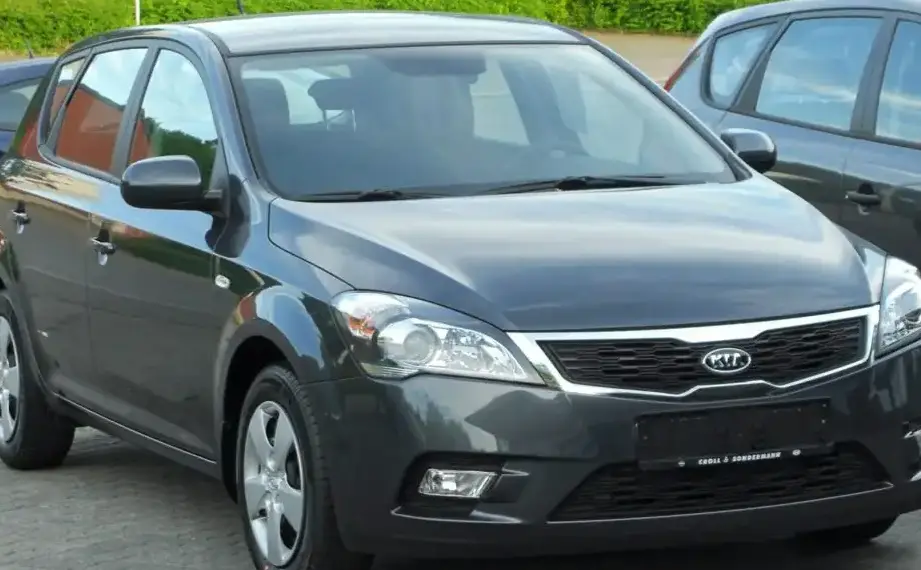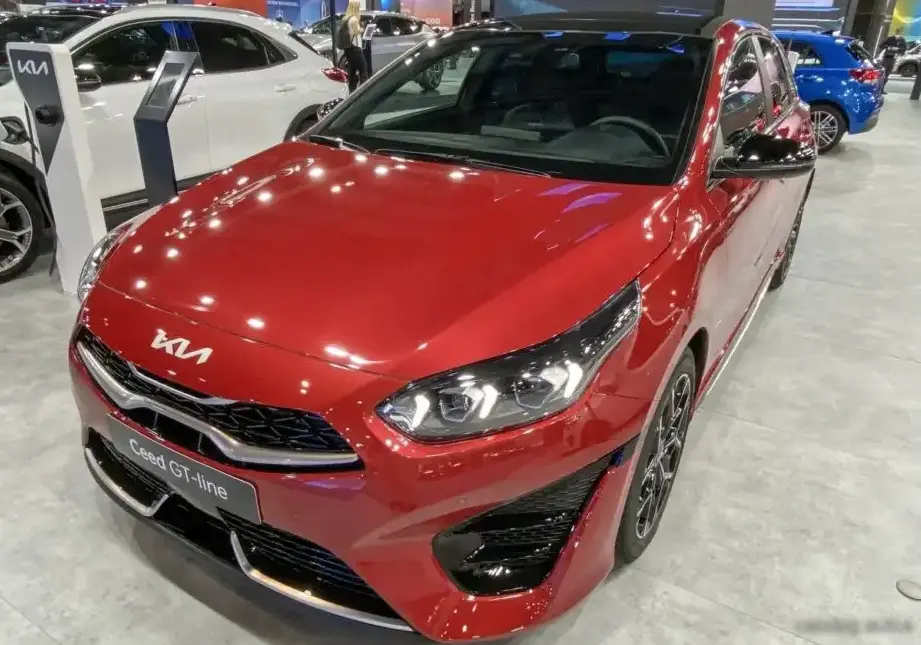
The Kia Ceed III (facelift, introduced in October 2021) 1.0 T-GDI, producing 100 horsepower, represents an entry-level offering within the third generation of Kia’s popular C-segment hatchback. Positioned as a fuel-efficient and accessible option, this variant was available through April 2024 and played a significant role in attracting buyers seeking a practical and economical vehicle. It’s built on the 1HX0 platform, shared with the Hyundai i30. This facelift brought updated styling, improved technology, and refined powertrain options to the Ceed range, aiming to maintain its competitiveness in the European and global markets.
Technical Specifications
| Brand | Kia |
| Model | Cee’d |
| Generation | Ceed III (facelift 2021) |
| Type (Engine) | 1.0 T-GDI (100 Hp) |
| Start of production | October, 2021 |
| End of production | April, 2024 |
| Powertrain Architecture | Internal Combustion engine |
| Body type | Hatchback |
| Seats | 5 |
| Doors | 5 |
| Combined fuel consumption (WLTP) | 5.2-6.4 l/100 km (45.2 – 36.8 US mpg, 54.3 – 44.1 UK mpg, 19.2 – 15.6 km/l) |
| CO2 emissions (WLTP) | 119-145 g/km |
| Fuel consumption (economy) – urban (NEDC, WLTP equivalent) | 6.3-7.2 l/100 km (37.3 – 32.7 US mpg, 44.8 – 39.2 UK mpg, 15.9 – 13.9 km/l) |
| Fuel consumption (economy) – extra urban (NEDC, WLTP equivalent) | 4.3-5.0 l/100 km (54.7 – 47 US mpg, 65.7 – 56.5 UK mpg, 23.3 – 20 km/l) |
| Fuel consumption (economy) – combined (NEDC, WLTP equivalent) | 5.1-5.8 l/100 km (46.1 – 40.6 US mpg, 55.4 – 48.7 UK mpg, 19.6 – 17.2 km/l) |
| CO2 emissions (NEDC, WLTP equivalent) | 116-133 g/km |
| Fuel Type | Petrol (Gasoline) |
| Acceleration 0 – 100 km/h | 11.8 sec |
| Acceleration 0 – 62 mph | 11.8 sec |
| Acceleration 0 – 60 mph | 11.2 sec |
| Maximum speed | 183 km/h (113.71 mph) |
| Emission standard | Euro 6d |
| Weight-to-power ratio | 12.2 kg/Hp, 81.8 Hp/tonne |
| Weight-to-torque ratio | 7.1 kg/Nm, 140.6 Nm/tonne |
| Power | 100 Hp @ 4500 rpm |
| Power per litre | 100.2 Hp/l |
| Torque | 172 Nm @ 1500-4000 rpm (126.86 lb.-ft. @ 1500-4000 rpm) |
| Engine layout | Front, Transverse |
| Engine Model/Code | Kappa II / G3LC |
| Engine displacement | 998 cm3 (60.9 cu. in.) |
| Number of cylinders | 3 |
| Engine configuration | Inline |
| Cylinder Bore | 71 mm (2.8 in.) |
| Piston Stroke | 84 mm (3.31 in.) |
| Compression ratio | 10.5:1 |
| Number of valves per cylinder | 4 |
| Fuel injection system | Direct injection |
| Engine aspiration | Turbocharger, Intercooler |
| Engine oil capacity | 3.6 l (3.8 US qt | 3.17 UK qt) |
| Coolant | 5.5 l (5.81 US qt | 4.84 UK qt) |
| Kerb Weight | 1223-1348 kg (2696.25 – 2971.83 lbs.) |
| Max. weight | 1780 kg (3924.23 lbs.) |
| Max load | 432-557 kg (952.4 – 1227.97 lbs.) |
| Trunk (boot) space – minimum | 395 l (13.95 cu. ft.) |
| Trunk (boot) space – maximum | 1291 l (45.59 cu. ft.) |
| Fuel tank capacity | 50 l (13.21 US gal | 11 UK gal) |
| Max. roof load | 80 kg (176.37 lbs.) |
| Permitted trailer load with brakes (12%) | 1000 kg (2204.62 lbs.) |
| Permitted trailer load without brakes | 500 kg (1102.31 lbs.) |
| Permitted towbar download | 75 kg (165.35 lbs.) |
| Length | 4315 mm (169.88 in.) |
| Width | 1800 mm (70.87 in.) |
| Width including mirrors | 2055 mm (80.91 in.) |
| Height | 1447 mm (56.97 in.) |
| Wheelbase | 2650 mm (104.33 in.) |
| Front track | 1565 mm (61.61 in.) |
| Rear (Back) track | 1573 mm (61.93 in.) |
| Front overhang | 885 mm (34.84 in.) |
| Rear overhang | 780 mm (30.71 in.) |
| Minimum turning circle (turning diameter) | 10.6 m (34.78 ft.) |
| Drivetrain Architecture | The Internal combustion engine (ICE) drives the front wheels of the vehicle. |
| Drive wheel | Front wheel drive |
| Number of gears and type of gearbox | 6 gears, manual transmission |
| Front suspension | Independent type McPherson |
| Rear suspension | Independent multi-link spring suspension with stabilizer |
| Front brakes | Ventilated discs, 305×25 mm |
| Rear brakes | Disc, 284×10 mm |
| Assisting systems | ABS (Anti-lock braking system) |
| Steering type | Steering rack and pinion |
| Power steering | Electric Steering |
| Tires size | 205/55 R16H |
| Wheel rims size | 6.5J x 16 ET50 |
Powertrain & Engine Architecture
The heart of this Ceed variant is the Kappa II 1.0 T-GDI engine, designated G3LC. This is a three-cylinder, inline gasoline engine with a displacement of 998cc. It utilizes direct fuel injection and is equipped with a single scroll turbocharger and intercooler to boost power and efficiency. The engine produces 100 horsepower at 4500 rpm and 172 Nm (126.86 lb-ft) of torque between 1500 and 4000 rpm. The engine features a compression ratio of 10.5:1 and 4 valves per cylinder. The engine is transversely mounted at the front of the vehicle. The 6-speed manual transmission delivers power to the front wheels. This transmission was chosen for its balance of fuel efficiency and driver engagement, although an optional 7-speed dual-clutch transmission (DCT) was available on higher trim levels.
Driving Characteristics
The 1.0 T-GDI with the manual transmission offers a reasonably responsive driving experience, particularly in urban and suburban environments. While not a performance-oriented setup, the turbocharger provides adequate boost for everyday driving situations. Acceleration from 0-100 km/h takes approximately 11.8 seconds. The gear ratios are tuned for fuel economy, meaning the engine can feel somewhat strained when accelerating quickly or climbing hills. Compared to the more powerful 1.4 T-GDI or diesel variants, this engine prioritizes efficiency over outright performance. The lighter engine weight contributes to nimble handling, but the suspension setup is geared towards comfort rather than sporty dynamics.
Equipment & Trim Levels
The 1.0 T-GDI typically served as the entry point to the Ceed range. Standard equipment generally included air conditioning, a touchscreen infotainment system with Apple CarPlay and Android Auto compatibility, Bluetooth connectivity, and a suite of safety features such as lane keeping assist, forward collision avoidance assist, and automatic emergency braking. Higher trim levels added features like automatic climate control, heated seats, a larger touchscreen display, and upgraded interior materials. Interior upholstery was typically cloth, with options for partial leather on higher trims. Dashboard configuration was consistent across the range, with a focus on a clean and modern design.
Chassis & Braking
The Ceed III utilizes a McPherson strut front suspension and a multi-link rear suspension. This setup provides a good balance of ride comfort and handling. The front brakes are ventilated discs measuring 305x25mm, while the rear brakes are solid discs measuring 284x10mm. Anti-lock Braking System (ABS) is standard. Stabilizer bars are fitted to both the front and rear axles to reduce body roll during cornering. The suspension tuning is generally softer, prioritizing ride comfort over aggressive handling.
Market Reception & Comparison
The 1.0 T-GDI variant was generally well-received by critics as a practical and economical choice. Fuel economy figures of 5.2-6.4 l/100 km (45.2-36.8 US mpg) were competitive within its segment. Compared to the 1.4 T-GDI, the 1.0 T-GDI offered lower running costs but less performance. The diesel variants (1.6 CRDi) provided even better fuel economy but came with the higher maintenance costs associated with diesel engines. The 1.0 T-GDI appealed to buyers prioritizing affordability and fuel efficiency over sporty driving dynamics.
Legacy
The Kappa II 1.0 T-GDI engine has proven to be a relatively reliable powertrain, although some owners have reported issues with the turbocharger and direct injection system. Regular maintenance, including oil changes and fuel system cleaning, is crucial for long-term reliability. On the used car market, the 1.0 T-GDI Ceed represents a good value proposition for buyers seeking an affordable and fuel-efficient hatchback. Its compact size, practical interior, and modern features continue to make it a popular choice.